






























MPDL3280A produced durable responses in studies in patients with forms of locally advanced/metastatic cancers, including smokers with NSCLC who customarily have poorer responses to cancer therapies than nonsmokers.
MPDL3280A produced durable responses in studies in patients with forms of locally advanced/metastatic cancers, including smokers with NSCLC who customarily have poorer responses to cancer therapies than nonsmokers.
The use of cancer immunotherapies has evolved. The latest immunotherapies are not only effective, but also accessible enough to be administered not just by expert immunologists, but by general oncologists.

Targeted Therapies spoke with Suzanne Topalian, MD, professor of Surgery and Oncology at Johns Hopkins University School of Medicine, about the progress and promise of PD-1 targeted cancer therapy.

Targeted Oncology spoke with Antoni Ribas, MD, PhD, director of the Tumor Immunology Program Area at UCLA's Jonsson Comprehensive Cancer Center, about the emerging role for immunotherapy in cancer.

Naiyer A. Rizvi, MD, an associate attending physician, Memorial Sloan-Kettering Cancer Center, discusses PD-1 and PD-L1 antibodies in development for the treatment of lung cancer.
Jeffrey A. Sosman, MD, from the Vanderbilt University School of Medicine and Vanderbilt-Ingram Cancer Center, discusses the use of checkpoint inhibitors in cancer care.
PD-L1 expression in tumors is a candidate molecular marker warranting further investigation as a means to select patients for immunotherapy with an anti PD-1 antibody

Concurrent nivolumab and ipilimumab produced “rapid and deep†responses in patients with advanced melanoma who took part in the first phase I trial to evaluate the PD-1-blocking antibody nivolumab, along with the CTLA-4-blocking antibody ipilimumab.
Julie R. Brahmer, MD, from Johns Hopkins University School of Medicine, Sidney Kimmel Comprehensive Cancer Center, discusses the outlook for immunotherapies in cancer care.
Julie R. Brahmer, MD, explains the role of the PD-1 pathway and the ligands PD-L1 and PD-L2 in the regulation of the immune system.
Omid Hamid, MD, discusses promising combination therapies for the treatment of melanoma.
Michael Birrer, MD, PhD, professor of medicine, Harvard Medical School, director, Gillette Center for Gynecologic Oncology, Massachusetts General Hospital, discusses other targets in ovarian cancer besides PARP.
The PD-1 blocking antibody nivolumab continues to demonstrate clinical activity in previously treated patients with advanced non-small cell lung cancer (NSCLC), according to updated long-term survival data from a phase I trial.

Russell J. Schilder, MD, discusses new therapeutics and their role in gynecologic cancers.
Targeted Oncology spoke with Padmanee Sharma, MD, PhD, about advances in immunotherapy for castration-resistant prostate cancer (CRPC).
Jeffrey A. Sosman, MD, professor of medicine, director, Melanoma and Tumor Immunotherapy Program, Vanderbilt University School of Medicine, Vanderbilt-Ingram Cancer Center, discusses immune response in renal cell carcinoma.
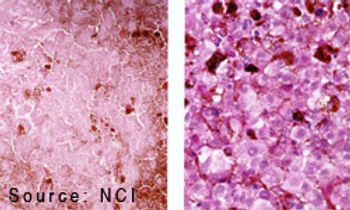
At the 11th International Congress on Targeted Therapies in Cancer, The International Journal of Targeted Therapies in Cancer spoke with Dr. Sosman about his conference presentation on advances in immunotherapy in melanoma.
Omid Hamid, MD, chief, translational research and immunotherapy, director, cutaneous oncology and melanoma, The Angeles Clinic and Research Institute, discusses treatment decisions for patients with melanoma.

With the arrival and incorporation into clinical practice of immunomodulatory drugs and proteasome inhibitor therapy, patients with multiple myeloma patients are achieving deep, durable responses and disease control, and are living longer

Karl Lewis, MD, medical oncologist, associate professor, University of Colorado, discusses sequencing immunotherapy and targeted therapy for patients with melanoma.
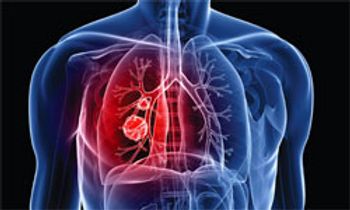
MK-3475, an investigational immunotherapy, has demonstrated an objective response rate (ORR) of up to 24% in patients with previously treated non-small cell lung cancer (NSCLC), according to interim results from a phase Ib expansion study.

Karl Lewis, MD, discusses new and emerging treatments for metastatic melanoma.
Roy S. Herbst, MD, PhD, discusses targeting PD-1 and PD-L1 when treating patients with lung cancer.
Jeffrey A. Sosman, MD, discusses how immunotherapies work in patients with melanoma or renal cancer.
Keerthi Gogineni, MD, MSHP, medical oncologist, Abramson Cancer Center, Perelman School of Medicine, University of Pennsylvania, comments on oncology drug shortages in the U.S.