





























James P. Allison, PhD, director, immunotherapy platform, The University of Texas MD Anderson Cancer Center, discusses the potentiation of immune checkpoint blockade cancer immunotherapy with oncolytic virus.

James P. Allison, PhD, director, immunotherapy platform, The University of Texas MD Anderson Cancer Center, discusses the potentiation of immune checkpoint blockade cancer immunotherapy with oncolytic virus.
Phase I results presented in 2013 from a study combining ipilimumab with the anti-PD-1 antibody, nivolumab,1 showed a 40% objective response rate in 53 patients with advanced melanoma and a preliminary overall survival (OS) of 80%.

The intratumoral injection talimogene laherparepvec (T-VEC) demonstrated promise in combinations and utility as a monotherapy in certain subsets of patients with unresectable melanoma.
Pembrolizumab continues to deliver impressive results in patients with advanced melanoma—producing long-lasting responses and improved overall survival, regardless of whether patients have been previously treated with ipilimumab.
Two patients with metastatic cervical cancer achieved durable complete responses that have so far lasted from 15 to 22 months through an adoptive T-cell therapy (ACT) targeting the human papillomavirus (HPV).
Nivolumab and elotuzumab have each been granted breakthrough therapy designations by the FDA for the treatment of two types of blood cancers.
James J. Hsieh, MD, PhD, medical oncologist, Memorial Sloan Kettering Cancer Center, provides an overview of the treatment of kidney cancer.
Jedd D. Wolchok, MD, PhD, from Memorial Sloan Kettering Cancer Center, discusses ongoing research regarding combinations of immunotherapies.
Balazs Halmos, MD, section chief of Thoracic Oncology at New York-Presbyterian Hospital/Columbia University Medical Center, discusses the variety of immune checkpoint inhibitors that are currently being explored as treatments for patients with non-small cell lung cancer (NSCLC).
Michael A. Postow, MD, attending physician, Melanoma and Immunotherapeutics Service, Memorial Sloan Kettering Cancer Center, discusses using PD-L1 as a biomarker of response in melanoma.

The FDA has assigned a priority review designation to the PD-1 inhibitor pembrolizumab (MK-3475) as a treatment for patients with unresectable or metastatic melanoma following progression on ipilimumab.
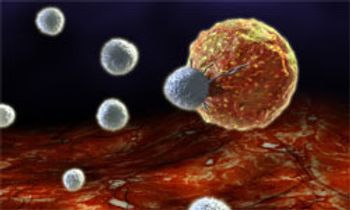
A novel immunotherapeutic known as IMCgp100 induced clinical responses with manageable toxicity in patients with advanced melanoma.

Tomasz Beer, MD, FACP, professor of medicine, deputy director of the Knight Cancer Institute, Oregon Health and Science University, characterizes the immune-related adverse events associated with ipilimumab in a phase III metastatic castration-resistant prostate cancer trial.

Smitha Krishnamurthi, MD, associate professor of medicine, Case Western Reserve University, describes GVAX for patients with metastatic pancreatic adenocarcinoma.

David F. McDermott, MD, associate professor, Department of Medicine, Harvard Medical School/Dana-Farber Cancer Institute, discusses PD-L1 expression in non-clear cell kidney cancer.

Talimogene laherparepvec (T-VEC) significantly improved durable response rates (DRR) but failed to extend overall survival (OS) in patients with advanced melanoma.

The first combination therapy for advanced melanoma received approval from the Food and Drug Administration (FDA) January 2014.
Jedd D. Wolchok, MD, PhD, chief, Melanoma and Immunotherapeutics Service, Lloyd J. Old Chair for Clinical Investigation, Memorial Sloan Kettering Cancer Center, explains immune checkpoint blockade.

Melanoma experts and researchers have gained ground in the development of novel and effective immunotherapies as well as targeted agents for those patients with metastatic melanoma who harbor specific tumor mutations.
Ryan J. Sullivan, MD, medical oncologist, Massachusetts General Hospital, gives an overview of new and emerging therapies for the treatment of metastatic melanoma.
Hassan Arshad, MD, assistant professor of oncology, head and neck surgeon, Department of Head and Neck Surgery/Plastic and Reconstructive Surgery, Roswell Park Cancer Institute, discusses the future of treating head and neck cancer and the challenges behind treating the disease.

Henry M. Kuerer, MD, PhD, FACS, professor of surgery, Department of Surgical Oncology, The University of Texas MD Anderson Cancer Center, discusses two ongoing trials that look promising for the treatment of patients with DCIS.

PD-L1 levels adequately predict response and clinical outcomes for PD-1 inhibitor MK-3475 in patients with non-small cell lung cancer (NSCLC) and melanoma.

The large phase III MAGRIT study investigating the MAGE-A3-specific vaccine GSK1572932A for patients with non-small cell lung cancer (NSCLC) will be completely halted following an interim analysis that demonstrated a lack of benefit.
Meir Wetzler, MD, chief, Leukemia Section, Department of Medicine, Professor of Medicine, Department of Medicine, Roswell Park Cancer Institute, discusses a phase I trial that studies the side effects and immune response to DEC-205/NY-ESO-1 fusion protein CDX-1401 and decitabine in patients with myelodysplastic syndrome (MDS) or acute myeloid leukemia