

IMMUNOTHERAPY
Latest News
Latest Videos





CME Content





























More News
This review addresses the basics of CAR T-cell design and reviews data from published clinical studies in leukemia.
Anna C. Pavlick, DO, co-director, Melanoma Program, assistant director, Clinical Research Education, associate professor, Departments of Medicine and Dermatology, Langone Medical Center, New York University, discusses the study of vemurafenib combined with a MEK inhibitor.

The PD-1 inhibitor pembrolizumab (Keytruda) was recently approved by the European Commission for the treatment of adult patients who have unresectable or metastatic melanoma in the first-line and previously treated settings, based on data from three clinical trials that evaluated the medication in over 1500 patients.
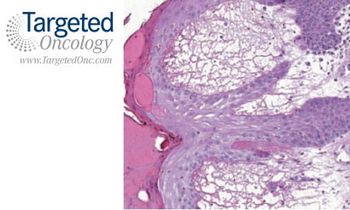
A letter to the editor in the New England Journal of Medicine from notable researchers at Memorial Sloan Kettering reported a case of complete remission of metastatic melanoma in a patient treated with single doses of ipiliumab and nivolumab.
Hope S. Rugo, MD, clinical professor, Department of Medicine (Hematology/Oncology), director, Breast Oncology Clinical Trials Program, Helen Diller Family Comprehensive Cancer Center, University of California, San Francisco, discusses patient selection for premenopausal endocrine therapy.
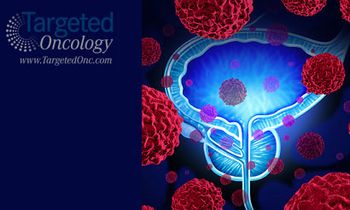
The anti-PDL1 agent, atezolizumab (MPDL3280A) may effectively shrink tumors in patients with locally advanced or metastatic urothelial bladder cancer in the second-line setting, according to a statement from the immunotherapy’s developer, Genentech.
Data from a phase I/II single-arm trial of the NY-ESO-1 T-Cell Receptor (TCR) therapy, recently published in Nature Medicine, is the first to show feasibility and antitumor responses in patients who have multiple myeloma.

Nivolumab (Opdivo) was recently approved by the European Commission as a treatment for patients who have locally advanced or metastatic squamous non-small cell lung cancer (NSCLC), following prior chemotherapy, based on findings from the phase III Checkmate-017, as well as the phase II Checkmate-063 trials.

An independent panel has halted the phase III CheckMate-025 trial after determining that nivolumab (Opdivo) improved overall survival versus everolimus (Afinitor) in patients with advanced renal cell carcinoma.
The immunotherapy DPX-Survivac has been granted orphan drug designation as treatment ovarian cancer, based on early-phase research showing a robust immune response with the therapy in combination with low-dose cyclophosphamide.
Marc Ernstoff, MD, director of melanoma, Cleveland Clinic, discusses progression-free survival (PFS) and safety in patients with advanced melanoma (MEL) receiving nivolumab (NIVO) combined with ipilimumab (IPI).

Ginseng polysaccharides may affect the balance of T-helper cells in patients with non-small cell lung cancer.
Mark A. Socinski, MD, professor, Medicine and Cardiothoracic Surgery, director, Lung Cancer Section, Division of Hematology/Oncology, clinical associate director, Lung SPORE, co-director, UPMC Lung Cancer Center of Excellence, co-leader, UPCI Lung Cancer Program, University of Pittsburgh, discusses the adverse events, as well as the overall significance, of nivolumab in patients with advanced non-squamous non-small cell lung cancer (NSCLC).

Trisha Wise-Draper, MD, PhD, assistant professor, University of Cincinnati, discusses the quality of life (QOL) as a predictor of clinical outcome in patients with head and neck cancer (HNC).

Yung-Jue Bang, MD, PhD, professor of medical oncology, College of Medicine, Seoul National University, president, Biomedical Research Institute, Seoul National University Hospital, discusses the clinical results for the treatment of pembrolizumab in patients with advanced gastric cancer.

Infusions of CTL019, a CAR-modified T-cell therapy against CD19, achieved durable responses and showed an acceptable safety profile in heavily pretreated patients with CD19-positive DLBCL, MCL, and FL.

The ASCO Annual Meeting is always packed with the latest and greatest advances in the field of oncology, and this year was no exception! The 2015 meeting had posted record-breaking numbers for abstract submissions and attendance, with over 37,000 individuals crowding the halls of the McCormick Place in Chicago.

At the ASCO 2015 Annual Meeting, F. Stephen Hodi, MD presented an analysis of the phase II CheckMate 069 trial covering objective response rate, progression-free survival, and safety in predefined subgroups, including those with poor prognostic factors.

Results presented at the 2015 ASCO Annual Meeting by Antoni Ribas, MD, PhD, examined the feasibility of combining these immunotherapy and targeted therapies in a phase I study.

At the 2015 ASCO Annual Meeting, Adil I. Daud, MD, UCSF Hellen Diller Family Comprehensive Cancer Center, presented a pooled analysis of 655 patients with advanced melanoma enrolled in the KEYNOTE-001 trial.

An independent data safety and monitoring board has recommended continuation of the phase III ACT IV clinical trial of rindopepimut (Rintega) in patients with newly diagnosed glioblastoma multiforme.
Maha H. Hussain, MD, professor of Medicine and Urology, University of Michigan, associate director, Clinical Research, co-leader, Prostate Cancer/GU Oncology Program, assistant chief, Clinical Research at the Division of Hematology/ Oncology, University of Michigan Comprehensive Cancer Center, discusses immunotherapy in prostate cancer.
Anna C. Pavlick, MD, associate professor, co-director, Melanoma Program, assistant director, Clinical Research Education, discusses a study that examined two immunotherapy agents, ipilimumab and nivolumab, in patients with melanoma.
Elizabeth Plimack, MD, MS, attending physician, genitourinary cancer associate professor, Medical Oncology Director of Genitourinary Clinical Research, Fox Chase Cancer Center, discusses a study that examined pembrolizumab in patients with urothelial cancer.

David Reardon, MD, clinical director, Center for Neuro-Oncology, Dana-Farber Cancer Institute, and president, Society for Neuro-Oncology, discusses rindopepimut (CDX-110), a synthetic peptide vaccine, and its potential in brain cancer based on the results of the ReACT Trial.