
William J. Gradishar, MD, summarizes the need for new strategies to alter the landscape of HR-positive breast cancer for the better, and how these methods can overcome drug resistance and delay disease progression.
William J. Gradishar, MD, summarizes the need for new strategies to alter the landscape of HR-positive breast cancer for the better, and how these methods can overcome drug resistance and delay disease progression.

Hope S. Rugo, MD, discusses immunotherapies, androgen receptor (AR)-targeted agents, and targeted therapies all on the horizon in TNBC.

Existing data for androgen receptor (AR) antagonists are encouraging and anticipated future results could soon show a benefit for these agents in large populations of patients with breast cancer.
William J. Gradishar, MD, discusses combining and sequencing novel targeted therapies.

Researchers are further exploring the possibility of using an immunotherapeutic vaccinia virus to treat advanced hepatocellular carcinoma (HCC), according to Ghassan K. Abou-Alfa, MD.
According to phase II findings published in <em>The New England Journal of Medicine</em><sup>1</sup>, <sup> </sup>multikinase inhibitor midostaurin (PKC412) demonstrated an overall response rate (ORR) of 60% in patients with advanced systemic mastocytosis.

The National Comprehensive Cancer Network has issued an updated recommendation for Optune for use in combination with temozolomide as standard treatment for patients with newly diagnosed glibolastoma multiforme.

Tumor infiltrating lymphocyte (TIL) technology represents an intriguing way of overcoming the immunosuppressive power of cancer, according to Jeffrey S. Weber, MD, PhD.

A chimeric antigen receptor T-cell therapy used in patients with EGFRvIII-positive glioblastoma multiforme during a pilot study showed promising results, according to two leading researchers in the field presenting at the 2015 Society of Neuro-Oncology Annual Meeting.
Though clinical work is ongoing and early, researchers are already considering how to manage potentially fatal neurotoxicities in patients treated with chimeric antigen receptor (CAR) T-cell therapy.

The addition of olaratumab to doxorubicin improved overall survival (OS) by nearly 1 year in patients with advanced soft tissue sarcoma, according to final results of a phase Ib/II study.

Laura Dawson, MD, provides insight into the diagnosis and treatment of hepatocellular carcinoma.

Adding docetaxel to standard androgen deprivation therapy significantly improved overall survival in men with newly diagnosed, hormone-naïve advanced prostate cancer.

The chimeric antigen receptor (CAR) T-cell therapy JCAR017 elicited a 91% complete remission rate in pediatric patients with relapsed/refractory acute lymphoblastic leukemia (ALL).

To gain insight into this novel approach and its potential benefit, Targeted Oncology interviewed Bradley J. Monk, MD, FACOG, FACS, who presented phase II results at the 2015 SGO's Annual Meeting on Women's Cancer.
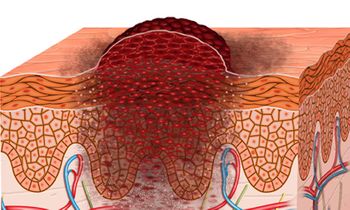
Pembrolizumab (Keytruda) yielded significantly better outcomes compared with ipilimumab (Yervoy) in a randomized phase III trial of patients with advanced melanoma.

IMCgp100, an anti-CD3 antibody fragment fused to a gp100-specific T cell receptor, yielded long-lasting responses in patients with advanced melanoma.
A trial comparing frontline pembrolizumab with ipilimumab for the treatment of advanced melanoma has met its progression-free survival (PFS) and overall survival (OS) endpoints and will be stopped early.

First-line treatment with lapatinib (Tykerb) and a taxane failed to improve progression-free survival (PFS) versus trastuzumab (Herceptin) plus a taxane in patients with HER2-positive metastatic breast cancer, according to final results from the phase III MA.31 trial.

To gain new insight on bortezomib’s use in the frontline MCL setting, Targeted Oncology interviewed Andrew Evens, DO, MSc, director of the Tufts Cancer Center.

The FDA has accepted a supplemental Biologics License Application (sBLA) for ipilimumab (Yervoy) as an adjuvant treatment of patients with stage III melanoma at high risk of recurrence following complete resection.

Neither sorafenib nor sunitinib improved outcomes when administered after surgery to patients with locally advanced renal cell carcinoma (RCC), according to results from the phase III ASSURE trial. These results were presented at a presscast held ahead of the 2015 Genitourinary Cancers Symposium.

Follicular lymphoma (FL) is a slow-growing and typically asymptomatic disease, characterized by many relapses.

Experts on hematologic malignancies will convene for the 19th Annual International Congress on Hematologic Malignancies, from February 20-21 in Miami, Florida, to provide insight into recent developments in the treatment of the diseases.

To gain insight into the integration of olaparib (Lynparza) into clinical practice, Targeted Oncology interviewed Ursula A. Matulonis, MD, medical director of gynecologic oncology at Dana-Farber Cancer Institute.

The proteasome inhibitor ixazomib (MLN9708) met its primary endpoint of improving PFS at a prespecified interim analysis of a phase III trial of patients with relapsed/refractory multiple myeloma.

The risk of death was significantly reduced for patients with BRAFV600E/K mutation-positive metastatic melanoma treated with dabrafenib and trametinib compared with dabrafenib alone.

The FDA has expanded the approval of ibrutinib (Imbruvica) for the treatment of patients with Waldenström’s Macroglobulinemia.

Topline results from the phase II TERRAIN trial showed enzalutamide increased progression-free survival (PFS) by nearly 10 months compared with bicalutamide in patients with metastatic castration-resistant prostate cancer (mCRPC).
The FDA has approved the PARP inhibitor olaparib (Lynparza) for the treatment of women with BRCA-positive advanced ovarian cancer.
June 16th 2014