



Melanoma
Latest News
Latest Videos





CME Content





























More News

With the field of immunotherapy growing at a rapid rate, and its increasing incorporation in the armamentarium of treatments in melanoma, Jeffrey S. Weber, MD, PhD, discusses where the field is going and how oncologists can be using the therapies.

Nivolumab's new FDA expanded approval putsthe drug in the frontline for all patients with advanced melanoma, which Jedd D. Wolchok, MD, PhD, says will be beneficial for patients.
Single-dose fosaprepitant dimeglumine (Emend for injection) in combination with antiemetic agents has been approved by the FDA for the preventing

The frontline melanoma indications for nivolumab (Opdivo), as both a single agent and in combination with ipilimumab (Yervoy), have been expanded by the FDA to include patients with BRAF V600 mutations. This expansion was based on data from the phase III CheckMate-067 trial.

​Michael A. Davies, MD, PhD, discusses the importance of identifying which patients diagnosed with melanoma are at the highest risk for developing brain metastases.

Ashani T. Weeraratna, PhD, discusses the similarities in treatment between younger and older patients with melanoma. She says this lack of differentiation between treatment regimens could pose a problem in the future. One such issue is that older patients tend to react less well to treatments like vemurafenib.

A team in Australia have revealed the clinicopathological phenotypes and clinical activities of rarer BRAF mutations, namely BRAFK601E (K601E) and BRAFL597 (L597).

Sheri Holmen, PhD, discusses treating metastases in melanoma. Holmen says the treatment of metastases in melanoma is currently the cancer's biggest unmet clinical need, specifically brain metastases.
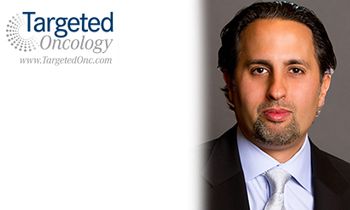
Omid Hamid, MD, discusses the upcoming Annual International Symposium on Melanoma and Other Cutaneous Malignancies.

With the continuously expanding landscape of treatment options for advanced and/or metastatic melanoma, it is becoming increasingly important to understand the patient-specific oncogenic drivers as a means of selecting treatments.

Talimogene laherparepvec (T-VEC; Imlygic) has been approved by the European Comission as a treatment for adult patients with unresectable stage IIIb, IIIc, and IVM1a melanoma that has not spread to the bone, brain, lung, or other viscera, based on the phase III OPTiM study.

Expanded approval for single-agent pembrolizumab (Keytruda) has arrived from the FDA to include frontline treatment for advanced melanoma regardless of BRAF status, based on a substantial improvement in progression-free and overall survival compared with ipilimumab (Yervoy) in the phase III KEYNOTE-006 trial

Danae Delivanis, MD, endocrinologist, Mayo Clinic, on the use of pembrolizumab and nivolumab in the treatment of metastatic melanoma.

The FDA has issued a complete response letter to Bristol-Myers Squibb regarding its supplemental biologics license application for the use of single-agent nivolumab in previously untreated patients with BRAF V600 mutation-positive advanced melanoma.

A regimen of pembrolizumab (Keytruda) and low-dose ipilimumab (Yervoy) was effective, and tolerable, for patients with advanced melanoma, according to results from the phase Ib KEYNOTE-029 clinical trial presented by lead investigator Georgina Long, BSc, PhD, MBBS.

Nivolumab (Opdivo) has been approved by the FDA as a single-agent to include the frontline treatment of patients with BRAF wild-type advanced melanoma.

A combination of dabrafenib and trametinib has been approved by the FDA for patients with unresectable or metastatic BRAF-mutated melanoma, based on an extension in overall survival (OS) from two phase III studies.
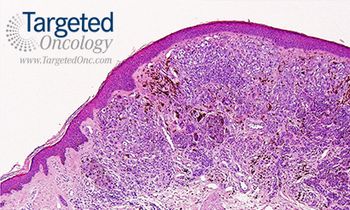
Patients receiving a combination of MEK inhibitor trametinib and BRAF inhibitor dabrafenib not only greatly improves long-term outcomes, but also lowers some adverse events associated with either standalone agent for patients with BRAF-mutated metastatic melanoma.

Avelumab has been given breakthrough therapy designation by the FDA as a possible treatment for patients with metastatic Merkel cell carcinoma (MCC) following progression on at least one prior chemotherapy regimen

The FDA has approved a combination of vemurafenib (Zelboraf) and cobimetinib (Cotellic) to treat patients with metastatic or unresectable BRAF V600E/K mutation-positive melanoma.

Study data involving NY-ESO-1specific T-cell receptor transgenic lymphocytes with an NY-ESO-1 peptide-pulsed DC vaccination in patients with advanced sarcomas and melanoma with or without ipilimumab were detailed during a presentation at the 2015 CTOS Annual Meeting.

Jeffrey S. Weber, MD, PhD, deputy director, Laura and Isaac Perlmutter Cancer Center, co-director of its Melanoma Program, head of Experimental Therapeutics, NYU Langone Medical Center, discusses keys to targeted therapies for melanoma. These keys lie in BRAF and MEK inhibitors and combining those drugs with immunologic therapies.

Investigators of a new phase II study reported that favorable-risk oropharyngeal squamous cell carcinoma testing positive for human papillomavirus or p16 can be treated successfully using substantially decreased chemoradiotherapy doses.
Jedd D. Wolchok, MD, PhD, chief of the Melanoma and Immunotherapeutics Service at Memorial Sloan Kettering Cancer Center in New York City, talks about the phase III CheckMate 067 trial.
Jason J. Luke, MD, FACP, assistant professor of medicine, The University of Chicago, discusses the international MSLT-II trial, which looks at the possibility of less surgery for melanoma patients in the future.