Melanoma
Latest News
Latest Videos




CME Content





























More News
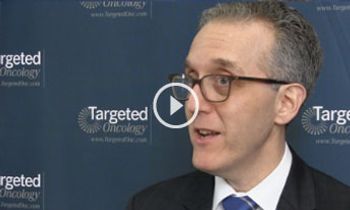
Jedd D. Wolchok, MD, PhD, chief, Melanoma and Immunotherapeutics Service, Memorial Sloan Kettering Cancer Center, discusses a phase 1/1b first in-human study of IPI-549, a PI3K gamma inhibitor as monotherapy and in combination with pembrolizumab (Keytruda) in patients with advanced solid tumors.
Howard L. Kaufman, MD, a surgical oncologist at Rutgers Cancer Institute of New Jersey, discusses a study which showed further durable responses to avelumab (Bavencio) in patients with merkel cell carcinoma who progressed after chemotherapy.

Outcomes have significantly improved for patients with melanoma in the wake of newer targeted treatments. Yet, brain metastases from melanoma remain a significant unmet need, with up to 60% of patients with advanced melanoma developing brain metastases.

Treatment of Malignant Melanoma



Yousef Zakharia, MD, assistant professor, University of Iowa, Holden Comprehensive Cancer Center, discusses indoximod as an active IDO inhibitor in advanced melanoma.
The BRAF inhibitor encorafenib combined with the MEK inhibitor binimetinib reduced the risk of disease progression or death by 23% compared with single-agent encorafenib for patients with <em>BRAF</em>-mutant melanoma.
Jason J. Luke, MD, assistant professor of Medicine, The University of Chicago Medicine, discusses immunotherapy combinations on the horizon in melanoma.

Oddbjørn Straume, MD, PhD, associate professor, department of Clinical Science, Haukeland University Hospital, discusses a study investigating BGB324 with pembrolizumab or dabrafenib/trametinib in patients with advanced non-resectable or metastatic melanoma.
Responses to treatment with avelumab monotherapy can increase in certain subtypes of patients with metastatic Merkel cell carcinoma, per an analysis of the phase II JAVELIN Merkel 200 trial that was presented during the ASCO-SITC Clinical Immuno-Oncology Symposium.
Richard Carvajal, MD, Director of Experimental Therapeutics and Director of the Melanoma Service at Columbia University Medical Center, discusses options for treating melanoma after the use of targeted therapies and immunotherapy.
According to results from a randomized, double-blind, phase III study, patients with stage III or IV melanoma assigned to 10 mg/kg ipilimumab lived longer than patients assigned to a lower dose of the anti-CTLA-4 anticlonal antibody, but at the cost of greater toxicity.

Michael B. Atkins, MD, deputy director, Georgetown-Lombardi Comprehensive Cancer Center, professor of Oncology and Medicine, Georgetown University School of Medicine, discusses the ideal therapy for melanoma in the adjuvant setting.

Ann W. Silk, MD, discusses preliminary results of the CAPRA trial, a phase 1B study of intratumoral coxsackievirus A21 (CVA21; CAVATAK) and systemic pembrolizumab in patients with advanced melanoma.
Combining the IDO inhibitor indoximod with pembrolizumab led to an overall response rate of 52% in patients with advanced melanoma.
Adding a formulation of the Coxsackievirus A21 to ipilimumab yielded an overall response rate of 50% and was well-tolerated in immunotherapy-naïve and pretreated patients with advanced melanoma.
BGB-283, a novel agent that targets <em>RAS/RAF</em>-mutated tumors, demonstrated activity across a variety of tumor types, according to the results of a preliminary clinical evaluation presented at the 2017 AACR Annual Meeting.
Yousef Zakharia, MD, assistant professor, University of Iowa, Holden Comprehensive Cancer Center, discusses an interim analysis of the phase II clinical trial investigating the IDO pathway inhibitor indoximod in combination with pembrolizumab (Keytruda) for patients with advanced melanoma.
The PD-1 and CTLA-4 inhibitor combination of nivolumab (Opdivo) and ipilimumab (Yervoy) induced a 12% reduction in the risk of death versus nivolumab monotherapy in patients with treatment-naïve advanced melanoma.
The American Association for Cancer Research (AACR) will recognize several individuals for their contributions to cancer research during its annual meeting, to be held April 1 to 5 in Washington, DC.
The first-in-class IDO1 inhibitor epacadostat (INCB024360), currently being investigated in combination with the PD-1 inhibitor pembrolizumab (Keytruda), could be an exciting new FDA approval for patients with stage III/IV unresectable or metastatic melanoma.
As immunotherapies become a greater part of the treatment paradigm of various cancers, researchers are spending more time developing ways to determine which patients will respond better to immunotherapy. Mutational load is one such biomarker that appears to have an impact on response to immunotherapy, particularly for checkpoint inhibitors.