



HEMATOLOGY
Latest News
Latest Videos

CME Content





























More News

Jae Park, MD, assistant attending physician, Memorial Sloan Kettering Cancer Center, discusses CAR T-cell therapy for the treatment of acute lymphoblastic leukemia.

The novel drug AG-221 generated durable remissions in patients with acute myeloid leukemia (AML) by targeting a mutation of the IDH2 gene in a small, first-in-man study that represents a new, chemotherapy-free approach for attacking the malignancy. Eytan M. Stein, MD, reported these findings during a press briefing at the 56th Annual Meeting of the American Society of Hematology (ASH).
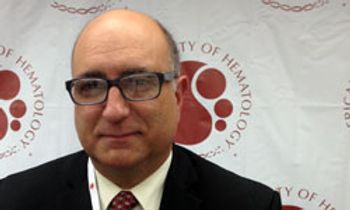
Patients with HIV-associated lymphoma can effectively be treated with autologous hematopoietic stem cell transplantation (AHCT), with outcomes that are similar to patients without HIV. Joseph Alvarnas, MD, presented results from a phase II study at the 2014 ASH Annual Meeting.

Treatment with nilotinib (Tasigna) in combination with chemotherapy elicited complete hematological remissions (CHR) in 87% of elderly patients with newly diagnosed Philadelphia-positive acute lymphoblastic leukemia (Ph+ ALL).

Adrian Wiestner, MD, PhD, senior investigator, National Institutes of Health, discusses curing or managing patients with chronic lymphocytic leukemia (CLL).

Idelalisib monotherapy shows activity in treatment-naïve patients ≥65 years with chronic lymphocytic leukemia (CLL) or small lymphocytic lymphoma (SLL) — nearly 90% of patients enrolled in a phase II study demonstrated a partial response.

Joseph Alvarnas, MD, Director of Medical Quality, associate clinical professor, City of Hope, discusses the treatment of HIV-associated lymphoma.

Patients with relapsed and difficult-to-treat Hodgkin lymphoma who received brentuximab vedotin following treatment with high-dose chemotherapy and stem cell transplant had an unprecedented 50% higher likelihood of continuing to experience PFS at 2 years.
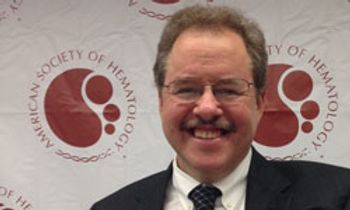
The anti-CD19 chimeric antigen receptor (CAR)-modified T-cell therapy CTL019 demonstrated a 92% complete response (CR) rate in pediatric patients with relapsed/refractory acute lymphoblastic leukemia (ALL).

The anti-CD19 immunotherapy blinatumomab (Blincyto) has been approved by the FDA as a treatment for patients with Philadelphia chromosome-negative relapsed/refractory B-precursor acute lymphoblastic leukemia (ALL), based on findings from a phase II trial.
Marcel R.M. van den Brink, MD, PhD, Head, Division of Hematologic Oncology, Memorial Sloan Kettering Cancer Center, discusses two abstracts being presented at ASH looking at CAR T cell therapies for the treatment of ALL and NHL.
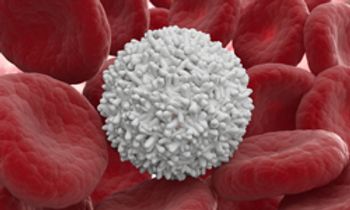
The FDA has granted the chimeric antigen receptor (CAR) T cell therapy JCAR015 a breakthrough therapy designation as a treatment for patients with relapsed or refractory B-cell acute lymphoblastic leukemia (ALL).
As its CAR T cell and high-affinity TCR products continue to advance in clinical trials, Juno Therapeutics, Inc, filed a registration statement for an initial public offering (IPO) of its common stock on November 17.

The monoclonal antibody cirmtuzumab, currently in clinical trials to treat CLL, targets ROR1 on the surface of cancerous B cells, and the agent may have a wider reach in the treatment of ovarian and other cancers.

Recent news stories profiling a cancer patient whose last hope rests on treatment by injections of the virus that causes AIDS may have created some misconceptions regarding a new cancer immunotherapy.

When Gail J. Roboz, MD, took the stage Wednesday to give her talk on what’s ahead in the treatment of acute myeloid leukemia (AML), she admitted feeling a little jealousy toward her colleagues in the lymphoid diseases.

The landscape in lymphoma management continues to evolve, with new therapies and approaches improving established treatment paradigms.

As the targeted therapy era in chronic lymphocytic leukemia (CLL) continues to unfold, two next-generation agents are generating responses with improved safety profiles as single agents and in combination regimens.

The combination of a FLT3L-primed in situ vaccine, low-dose radiotherapy, and a TLR 3 agonist has been shown to be feasible, safe, and immunologically and clinically effective in a phase I/II study for patients with low-grade lymphoma.

Joshua Brody, MD, assistant professor, Icahn School of Medicine, director, Lymphoma Immunotherapy Program, Mount Sinai Hospital, discusses vaccine strategies in follicular lymphoma.
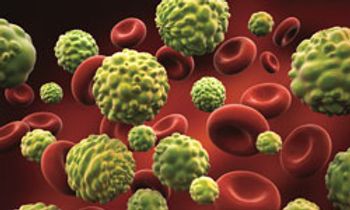
The investigational chimeric antigen receptor (CAR) therapy CTL019 elicited complete remissions in 27 of 30 pediatric and adult patients (90%) with relapsed/refractory acute lymphoblastic leukemia (ALL) in 2 pilot trials.

The FDA has approved bortezomib (Velcade) in combination with rituximab, cyclophosphamide, doxorubicin, and prednisone (VR-CAP) as a frontline treatment for patients with mantle cell lymphoma.

The FDA has assigned a priority review designation to blinatumomab as a treatment for adult patients with Philadelphia chromosome-negative (Ph-) relapsed/refractory B-precursor acute lymphoblastic leukemia.

Despite a recent decline in utilization, consolidated radiation therapy (RT) has been shown to improve 10-year survival rates for patients with stage I/II Hodgkin's lymphoma following treatment with chemotherapy.
Julian Adams, PhD, president, Research and Development, Infinity Pharmaceuticals, discusses the rationale behind the DUO trial.