





HEMATOLOGY
Latest News
Latest Videos





CME Content





























More News
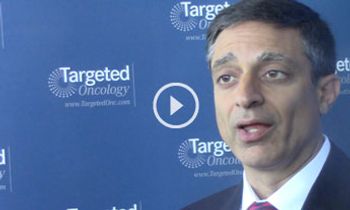
Sagar Lonial, MD, professor, School of Medicine, executive vice chair, Department of Hematology & Medical Oncology, chief medical officer, Winship Cancer Institute, Emory University, discusses the ELOQUENT-2 study in patients with relapsed/refractory multiple myeloma.

Philip McCarthy, MD, professor of oncology, director, Blood and Marrow Transplant Center, Department of Medicine, Roswell Park Cancer Institute, discusses the toxicities associated with lenalidomide for multiple myeloma in the CALGB 100104 study.

Sarah Holstein, MD, PhD, assistant professor of oncology, Roswell Park Cancer Institute, discusses a randomized study that compared lenalidomide with placebo for patients with multiple myeloma, following a single autologous stem cell transplant (ASCT).

Venetoclax (ABT-199) monotherapy showed promising phase II results, which will be submitted to regulatory agencies for patients with relapsed or refractory chronic lymphocytic leukemia (CLL) harboring the 17p deletion.
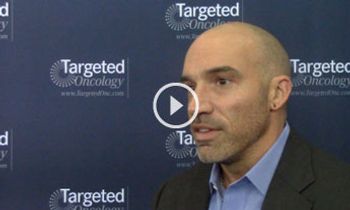
Jeffrey Jones, MD, MPH, assistant professor, Internal Medicine, section head, Chronic Lymphocytic Leukemia (CLL) research program, Ohio State University, discusses idelalisib (Zydelig) for previously treated CLL.

Ravi Vij, MD, associate professor of medicine, Division of Oncology, Section of Bone Marrow Transplant, Washington University School of Medicine, discusses the monoclonal antibody daratumumab for the treatment of patients with heavily pretreated multiple myeloma.
This review addresses the basics of CAR T-cell design and reviews data from published clinical studies in leukemia.
Data from a phase I/II single-arm trial of the NY-ESO-1 T-Cell Receptor (TCR) therapy, recently published in Nature Medicine, is the first to show feasibility and antitumor responses in patients who have multiple myeloma.

According to findings from a phase II study released by Amgen, monotherapy with blinatumomab (Blincyto) showed promising complete remission (CR) or CR with partial hematological recovery (CRh) rates in adult patients with relapsed or refractory Philadelphia chromosome-positive (Ph+) B cell precursor acute lymphoblastic leukemia (ALL).
Peter Voorhees, MD, associate professor, School of Medicine, UNC-Chapel Hill, Clinical Research, Leukemia, Lymphoma, and Myeloma Program, UNC Lineberger Comprehensive Cancer Center, discusses a phase II study examining daratumumab for the treatment of patients with multiple myeloma.

CPX-351 demonstrated a complete response (CR) or CR with incomplete hematologic recovery rate of 47.7% in elderly patients with untreated secondary acute myeloid leukemia.

Treatment with the combination of idelalisib and ofatumumab demonstrated an improvement in objective response rates, progression-free survival, and lymph node response compared with ofatumumab alone in patients with previously treated chronic lymphocytic leukemia.

Treatment with ibrutinib plus the anti-CD20 antibody ublituximab was shown to be safe with an objective response rate of 95% in patients with chronic lymphocytic leukemia.

Jesus G. Berdeja, MD, director of Myeloma Research, senior investigator, Hematologic Malignancies Principal Investigator, Sarah Cannon Research Institute, discusses a phase I/II study of the combination of panobinostat and carfilzomib in patients with relapsed or relapsed/refractory multiple myeloma.
Treatment with inotuzumab ozogamicin was found to be safe and effective in a phase III study for patients with relapsed or refractory acute lymphoblastic leukemia.

Treatment with the PD-1 inhibitor nivolumab demonstrated durable objective response rates in patients with classical Hodgkin lymphoma, diffuse large B-cell lymphoma, and follicular lymphoma.

The IDH2 inhibitor AG-221 has demonstrated promising response rates in patients with acute myeloid leukemia and other hematologic malignancies.

Catherine M. Diefenbach, MD, assistant professor, Department of Medicine, NYU Langone Medical Center, discusses the efficacy of two doses of polatuzumab vedotin (POV) in patients with relapsed/refractory (RR) follicular lymphoma (FL).
The combination of ibrutinib with bendamustin plus rituximab (BR) demonstrated a significant improvement in progression-free survival compared with BR alone in patients with pretreated chronic lymphocytic leukemia or small lymphocytic lymphoma.
Treatment with obinutuzumab in combination with bendamustine nearly doubled progression-free survival compared with bendamustine alone in patients with rituximab-refractory indolent non-Hodgkin lymphoma.

While ibrutinib is a relatively new option in the treatment of B-cell NHL, it has convincing antitumor activity as a single agent in a wide variety of B-cell lymphoma subtypes and is a viable therapeutic option for patients.

Common AEs associated with brentuximab vedotin, such as peripheral neuropathy and neutropenia, are often manageable with modifications to dose and schedule.

Oncologists, nurses, physician assistants, pharmacists, and other healthcare professionals involved in the treatment of patients with lung cancer will gather July 2015, at the Hyatt Regency in Huntington Beach, California, for the 16th Annual International Lung Cancer (ILC) Conference.

Two presentations at this year’s American Association for Cancer Research (AACR) annual meeting linked a specific microRNA (miRNA), miR-34a, to an active area in immunotherapy, programed cell death-1 (PD-1) protein and its ligand, PD-L1.

Treatment with the BTK inhibitor ibrutinib could enhance the efficacy of chemoimmunotherapy without increasing toxicity for patients with chronic lymphocytic leukemia.