
HEMATOLOGY
Latest News

Latest Videos




CME Content





























More News
Anas Younes, MD, chief, Lymphoma Service, Memorial Sloan Kettering Cancer Center, discusses treatment with idelalisib for chronic lymphocytic leukemia (CLL) and indolent non-Hodgkin lymphoma (iNHL)

Ari Melnick, MD, a professor of medicine at the Weill Cornell Medical College, discusses EZH2 and its potential as a target in diffuse large B cell lymphoma
William G. Wierda, MD, PhD, professor, Department of Leukemia, Division of Cancer Medicine, The University of Texas MD Anderson Cancer Center, discusses treatment options for patients with CLL who harbor the 17p deletion.
Renier J. Brentjens, MD, PhD, associate professor, chief, Cellular Therapeutics Center, Memorial Sloan Kettering Cancer Center, discusses the utility of CAR-modified T cells in myeloid malignancies.

Ibrutinib (Imbruvica) has received an FDA approval to include the treatment of patients with chronic lymphocytic leukemia (CLL) who have received at least one previous therapy.
Jennifer Brown, MD, PhD, Director, Chronic Lymphocytic Leukemia Center, Dana-Farber Cancer Institute, Assistant Professor of Medicine, Harvard Medical School, discusses the Bcl-2 inhibitor ABT-199 for the treatment of patients with CLL.
John C. Byrd, MD, from OSUCCC – James, describes a phase I/Ib trial looking at dinaciclib for patients with relapsed or refractory chronic lymphocytic leukemia (CLL).

The intravenous pan-HDAC inhibitor belinostat (Beleodaq) as a treatment for patients with relapsed or refractory peripheral T-cell lymphoma (PTCL) has received a priority review designation from the FDA.
Timothy S. Pardee, MD, from Wake Forest University Baptist Medical Center, discusses the mechanism and utility of the pyruvate dehydrogenase complex inhibitor CPI-613 for the treatment of patients with advanced hematologic malignancies.
Jasmine Zain, MD, discusses how her institution is working on improving the outcome of patients with T cell lymphoma that undergo transplants.
Jae Park, MD, attending physician, Leukemia Service, Memorial Sloan-Kettering Cancer Center, describes the design of a trial analyzing vemurafenib for the treatment of patients with hairy cell leukemia.
Miguel-Angel Perales, MD, from Memorial Sloan-Kettering Cancer Center, discusses the challenges regarding access to bone marrow transplant donors.
Mark J. Levis, MD, PhD, discusses the ideal way to use quizartinib to treat a patient with an FLT3-ITD mutation in acute myeloid leukemia (AML).
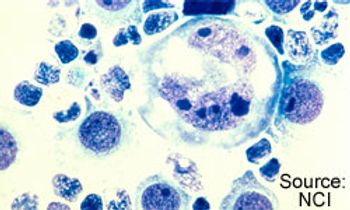
Several oral drugs are in development for both non-Hodgkin lymphoma (NHL) and mantle cell lymphoma (MCL). “There is different activity in different lymphoma types with different oral drugs and antibodies in development,†said Andrew D. Zelenetz, MD, PhD.
Renier J. Brentjens, MD, PhD, associate professor, chief, Cellular Therapeutics Center, Memorial Sloan-Kettering Cancer Center, discusses the differences between the CAR-modified T cells of three institutions.

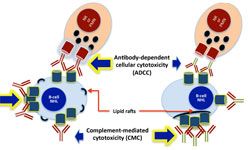
The FDA approval of two anti-CD20 antibodies—ofatumumab (Arzerra) and, just recently, obinotuzumab (Gazyva)—has greatly advanced the outlook for managing chronic lymphocytic leukemia.

Idelalisib is a potent and highly selective PI3K inhibitor that promotes apoptosis in primary cells from patients with different B-cell malignancies. Idelalisib has been shown to affect microenvironmental signaling and cell survival both in vitro and in vivo.
Richard R. Furman, MD, Richard A. Stratton Assistant Professor in Hematology and Oncology, Weill Cornell Medical College, gives an overview of the efficacy and safety of idelalisib and rituximab for previously treated CLL.

Ayalew Tefferi, MD, hematologist, Mayo Clinic, Rochester, Minnesota, discusses the outlook for JAK inhibitors for patients with myelofibrosis.

A combination of rituximab (Rituxan) and the PI3K-delta inhibitor idelalisib was associated with a >70% improvement in overall survival (OS) in patients with high-risk relapsed/refractory chronic lymphocytic leukemia (CLL).

At the 55th Annual Meeting of the American Society of Hematology (ASH), several trials of ibrutinib both alone and in combination with currently used therapies for patients with chronic lymphocytic leukemia (CLL) were presented.

Results of a phase II trial showed that when treated with a reduced dose of the oral FLT3 receptor tyrosine kinase inhibitor quizartinib, nearly half of patients with relapsed/refractory acute myelogenous leukemia (AML) had complete remissions.

Brentuximab vedotin, an anti-CD30 monoclonal antibody, has demonstrated antitumor activity in the setting of relapsed or refractory diffuse large B-cell lymphoma (DLBCL) and has generated responses across a broad range of CD30 expression, including low or undetectable CD30 expression. Data from an ongoing phase II study were presented by Nancy Bartlett, MD, at the 55th annual meeting of the American Society of Hematology (ASH).
Jennifer E. Amengual, MD, discusses the study she presented at the 2013 American Society of Hematology (ASH) Annual Meeting. The trial analyzed dual targeting with the HDAC inhibitor ACY-1215 and bortezomib in preclinical models of lymphoma.

In patients with previously untreated chronic lymphocytic leukemia (CLL) who are considered inappropriate for fludarabine, the addition of ofatumumab to chlorambucil improves clinical outcomes and is tolerable irrespective of patient age or fitness.