
HEMATOLOGY
Latest News
Latest Videos




CME Content





























More News
John C. Byrd, MD, a professor of Medicine at The Ohio State University Comprehensive Cancer Center, discusses updates in the treatment of CLL.

Frits van Rhee, MD, PhD, MRCP, professor of medicine, Myeloma Institute for Research and Therapy, University of Arkansas for Medical Sciences, discusses treatment options for multicentric Castleman's disease.

The investigational CD19-targeted chimeric antigen receptor (CAR) therapy CTL019 has received a breakthrough therapy designation from the FDA as a potential treatment for pediatric and adult patients with relapsed/refractory acute lymphoblastic leukemia (ALL).
Timothy S. Pardee, MD, discusses comorbidities, age, and outcomes among intensively treated patients with acute myeloid leukemia (AML).
In the spring of 2014, a search of the clinicaltrials.gov web site with the key words acute myeloid leukemia and phase II, III returned a list of just over 340 open studies. Most of those trials involving novel agents can be grouped into 1 of 2 general categories: immunomodulators or kinase inhibitors.
B-cell malignancies include non-Hodgkin lymphomas (NHL) and chronic lymphocytic leukemia (CLL). NHLs are a heterogeneous group of more than 30 cancers of B lymphocytes and T lymphocytes.
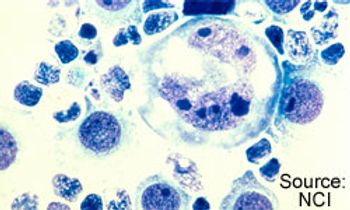
Follicular lymphoma is the malignancy of germinal center B cells in the lymph nodes. It is the second most commonly diagnosed non-Hodgkin’s lymphoma, accounting for approximately 35% of all such cases.
John C. Byrd, MD, a professor of Medicine at The Ohio State University Comprehensive Cancer Center, discusses resistance to ibrutinib.
Anas Younes, MD, chief, Lymphoma Service, Memorial Sloan Kettering Cancer Center, discusses IPI-145 and ABT-199 for the treatment of lymphoid malignancies.

Creating new treatment options for CLL, particularly for high-risk patient populations such as those with fludarabine-refractory disease or with 17p deletions, is the goal of an intense effort by clinical researchers and pharmaceutical companies.

A Q&A with Jacqueline Claudia Barrientos, MD, assistant professor at Hofstra North Shore-LIJ School of Medicine, New York.
Julian Adams, PhD, president, Research and Development, Infinity Pharmaceuticals, discusses the rationale for a phase II trial looking at IPI-145 for the treatment of patients with refractory indolent non-Hodgkin lymphoma.

Anas Younes, MD, chief, Lymphoma Service, Memorial Sloan Kettering Cancer Center, discusses a phase III trial of brentuximab vedotin plus doxorubicin, vinblastine, and dacarbazine (A+AVD) versus doxorubicin, bleomycin, vinblastine, and dacarbazine (ABVD) as front-line treatment for advanced classical Hodgkin lymphoma.

The FDA has approved the novel pan-HDAC inhibitor belinostat for the treatment of patients with relapsed or refractory peripheral T-cell lymphoma.
The FDA has granted a breakthrough therapy designation to blinatumomab for the treatment of adult patients with Philadelphia-negative relapsed/refractory B-precursor acute lymphoblastic leukemia (ALL).
Timothy S. Pardee, MD, discusses the results of a phase I study of the mitochondrial metabolism inhibitor CPI-613 for relapsed or refractory acute myeloid leukemia (AML).
Joseph Jurcic, MD, head, Hematologic Malignancies, Columbia University Medical Center, discusses using radioimmunotherapy as a treatment option for patients with AML.
Jonathan Riess, MD, MS, Assistant Professor of Medicine, Hematology and Oncology, UC Davis Comprehensive Cancer Center, discusses a population-based study of incidence and survival trends of 1261 thymic malignancies from the California Cancer Registry.
The FDA has approved the radioactive diagnostic imaging agent Lymphoseek injection to guide sentinel lymph node biopsy in patients with cancer of the head and neck.

Joseph M. Flynn, DO, MPH, co-director, Division of Hematology; co-director, LIVESTRONG Survivorship Center of Excellence; medical director, James Survivorship Clinics, The Ohio State University, James Cancer Hospital, discusses the results of the phase II GAGE study, which compared 1000 mg vs 2000 mg of obinutuzumab in patients with chronic lymphocytic leukemia (CLL).

The novel agents idelalisib and ABT-199 in combination with rituximab have demonstrated impressive activity with manageable toxicity for patients with relapsed or refractory chronic lymphocytic leukemia (CLL).
Jennifer Woyach, MD, assistant professor of Internal Medicine, Division of Hematology, The Ohio State University Comprehensive Cancer Center, discusses the efficacy findings from the RESONATE trial, a phase III trial that compared ibrutinib versus ofatumumab in relapsed or refractory (R/R) chronic lymphocytic leukemia/small lymphocytic lymphoma.

Ian W. Flinn, MD, PhD, director, Hematologic Malignancies Research Program, Sarah Cannon Research Institute, gives an overview of two ongoing clinical trials looking at IPI-145 for the treatment of hematologic malignancies.
Filip Janku, MD, PhD, discusses a trial presented at the 2014 ASCO Annual Meeting looking at the activity of the mTOR inhibitor sirolimus and HDAC inhibitor vorinostat in heavily pretreated patients with refractory Hodgkin lymphoma.
Treatment with single-agent ibrutinib (Imbruvica) dramatically increased progression-free survival (PFS) by nearly 80% and significantly extended overall survival (OS) by 57% compared with ofatumumab in patients with relapsed or refractory chronic lymphocytic leukemia (CLL).