



Renal Cell Carcinoma
Latest News
Latest Videos



CME Content





























More News

Thomas A. Gallo, MS, MDA, president of the Association of Community Cancer Centers, discusses his mission as president to “reflect, renew, and reignite” in order to create a more resilient oncology team for the community.

Larotrectinib induced an objective response rate of 80% in patients with advanced solid tumors who harbored <em>NTRK </em>gene fusions, according to results pooled from 3 small trials of the TRK inhibitor. Results were presented during the 2018 ESMO Congress.
A combination of an immune checkpoint inhibitor and a VEGF inhibitor, avelumab and axitinib, induced 2-fold higher objective response rates compared with sunitinib in patients with treatment-naïve advanced renal cell carcinoma, regardless of their PD-L1 expression. Progression-free survival was also significantly improved over sunitinib, according to findings from the phase III JAVELIN Renal 101 trial presented at the 2018 ESMO Congress.
Brian Rini, MD, professor of medicine, Cleveland Clinic, discusses subgroup findings from the IMmotion151 trial in metastatic renal cell carcinoma.

Rising prescription drug prices continue to add to the burden of paying for quality healthcare. In an effort to confront such costs, the Centers for Medicare & Medicaid Services has rescinded a prohibition on step therapy for Medicare Advantage plans. But some contend such a policy will reduce patient access to optimal medication.
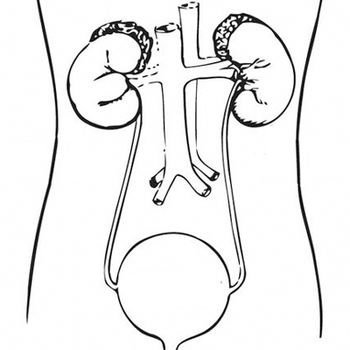
Patients with advanced or metastatic renal cell carcinoma who were treated with the combination of pembrolizumab (Keytruda) and axitinib (Inlyta) demonstrated a significantly improved survival benefit compared with sunitinib (Sutent) in the first-line setting, meeting the endpoints of the pivotal phase III KEYNOTE-426 trial.
Bradley McGregor, MD, discusses the impact of combination therapies on the treatment landscape of renal cell carcinoma.

<br /> Shilpa Gupta, MD, assistant professor in the Hematology, Oncology, and Transplantation Division at the University of Minnesota, discusses the potential for triplet regimens in the treatment of patients with renal cell carcinoma.
Long-term metastatic control is an important goal for patients with high-risk renal cell carcinoma after nephrectomy. In recent years, adjuvant therapy with tyrosine kinase inhibitors has entered the picture to potentially fill this unmet need.
Progression-free survival was significantly improved in treatment-naïve patients with advanced renal cell carcinoma by combining the PD-L1 inhibitor avelumab (Bavencio) with the VEGF inhibitor axitinib (Inlyta) compared with sunitinib, according to findings from the phase III JAVELIN Renal 101 study.
The presence of biomarkers including SDF-1, VEGF-A, and sVEGFR1 and 2 at baseline were associated with poorer progression-free survival and overall survival in patients with metastatic renal cell carcinoma treated with sunitinib prior to nephrectomy.

Daniel J. George, MD, professor of medicine and surgery at Duke Cancer Institute, discusses his rationale for choosing patients with renal cell carcinoma that should receive adjuvant sunitinib therapy.



Perspective on the Treatment of Advanced Renal Cell Cancer


