The FDA has lifted a partial clinical hold on the phase 1 clinical trials of PRS-343 for solid tumors.
The FDA has lifted a partial clinical hold on the phase 1 clinical trials of PRS-343 for solid tumors.
The FDA accepted a supplemental Biologics License Application for nivolumab as adjuvant treatment of patients with resected esophageal or gastroesophageal junction cancer after neoadjuvant chemoradiation therapy and granted it Priority Review.

Cancer mortality has been on a continuous decline since its peak in 1991, resulting in an overall reduction of 31% in the mortality rate and approximately 3.2 million fewer cancer deaths in the United States.

In an interview with Targeted Oncology, Naveen Pemmaraju, MD, discussed the potential role of an add-back strategy as treatment of patients with myelofibrosis who no longer benefited from prior ruxolitinib.

In an interview with Targeted Oncology, Maria E. Cabanillas, MD, discussed the use of larotrectinib as treatment of patients with thyroid cancer and the pooled findings from 2 larotrectinib trials.

Andrew X. Zhu, MD, PhD, discusses the final results from the phase 3 ClarIDHy study of ivosidenib versus placebo as treatment of patients with previously treated cholangiocarcinoma and an IDH1 mutation.
Camrelizumab in combination with apatinib demonstrated encouraging clinical efficacy as a second-line treatment of patients with esophageal squamous cell carcinoma and demonstrated acceptable safety in a single-arm, open-label phase 2 clinical trial.
In an interview with Targeted Oncology, Vivek Subbiah, MD, discussed the role of selpercatinib as treatment of patients with RET fusion-positive NSCLC, which is supported by findings from the LIBRETTO-001 study.
Gallium-68 prostate-specific membrane antigen PET imaging demonstrated the ability to detect metastatic thyroid cancer but resulted in a lower detection rate compared with 2-[18F]FDG PET for thyroid cancer lesion visualization.

Myriam Chalabi, MD, discussed the utility of microsatellite instability testing in gastrointestinal cancers and highlights the current role of immunotherapy for these patient populations.
Patients with tissue tumor mutational burden-high solid tumors represent a subset of patients who could have a robust tumor response to the immune checkpoint inhibitor pembrolizumab as monotherapy, suggesting tTMB may be a novel and useful predictor of response in patients with previously treated recurrent or metastatic advanced solid tumors, including thyroid cancer.
The FDA granted 2 Fast Track designations to the cavrotolimod for 2, including in combination with anti-PD-1 therapy in patients with locally advanced or metastatic Merkel cell carcinoma who are refractory to prior anti-PD-1 blockade and in combination with anti-PD-1/PD-L1 in patients with locally advanced or metastatic cutaneous squamous cell carcinoma who are refractory to prior anti-PD-1/PD-L1 blockade.
In an interview with Targeted Oncology, Nina Shah, MD, discussed the findings from the KarMMA study supporting the use of idecabtagene vicleucel as treatment of patients with multiple myeloma.
The FDA granted an Orphan Drug designation to the novel immunotherapy PVSRIPO for the treatment of patients with advanced melanoma of stage IIB-IV.
Ten-year overall survival is low among patients with acute myeloid leukemia , but an analysis demonstrated that survival is shorter for older patients treated with chemotherapy alone, according to published findings.
Noelle G. Cloven, MD, discussed the current cervical cancer treatment paradigm, the unmet needs that still remain to be addressed, and encouraging new directions of research in clinical trials in honor of Cervical Cancer Awareness Month.
A review of the trending news in oncology online for the week of January 8, 2021, including recent news from the FDA on the cancer treatment paradigm, updates in oncology, and the latest information regarding COVID-19.
In an interview with Targeted Oncology, Amitkumar Mehta, MD, discussed the findings for the PI3Kδ inhibitor parsaclisib as treatment of patients with relapsed/refractory mantle cell lymphoma.
In an interview with Targeted Oncology, Vanessa Kazanietz, MD, discussed the findings from a study exploring the correlation between thyroid toxicity and response to immunotherapy as treatment of patients with metastatic non-small cell lung cancer.
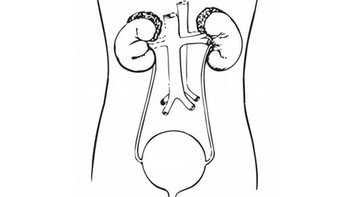
The role of immunotherapy, HIF-2α inhibitors, and CDK4/6 inhibitors appear encouraging for the treatment of patients with kidney cancer following recent research on targeting von Hippel-Lindau disease-associated renal cell carcinoma.
The FDA lifted the partial clinical hold that was placed on a phase 2 study of MT-401 as treatment of patients with post-transplant acute myeloid leukemia.
An Independent Data Monitoring Committee has recommended the pivotal phase 3 SIERRA study continue as planned to full enrollment of 150 patients based on the findings from a pre-planned ad hoc interim analysis of the study.
The FDA deferred action on the Biologics License Application for the potential biosimilar of bevacizumab, MYL-1402O, due to travel restrictions related to COVID-19 that prohibited the agency from completing an inspection of the manufacturing facility, as required by the standard review process.
The FDA has granted a Breakthrough Therapy designation to tiragolumab in combination with atezolizumab for the frontline treatment of patients with metastatic non – small cell lung cancer whose tumors have high PD-L1 expression and no EGFR or ALK genomic aberrations.

In an interview with Targeted Oncology, Richard S. Finn, MD, discussed the real-world data from the REFINE study, which is exploring the outcomes of patients with unresectable hepatocellular carcinoma who received treatment with regorafenib.
The FDA granted a Fast Track designation to ARX788 as a single agent for the treatment of patients with advanced or metastatic HER2-positive breast cancer who received at least 1 prior anti-HER2 regimen in the metastatic setting.
Bristol Myers Squibb has withdrawn the indication of nivolumab for the treatment of patients with small cell lung cancer who had disease progression after a platinum-based chemotherapy and at least 1 other line of therapy from the US market following a consultation with the FDA.
In a phase 1b clinical trial presented during the 2020 American Society of Hematology Annual Meeting, investigators sought to determine the efficacy and safety of the novel TIM-3–targeting IgG4 antibody sabatolimab in combination with hypomethylating agents as treatment of patients with acute myeloid leukemia, as well as high-risk myelodysplastic syndrome.
In an interview with Targeted Oncology, Ira Winer, MD, PhD, discussed the findings from the ARTISTRY-1 and ARTISTRY-2 studies, exploring the safety and efficacy of ALKS 4230 as treatment of patients with gynecologic cancers as well as other solid tumors.
In an interview with Targeted Oncology, Rajat Bannerji, MD, PhD, discussed the early and encouraging findings from a novel bispecific antibody for the treatment of patients with follicular lymphoma and diffuse large B-cell lymphoma.
August 20th 2020

October 9th 2020