Articles by Arjun V. Balar, MD
A post hoc analysis from the IMvigor010 study evaluating circulating tumor ctDNA in patients receiving adjuvant atezolizumab in high-risk muscle-invasive urothelial cancer after surgery was presented at the European Society of Medical Oncology Immuno-Oncology Virtual Congress in 2020.

Arjun V. Balar, MD, co-physician editor in chief of Targeted Therapies in Oncology, discusses the proceedings of the 3-day Oncologic Drug Advisory Committee meeting on accelerated approvals for PD-1/PD-L1 antibodies in solid tumor indications that failed to show confirmatory benefit.
It is not uncommon to have studies of nearly identical agents in nearly identical settings yield conflicting results, says Arjun V. Balar, MD.

Immune checkpoint blockade has revolutionized cancer therapy and led to improved outcomes and possibly even cures in the metastatic setting once thought to be unattainable.
The economic impact of the pandemic, which is still taking shape, will likely lead
to many patients being uninsured, resulting in less access to medical care and ultimately culminating in an uptick in cancer-related mortality in the years ahead.
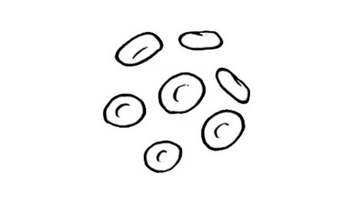
The CLOVER-1 study is testing CLR 131 in patients with relapsed or refractory non-Hodgkin lymphoma, including lymphoplasmacytic lymphoma and Waldenström macroglobulinemia.
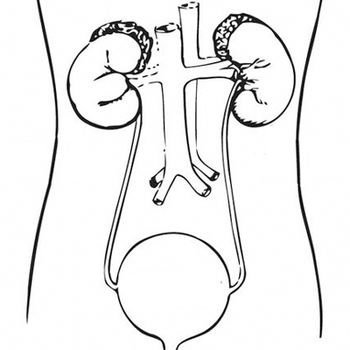
Arjun V. Balar, MD, reviewed the data from the KEYNOTE-057 and how they impact the treatment of urothelial cancer in an editorial note.
Much of the most important work that must be done during the development of a new cancer medication is often accomplished long after FDA approval, wrote Arjun V. Balar, MD.

Results from the study, JAVELIN Bladder 100, demonstrated that in patients who have achieved stable disease or better after first-line platinum-based chemotherapy, maintenance avelumab significantly improved both progression-free survival and overall survival compared with best supportive care alone.
"We will continue to find innovative ways to come together both in person and virtually to more widely disseminate valuable information regarding important advances in cancer research."

Building upon the initial successes of anti–PD-1 and anti–CTLA-4 therapies has been a major focus of drug development over the past several years—basically, in search of other agents that could generate “immune-synergy.” What the term means and implies is critically important: It refers to drugs that work better together than alone (or in sequence) through their individual mechanisms of action to enhance the host immune-response to cancer.

In solid tumor oncology, an evolving treatment paradigm is getting more and more attention—and no, I’m not referring to immunotherapy. In localized solid tumors, surgery is often a standard of care, with intent being toward cure.
The results of multiple studies suggest that bacteria may influence both cancer growth and the immune system, with certain species linked to improved immune surveillance of cancer. Some bacteria interact with the host’s immune system through paracrine factors to shape the immune system’s response to cancer.
Even as supplies of bacillus Calmette-Guérin, a standard of care for many patients with non–muscle invasive bladder cancer, continue to dwindle, oncologists have undertaken some desperate measures to continue the care they have been providing to their patients.
PET imaging modalities such as fluciclovine PET, choline PET, and more recently PSMA-PET are more sensitive in the detection of both soft tissue and bone metastases. These newer modalities have the potential to better identify patients who are eligible for targeted treatment of oligometastases with radiation or treatments more appropriate for immediate systemic androgen deprivation, according to Arjun V. Balar, MD.
The recent approval of erdafitinib has significant implications for the field, says Arjun V. Balar, MD. It marks the most recent in a string of FDA approvals in urothelial carcinoma after nearly 3 decades of little to no advancement but is, importantly, the first targeted therapy in UC, which should open the door for more biomarker-driven drug discovery.
Arjun V. Balar, MD, discusses key findings from updated data from the interim analysis of KEYNOTE-057, a phase II single-arm trial of pembrolizumab (Keytruda) in Bacillus Calmette-Guérin-unresponsive, high-risk nonmuscle-invasive bladder cancer, which he presented during the the 2019 Genitourinary Cancers Symposium.
Arjun V. Balar, MD, co-physician editor in chief of <em>Targeted Therapies in Oncology</em>, discusses recent data for bone-seeking radiopharmaceuticals in prostate cancer.
Arjun V. Balar, MD, discusses a few approaches for incorporating immunotherapy treatments into the frontline for patients with bladder cancer.

In this editorial note from Arjun V. Balar, MD, he discusses how the KEYNOTE-57 findings have impacted the treatment landscape for Bacillus Calmette-Guérin—refractory, high-risk nonmuscle invasive bladder cancer.
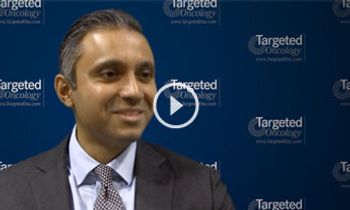
Arjun V. Balar, MD, discusses some combinations currently being investigated in clinical trials for patients with bladder cancer.
I think one of the most important advancements in biomedical technology that has improved our understanding of the complexities of cancer is the ability to sequence the cancer genome for any individual patient, in a rapid and cost-effective manner, to help us make treatment decisions in the clinic.
In this letter from the editor, Targeted Therapies in Oncology Editor-in-Chief, Arjun V. Balar, MD, reflects on patient advocacy and those that support patients with cancer.
Arjun V. Balar, MD, Editor-in-Chief of Targeted Therapies in Oncology, discusses the plenary session at. the 2018 ASCO Annual Meeting. Findings from the CARMENA trial in metastatic clear cell renal cell carcinoma were presented.
Urothelial cancer is a disease of older individuals, with a median age of 70, and comprises a population burdened with significant medical comorbidities. For those ineligible for cisplatin, the outcomes are undeniably poor, even with carboplatin. The advent of immunotherapy provided a very-well-tolerated option that could lead to durable remissions and, most importantly, expanded the treatable population with this disease.
On May 18, 2018, the FDA released a safety alert concerning decreased survival observed in 2 separate ongoing first-line randomized clinical trials of checkpoint inhibitors in metastatic urothelial cancer for patients treated in the monotherapy arms with low PD-L1 expression compared with patients who received cisplatin- or carboplatin-based chemotherapy.
Editori-in-Chief of <em>Targeted Therapies in Oncology </em>discusses the importance of KEYNOTE-189 which investigated whether the best frontline treatment for any patient is chemotherapy, immunotherapy, or a combination of the 2. Data from the IMpower150 and CheckMate 227 also investigate this question in various patient populations.
Arjun V. Balar, MD, joins <em>Targeted Therapies in Oncology™</em> to cover the latest developments in cancer therapies that will span new and emerging agents and classes including targeted therapies, immunotherapies, biologics, and cytotoxics, as well as continue to focus on efforts to improve patient selection using biomarkers.
It is truly an exciting time in cancer research and drug development and it’s a privilege to be able to join Targeted Therapies in Oncology™ and assist an outstanding team of editors and writers to disseminate the most up-to-date, timely and clinically relevant information in this fast-paced era.
For decades and even to this day, the foundation of metastatic bladder cancer therapy has been cytotoxic chemotherapy. In fact, until recently, the most significant breakthrough in treatment was in the 1980s, when cisplatin-based therapies, specifically MVAC, became the new standard of care.