


Renal Cell Carcinoma
Latest News
Latest Videos






CME Content





























More News

The FDA granted approval to countless treatments across cancer types throughout 2019 until the end of the year, with a final approval on December 31<sup>st </sup>for the first BRCA targeted therapy in pancreatic cancer. Following the excitement for a new year of further advances, Targeted Oncology followers on Twitter shared their thoughts on some of the most impactful FDA approvals in 2019.
Individuals with obesity who were diagnosed with locally advanced or metastatic clear cell renal cell carcinoma achieved longer overall survival than patients of normal weight in select groups of an independent cohort study, which evaluated overall survival and the transcriptomic differences in the primary tumor and peritumoral adipose tissue in adult patients with metastatic clear cell renal cell carcinoma.







Frontline TKI in Intermediate-Risk Renal Cell Carcinoma
In patients whose solid<strong> </strong>tumors harbor a mutation in <em>KRAS </em>G12C, therapy with MRTX849 has produced promising responses and acceptable toxicity across 3 tumors types, according to data presented at the 2019 American Association for Cancer Research–National Cancer Institute–European Organization for Research and Treatment of Cancer International Conference on Molecular Targets and Cancer Therapeutics.
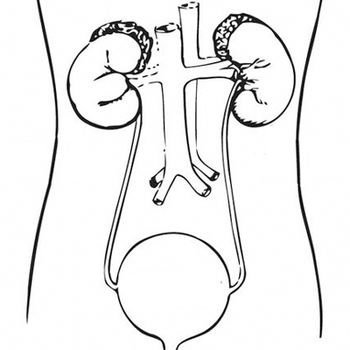
Cytotoxic chemotherapy has shown limited efficacy in metastatic RCC, but immunotherapeutic and antiangiogenic approaches have introduced promising treatment modalities. The use of immunotherapy has made a significant impact on the treatment of patients with RCC, first with single agents and then with combination regimens.
In an interview with Targeted Oncology during the 2019 Kidney Cancer Research Summit, Wayne A. Marasco, MD, PhD, discussed the intricacy of engineering CAR T cells and the early data he has observed with the approach in RCC.
Findings from a planned interim analysis of the Ib/II Study 111 showed that lenvatinib plus pembrolizumab induced a disease control rate of 94% in patients with metastatic clear cell RCC who had disease progression following treatment with a PD-1/PD-L1 inhibitor.
Chung-Han Lee, MD, PhD, medical oncologist, Memorial Sloan Kettering Cancer Center, discusses the rationale for the phase II study of lenvatinib plus pembrolizumab for disease progression after PD-1/PD-L1 immune checkpoint inhibitor in metastatic clear cell renal cell carcinoma.<br />
Patients with advanced renal cell carcinoma assigned to nivolumab plus ipilimumab had a longer treatment-free survival than patients treated with sunitinib. Furthermore, those patients assigned to the combination spent less time experiencing treatment-related adverse events.
In an interview with Targeted Oncology at the IKCS meeting, Gennady Bratslavsky, MD, provided his expert opinion on the optimal first-line therapy for non–clear cell renal cell carcinoma, a topic he debated on with peers at the 2019 International Kidney Cancer Symposium.

Martin H. Voss, reviews the method of design and results for the phase I/II study of the experimental anti–PD-1 anitbody MEDI0680 plus durvalumab versus nivolumab monotherapy in patients with metastatic clear cell renal cell carcinoma.<br />
In an interview with Targeted Oncology during the 2019 International Kidney Cancer Symposium, Yinghong Wang, MD, PhD, MS, discussed the management of gi-related toxicity in patients with kidney cancer from the perspective of a gastrointestinal specialist. She also explained the multidisciplinary collaboration between oncology and gastrointestinal departments to enhance care.
Massachusetts General Hospital in Boston established its immunotherapy toxicity service care team in part because of the experience of David M., a patient treated there for metastatic melanoma that spread to the lung and brain.
Treating clear cell renal cell carcinoma with immune checkpoint inhibitors resulted in vascular changes that may make these tumors more vulnerable to combinations of ICIs and VEGF inhibitors, according to data presented at the 18th International Kidney Cancer Symposium.
Immunotherapy combination regimens have revolutionized the first-line treatment paradigm for patients with clear cell renal cell carcinoma, explained Robert J. Motzer, MD, at the <em>37th Annual</em> CFS.
Following a meeting with the FDA, AVEO Oncology has decided to push back the planned New Drug Application submission for tivozanib to the first quarter of 2020 and to narrow for the proposed indication for tivozanib to the treatment of relapsed or refractory renal cell carcinoma, according to a press release from the company.