



Renal Cell Carcinoma
Latest News
Video Series
Latest Videos


Shorts
0:30
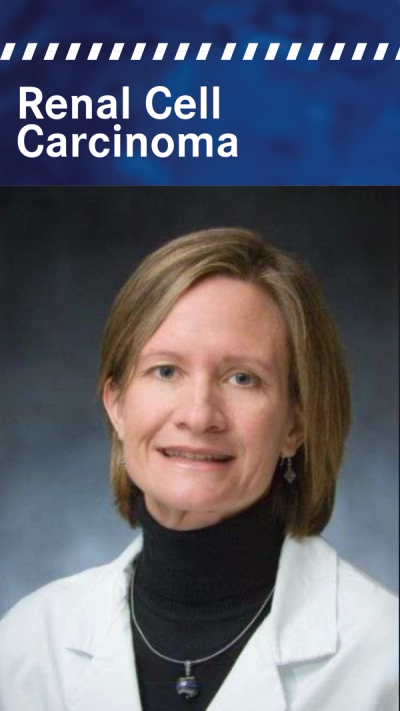
Who Should Get Neoadjuvant Therapy in RCC
a month ago
by
Naomi Haas, MD
0:44
Adjuvant Therapy in Non-Clear Cell RCC
a month ago
by
Naomi Haas, MD
0:50
Don't Over-Treat Based on Risk Scores
a month ago
by
Rami Komrokji, MD
0:42
Understanding MDS Staging and the Path to Cure
a month ago
by
Rami Komrokji, MD
0:35
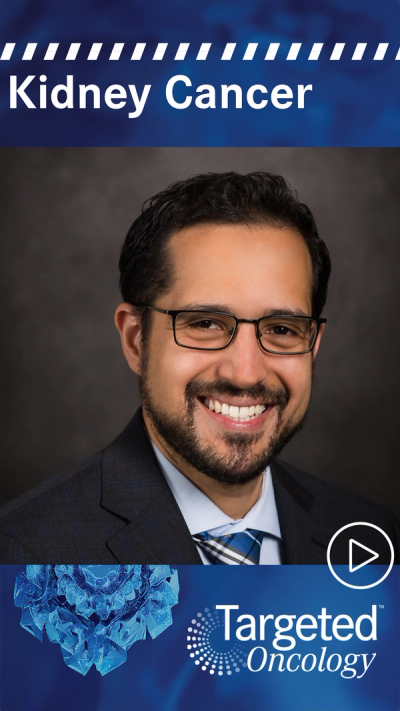
A Mass in the Right-Sided Kidney
a month ago
by
Pavlos Msaouel, MD, PhD
0:33
The Key Test to Confirm RMC Diagnosis is Immunohistochemistry for INI1
2 months ago
by
Pavlos Msaouel, MD, PhD

0:34
The Future of Personalized Kidney Cancer Treatment
2 months ago
by
Karie Runcie, MD
0:35
Impressive Durability in New Cancer Combo Therapy
2 months ago
0:40
A Breakthrough in Renal Cell Carcinoma Treatment
2 months ago
by
Yousef Zakharia, MD
0:38
Initial Assessments in Metastatic RCC
2 months ago
by
David Braun, MD, PhD
Podcasts



CME Content





























More News

KEYNOTE-564 follow-up shows OS and DFS gains with adjuvant pembrolizumab in high-risk ccRCC, plus guidance on relapse after therapy.

Use of the ProSense Cryoablation System in patients with kidney cancer resulted in an 83.9% recurrence-free rate among 112 patients in the ICESECRET clinical trial (NCT02399124).
During a live event, the benefit of adding nivolumab (Opdivo) to tivozanib (Fotivda) in the second-line setting was discussed by David Braun, MD, and participants.
Deepak Kilari, MD, shared his insights on recent trials in renal cell carcinoma presented at the 2026 ASCO Genitourinary Cancers Symposium.
The CYTOSHRINK trial showed that incorporating stereotactic body radiation therapy (SBRT) with ipilimumab and nivolumab did not enhance progression-free survival and resulted in a shorter median PFS compared to immunotherapy alone for advanced renal cell carcinoma.
Long-term CheckMate 9ER results show deeper tumor shrinkage with cabozantinib plus nivolumab and predicts longer survival and durable responses in advanced renal cell carcinoma.

The combination of durvalumab and tremelimumab improved disease-free survival compared with active monitoring, but efficacy came with increased toxicity.

Clinical validation results show changes in methylated circulating tumor DNA (ctDNA) measured prior to treatment initiation and before cycle 3 of therapy were strongly associated with objective response and clinical benefit.
The LITESPARK-024 trial showed a manageable safety profile for belzutifan and palbociclib in advanced RCC, but the response rate did not exceed that of historical single-agent belzutifan.

Findings from the phase 3 LITESPARK-011 trial favored belzutifan/lenvatinib vs cabozantinib in PFS and ORR.
NPX372 received Investigational New Drug Clearance from the FDA, allowing for clinical development.
During a live event, Sumanta K. Pal and other oncologists discuss the safety and efficacy of belzutifan for advanced renal cell carcinoma, highlighting management of anemia and hypoxia.
Experts discuss second-line treatment strategies for clear cell renal cell carcinoma, focusing on efficacy, tolerability, and the role of tivozanib.
During a live event, Kathryn E. Beckermann, MD, PhD, and participants discussed their approaches to TKI dose modification and immune checkpoint inhibitor rechallenge in advanced renal cell carcinoma.
During a live event, Kathryn E. Beckermann, MD, PhD, and participants discussed whether risk stratification factors into the choice of a combination regimen for advanced renal cell carcinoma.
XmAb819 shows promising antitumor activity and manageable safety in clear cell renal cell carcinoma patients, highlighting its potential in future therapies.
Immunotherapy shows significant survival benefits for metastatic chromophobe renal cell carcinoma patients with sarcomatoid features, suggesting a potential predictive biomarker.
During a live event, Moshe C. Ornstein, MD, MA, discussed the recommended regimens for non–clear cell renal cell carcinoma and evaluated the findings on dual immunotherapy in this setting.
A study reveals cabozantinib plus nivolumab shows a 71% response rate in fumarate hydratase-deficient renal cell carcinoma, promising survival outcomes.

High LAG3 expression in metastatic renal cell carcinoma enhances initial immunotherapy response but does not improve long-term survival outcomes.
During a live event, Moshe C. Ornstein, MD, MA, considered the trial design and outcomes of 2 trials of combination regimens for non–clear cell renal cell carcinoma.
A phase 1b/2 trial shows triplet therapy for advanced renal cell carcinoma is feasible but lacks significant response improvement over standard treatment.
The FDA grants fast track designation to a new noninvasive diagnostic agent for clear cell renal cell carcinoma, promising improved patient outcomes.
Research highlights promising advancements in renal cell carcinoma treatments, focusing on HIF-2α inhibitors and combination therapies for improved patient outcomes.
During a live event, Che-Kai Tsao, MD, MS, and participants considered the tolerability and efficacy benefits of high starting doses vs dose escalation with TKIs in renal cell carcinoma.