





SARCOMA
Latest News
Latest Videos




CME Content





























More News

Patients with sarcoma may respond to treatment with immune checkpoint inhibitors, but identifying patients who are most likely to respond to this therapy is an ongoing obstacle and suggests the need for further research.

There remains a need for biomarkers of primary gastrointestinal stromal tumor subclones to characterize invasion or metastasis, according to Jonathan A. Fletcher, MD.
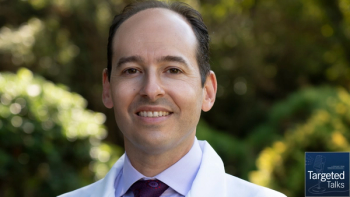
In season 3, episode 2 of Targeted Talks, Mark Agulnik, MD, discusses molecular testing for patients with sarcoma, treatment with targeted therapies, and ongoing research.

SPEAR T-Cell Therapy Induces Durable Responses in Synovial Sarcoma and Myxoid/Round Cell Liposarcoma
For patients with advanced synovial sarcoma or myxoid/ round cell liposarcoma, afamitresgene autoleucel is a promising novel therapy.

Results presented during the 2022 January ASCO Plenary Series showed that ripretinib did perform better than sunitinib in terms of the objective response rate, and the safety profile of the drug was favorable compared with sunitinib.

Devimistat shows therapeutic potential in patients with clear cell sarcoma after dose-escalation ends with no observed dose-limiting toxicities.
IMX-110 may soon be granted fast track designation for the treatment of rhabdomyosarcoma children.

In season 2, episode 10 of Targeted Talks, Sandra P. D'Angelo, MD, and Katherine Poruk, MD, discuss frontline treatment practices in the sarcoma space.
FDA approval has been granted to nab-sirolimus for intravenous use as treatment of patients with advanced malignant perivascular epithelioid cell tumors.
A California-based study of devimistat plus hydroxychloroquine for soft tissue sarcoma has enrolled its first patient.
A phase 1b/2 study has shown an 80% clinical activity rate with liposomal annamycin as treatment of soft tissue sarcoma lung metastases.
Following its success in acute myeloid leukemia and other cancers, devimistat is being explored as a treatment option for clear cell sarcoma in a phase 1/2 trial.
Phase 2 data show that tyrosine kinase inhibitors can be combined with chemotherapy to improve outcomes in patients with relapsed or refractory osteosarcoma.
The first patient has been dosed in a trial of FHD-609, a selective protein degrader of bromodomain-containing protein 9, for the treatment of synovial sarcoma.

An orphan drug designation has been granted to the CD40 agonistic monoclonal antibody, sotigalimab, for the treatment of patients with soft tissue sarcoma.

During the 2021 American Society of Clinical Oncology Annual Meeting, multiple trials for targeted treatments were presented for soft tissue sarcoma. Dean Frohlich, PhD, and Brian A. Van Tine, MD, PhD, discuss the the results of some of these presentations, including the Spearhead 1 trial.
The FDA has granted priority review to the New Drug Application for nab-sirolimus for consideration as a treatment for patients with advanced malignant perivascular epithelioid cell tumors.
Oral MDM2 Inhibitor Milademetan Enters Phase 3 Study for Patients with De-Differentiated Liposarcoma
A phase 3 study has been initiated in order to evaluate the efficacy of the oral MDM2 inhibitor milademetan for the treatment of de-differentiated liposarcoma.
The target number of patients with soft tissue sarcoma lung metastases have been enrolled in the phase 1b/2 study of Annamycin, commencing the recruiting portion of the trial.

New data from the phase 2 SPEARHEAD-1 trial showed that afami-cel can elicit encouraging responses in patients with advanced synovial sarcoma or myxoid/round cell liposarcoma.
Progression-free survival and disease control in patients with advanced synovial sarcoma was improved by catequentinib.
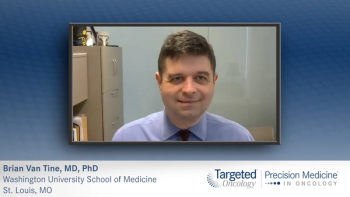
Brian Van Tine, MD, PhD, and Fadi Braiteh, MD, discuss unmet needs in the treatment of gastrointestinal stromal tumors (GISTs) and look to the future in terms of the evolving field.
Experts discuss the role of multidisciplinary management for patients with gastrointestinal stromal tumors (GISTs).
Implications for treating patients with gastrointestinal stromal tumors (GISTs) in the later lines of therapy after switching from 1 treatment to another.
Brian Van Tine, MD, PhD, and Fadi Braiteh, MD, discuss the current treatment options that are available for the treatment of gastrointestinal stromal tumor (GIST).