
SARCOMA
Latest News
Latest Videos




CME Content

























More News
In an interview with Targeted Oncology, Sandra P. D'Angelo, MD, discussed the approval and supporting data of afamitresgene autoleucel for the treatment of synovial sarcoma.
Edwin Choy, MD, PhD, discusses the mechanism of action of afamitresgene autoleucel and the recent accelerated approval from the FDA for patients with advanced synovial sarcoma.
Afamitresgene autoleucel is now an FDA-approved treatment for patients with advanced synovial sarcoma.

Juneko Grilley-Olson, MD, discussed findings from a phase 2 study investigating the addition of immunotherapy to chemotherapy for the treatment of advanced angiosarcoma.

Adam C. Berger, MD, FACS, highlights the challenges and advancements in diagnosing and treating sarcoma, a rare and diverse group of cancers originating from mesenchymal tissues.

Elizabeth Loggers, MD, PhD, discussed the phase 3 DeFi study exploring ovarian toxicity in female patients receiving nirogacestat for the treatment of desmoid tumors.
The first patient with metastatic sarcoma in the US has been treated with INT230-6 alone in the phase 3 INVINCIBLE-3 study.
Elizabeth Logers, MD, PhD, discusses the implications of ovarian toxicity on female patients of reproductive age being treated with nirogacestat for desmoid tumors.
The FDA has granted an orphan drug designation to tigilanol tiglate for the treatment of soft tissue sarcoma.
Early data of afamitresgene autoleucel suggest substantial benefits for those with advanced synovial sarcoma who haven't responded to other treatments.
Mark Agulnik, MD, discusses advances in determining the molecular drivers of the tumor in the sarcoma space.
In an interview with Targeted Oncology, Lisa B. Ercolano, MD, discussed the evolving treatment landscape for sarcomas and underscored the pivotal role of molecular profiling, while addressing the need for more efficacious systemic therapies.
According to findings presented at the Connective Tissue Oncology Society Annual Meeting, INT230-6 enhanced overall survival and disease control rates in relapsed, refractory, and metastatic sarcomas.
Lisa B. Ercolano, MD, discusses some of the advances that have been seen in the treatment of sarcomas.
INT230-6 is an investigational product candidate made up of cisplatin, vinblastine, and a penetration enhancer molecule being evaluated for patients with soft tissue sarcoma.
Various combination strategies are being explored in soft tissue sarcomas in efforts to increase efficacy.

For Sarcoma Awareness Month, Lisa B. Ercolano, MD, and Mark Agulnik, MD, discussed the importance of understanding the genomics of sarcomas and how molecular testing can be useful in this space.
Among patients with unresectable or metastatic undifferentiated pleomorphic sarcoma or myxofibrosarcoma, envafolimab generated positive efficacy data with a well-tolerated safety profile.
Treatment with INT230-6 alone led to extended survival among patients with soft tissue sarcoma by nearly 450 days, compared with synthetic controls, and demonstrated a favorable safety profile.

The combination of doxorubicin, balstilimab, and zalifrelimab has some early signals of activity in both immune hot and cold sarcoma subtypes with manageable toxicity.
Correlative work is ongoing following positive results from the phase 1 study of cabozantinib with nivolumab and ipilimumab.

No progression-free survival advantage was shown with milademetan compared with trabectedin in the phase 3 MANTRA study.
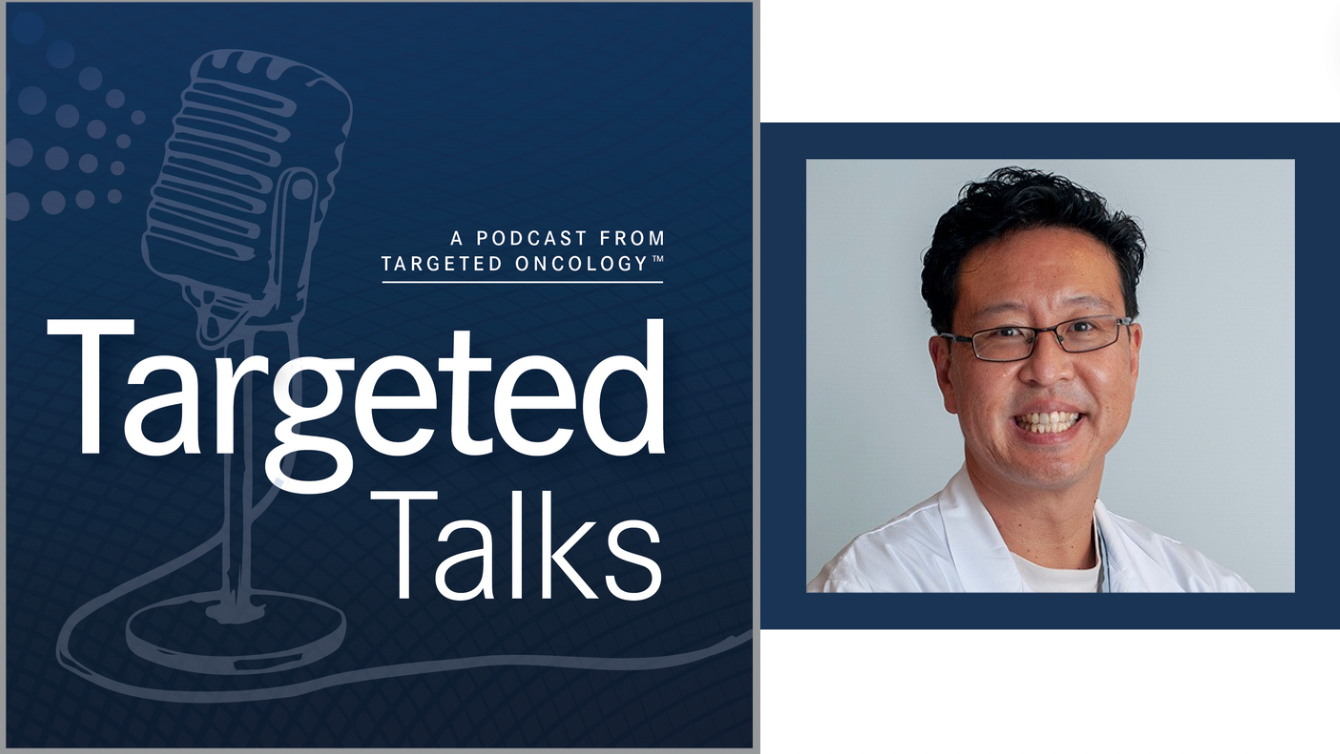
In season 4, episode 5 of Targeted Talks, Alice P. Chen, MD, discusses important studies that are investigating treatment options for alveolar soft part sarcoma.
According to Alice P. Chen, MD, the phase 2 study of atezolizumab alone or atezolizumab plus bevacizumab has a unique design.
A patient treated with the second highest dose level of FHD-609 had a grade 4 adverse event. Enrollment in the study of the agent in patients with synovial sarcoma or SMARCB-1 deleted tumors has been halted.