SARCOMA
Latest News

Ewing Sarcoma Survivors Largely Free of Long-Term Limitations, Study Finds
By Jason Harris
Latest Videos




CME Content





























More News
This section covers the Current Treatment Strategies section of the current Evolving Paradigms in Soft Tissue Sarcoma issue.

External beam radiation therapy (EBRT) lowers the risk of local recurrence in patients with either retroperitoneal or extremity sarcomas.
This section covers the Emerging Cytotoxic Agents, Current and Emerging Targets, and Emerging Therapies for Specific Histologies sections of the current Evolving Paradigms in Soft Tissue Sarcoma issue.
This section covers the Current Treatment Strategies section of the current Evolving Paradigms in Soft Tissue Sarcoma issue.
This section covers the Introduction and Epidemiology, Risk Factors, Detection and Diagnosis, and Staging and Prognosis sections of the current Evolving Paradigms in Soft Tissue Sarcoma issue.
Several subtypes of difficult-to-treat sarcomas may respond to treatment with PD-1 pathway inhibiting immunotherapies, according to findings of an immunohistochemistry analysis of a large patient population.
Sarcoma physician and researcher Robert G. Maki, MD, PhD, has joined the leadership team at Northwell Health Cancer Institute.
Elizabeth Loggers, MD, PhD, discusses the findings of the phase II SARC028 trial in sarcoma.
Nancy Gordon, MD, speaks about her osteosarcoma research, the next steps following the findings of the study, and what she envisions for the treatment landscape of osteosarcoma over the next decade.

Dimosthenis Andreou, MD, orthopedic oncologist, University Hospital Münster, discusses prognostic factors influencing local control in Ewing sarcoma.
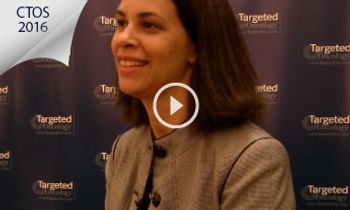
Breelyn Wilky, MD, recently sat down <em>Targeted Oncology</em> to discuss recent findings of a trial investigating axitanib and pembrolizumab in soft tissue sarcomas, as well as the role she envisions for immunotherapy in the treatment of sarcoma.

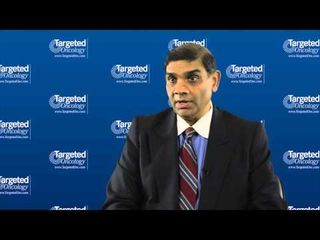
Kiran Turaga, MD, MPH, surgical oncologist, University of Chicago Cancer Center, speaks on distinguishing between the different subtypes of sarcomas.
According to updated study findings, pembrolizumab (Keytruda) reduced the size of tumors in patients with a subtype of soft tissue sarcoma.

A lower dose of radiation therapy following surgery did not improve limb function and was not found to be non-inferior compared with standard dose radiation 2 years post procedure in patients extremity soft tissue sarcoma.
TRC105, an endoglin antibody, combined with pazopanib showed promising anti-tumor activity in patients with advanced angiosarcoma, warranting the initiation of a phase III study to explore the combination further.<br />
Though surgical resection and radiation therapy remain at the forefront of the treatment for localized disease, accurately predicting outcomes for individual patients remains a challenge, which radiomics, an emerging research field, hopes to alleviate.
Olaratumab displayed anti-tumor activity both as a single-agent and in concert with standard of care chemotherapy in a study using human pediatric sarcoma cell-derived models and in human sarcoma cell transfected mice.
Pembrolizumab plus low dose metronomic cyclophosphamide demonstrated limited patient benefit in adult patients with diverse types of unresectable locally advanced or metastatic sarcoma.<br />
Elizabeth Loggers, MD, PhD, medical oncologist, Seattle Cancer Care Alliance, discusses the role that she expects immunotherapy will play in the future treatment landscape of sarcoma.
Clinical benefit, including partial response and stable disease, was observed in 11 of 20 patients with relapsed metastatic sarcoma following nivolumab treatment that was administered either alone or in combination with pazopanib.
Updated results of the multicenter phase II study SARC028 demonstrate both a favorable safety profile as well as encouraging efficacy for the use pembrolizumab (Keytruda) as a treatment for patients with advanced sarcomas.
Treatment with pembrolizumab, an immunotherapeutic agent approved in melanoma, lung, and head and neck cancer, and which is undergoing investigation in several other cancer types, reduced the size of tumors in patients with a specific soft tissue sarcoma.
Ian Judson, MD, medical oncologist, The Royal Marsden Hospital, discusses the future role of olaratumab in the treatment of patients with sarcoma.
Adjuvant chemotherapy was found to decrease the rates of local recurrence in some subtypes of extremity soft tissue sarcoma; however, the use of adjuvant/neoadjuvant therapy did not impact overall survival.
<br /> Local recurrence is associated with very poor prognosis in patients with Ewing sarcoma. Researchers are seeking to identify the factors associated with local recurrence in patients undergoing multimodal treatment.