SARCOMA
Latest News
Latest Videos

CME Content





























More News





George Demetri, MD, professor of medicine, Harvard Medical School, director of the Sarcoma Center, Dana Farber Brigham Women's Cancer Center, on the mutagenic properties of dacarbazine.
Robin Jones, BSc, MB, MRCP, MD, oncologist, Royal Marsden Hospital, London, discusses the effectiveness of monoclonal antibody olaratumab in combination with doxorubicin in metastatic soft tissue sarcoma.
William D. Tap, MD, discusses results from a phase Ib/II presented at the 2015 Connective Tissue Oncology Society (CTOS) Annual Meeting.

TRC105, an anti-endoglin antibody, demonstrated complementary antitumor effects with pazopanib, a VEGF inhibitor in the treatment of patients with soft tissue sarcomas.
The addition of olaratumab to doxorubicin improved overall survival (OS) by nearly 1 year in patients with advanced soft tissue sarcoma, according to final results of a phase Ib/II study.
Dr. Jonathan Trent discusses the FDA approval of trabectedin for patients with soft tissue sarcomas.
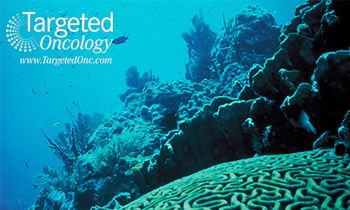
The storied history of Trabectedin, a treatment for metastatic liposarcoma or leiomyosarcoma, all starts in the shallow, warm waters of the ocean.
George Demetri, MD, talks about the benefits of utilizing trabectedin in patients with soft tissue sarcoma.
Advanced soft tissue sarcoma patients will now be able to receive trabectedin (Yondelis), which has been approved by the FDA after promising results from a phase III trial.
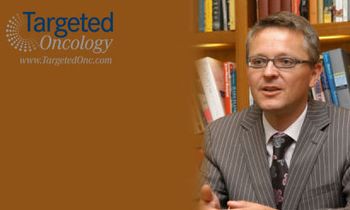
Eribulin mesylate (Halaven) has been granted an FDA priority review designation as a treatment for patients with advanced soft tissue sarcoma following chemotherapy.
A sarcoma study arm of the phase II portion of the multiarm PembroPlus clinical trial that combines immunotherapy with chemotherapy has commenced at Cancer Treatment Centers of America (CTCA), Western Regional Medical Center, Goodyear, Arizona

Second-line treatment with trabectedin improved progression-free survival by 2.7 months compared with dacarbazine in patients with advanced soft tissue sarcoma following prior treatment with an anthracycline.
Marking the first time a phase III study has shown a survival advantage for patients with soft tissue sarcoma, treatment with eribulin (Halaven) demonstrated improved overall survival (OS) by 2 months compared with dacarbazine in patients with advanced leiomyosarcoma (LMS) and adipocytic sarcoma (ADI).

The availability of mutation-specific treatments and an increasing understanding of potential resistance mechanisms have provided immense opportunities for research and development of new therapies in lung cancer.
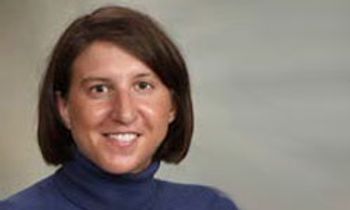
Soft tissue sarcomas are a rare and challenging group of malignancies of mesenchymal origin that have historically been treated with similar approaches.

David L. Rimm MD, PhD, from Yale School of Medicine, discusses the need for further research into tissue biomarkers in breast cancer.

William D. Tap, MD, discusses the potential to combine KIT and CTLA-4 blockade in patients with refractory GIST and other advanced sarcomas.

Sujana Movva, MD, medical oncologist, Fox Chase Cancer Center, discusses an analysis of chemotherapy administration and survival in soft tissue sarcoma.

Brian A. Van Tine, MD, PhD, assistant professor, Washington University School of Medicine in St. Louis, discusses some potential novel treatment modalities for the treatment of sarcoma.