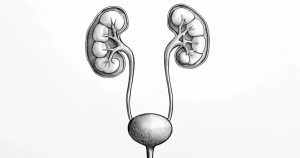
Naomi Haas, MD, shares her insights on the rapidly shifting landscape of adjuvant and neoadjuvant therapies in renal cell carcinoma.
Tony Berberabe, MPH, is the assistant managing editor for Targeted Therapies in Oncology. Berberabe received his Bachelor of Arts in Biology from Rutgers University and his Master of Public Health from the University of Medicine and Dentistry in New Jersey. He covers genitourinary cancers and myeloproliferative neoplasms. Contact him at aberberabe@targetedonc.com.
Naomi Haas, MD, shares her insights on the rapidly shifting landscape of adjuvant and neoadjuvant therapies in renal cell carcinoma.

The first patient has been dosed in a phase 1 trial (NCT05997615) of VIR-5500, a dual-masked PSMA-targeting T-cell engager for metastatic prostate cancer.
The FDA has granted fast track and rolling review status to Celltrion’s CT-P71, a Nectin-4 targeting ADC for treating advanced urothelial carcinoma.

The FDA has agreed on the design of two phase 3 trials of the antibody-drug conjugate CRB-701 in HNSCC and cervical cancer.

Learn the warning signs of renal medullary carcinoma—sickle cell trait, right-sided mass—and why INI1 testing changes therapy and survival.
Proton therapy showed an advantage in early toxicity mitigation vs radiotherapy in patients with oropharyngeal squamous cell carcinoma.

CMS has issued a permanent billing and reimbursement J-code, J9183, for the gemcitabine intravesical system (Inlexzo) in NMIBC.
The FDA has extended the deadline to review Orca-T for the treatment of myelodsyplastic syndromes and acute leukemias with a PDUFA date of July 6, 2026.
Transdermal estradiol offers fewer hot flashes and lower fracture rates, but higher rates of gynecomastia, as it meets the noninferiority bar against LHRH agonists.

Use of the ProSense Cryoablation System in patients with kidney cancer resulted in an 83.9% recurrence-free rate among 112 patients in the ICESECRET clinical trial (NCT02399124).
The FDA approved a label change for nadofaragene firadenovec-vncg (Adstiladrin) in non–muscle-invasive bladder cancer to improve preparation time.

The combination of selinexor and ruxolitinib achieved a statistically significant and sustained reduction in spleen volume compared with ruxolitinib alone in patients with JAK inhibitor treatment-naïve myelofibrosis, though symptom improvement was comparable across both arms.
Positive efficacy signals in progression-free survival (PFS) and objective response rate (ORR) did not translate into an overall survival (OS) benefit for first-line lenvatinib (Lenvima) plus pembrolizumab (Keytruda) in patients with recurrent or metastatic head and neck squamous cell carcinoma (HNSCC).
Nadofaragene firadenovec-vncg (Adstiladrin) received an expanded NCCN recommendation for patients with BCG-unresponsive NMIBC.
Early results from TALAPRO-3 suggest that the combination of talazoparib and enzalutamide may redefine the treatment paradigm for HRR gene-mutated mCSPC, demonstrating that targeting DNA damage repair earlier in the disease course substantially delays radiographic progression.
The combination of nogapendekin alfa inbakicept-pmln (Anktiva) and Bacillus Calmette-Guérin was added to the NCCN clinical guidelines for bladder cancer, according to the manufacturer.
Three-year follow-up data from the phase 3 RATIONALE-309 trial show that tislelizumab plus chemotherapy provides durable progression-free survival and a clinically meaningful overall survival advantage over placebo in recurrent or metastatic nasopharyngeal carcinoma.
Sacituzumab govitecan plus pembrolizumab may enable bladder preservation in MIBC.
A phase 3 trial evaluating TLX591-Tx (lutetium-177 (177Lu) rosopatamab tetraxetan) showed positive safety and toxicity profile in prostate cancer.
A supplemental Biologics License Application has been submitted for nogapendekin alfa inbakicept-pmln (Anktiva) plus BCG for patients with BCG-unresponsive non-muscle invasive bladder cancer with papillary tumors.

PIM-1 kinase inhibitors in myelofibrosis offer new targets to overcome relapsed and refractory disease.
The FDA has granted a priority review and accepted the NDA for rusfertide in PV.

Clinical validation results show changes in methylated circulating tumor DNA (ctDNA) measured prior to treatment initiation and before cycle 3 of therapy were strongly associated with objective response and clinical benefit.
AKY-1189 gains fast track designation in urothelial cancer.

The LITESPARK-024 trial showed a manageable safety profile for belzutifan and palbociclib in advanced RCC, but the response rate did not exceed that of historical single-agent belzutifan.

Findings from the phase 3 LITESPARK-011 trial favored belzutifan/lenvatinib vs cabozantinib in PFS and ORR.
An integrated analysis of the RETAIN-1 and RETAIN-2 trials demonstrates that circulating tumor DNA is a powerful prognostic indicator for metastatic recurrence in muscle-invasive bladder cancer.
Neoadjuvant enfortumab vedotin plus pembrolizumab significantly improved event-free survival and overall survival compared with gemcitabine plus cisplatin.
Findings from the phase 1 PAnTHA study demonstrate that actinium-225 was well tolerated with encouraging responses in patients with metastatic castration-resistant prostate cancer.
The phase 2 BRCAAway trial demonstrated that abiraterone acetate, prednisone, and olaparib significantly improves progression-free survival and overall survival compared with either agent used alone or sequentially in patients with metastatic castration-resistant prostate cancer harboring BRCA1/2 or ATM alterations.

Published: March 27th 2026 | Updated: April 2nd 2026

Published: October 29th 2025 | Updated: October 30th 2025

September 10th 2025