Commentary|Articles|April 6, 2026
The Hidden Kidney Cancer: A Rare Threat to Young Athletes
Author(s)Tony Berberabe, MPH, Pavlos Msaouel, MD, PhD
Listen
0:00 / 0:00
Learn the warning signs of renal medullary carcinoma—sickle cell trait, right-sided mass—and why INI1 testing changes therapy and survival.
For most patients diagnosed with kidney cancer, the standard playbook is clear. Immunotherapy and targeted therapies directed against blood vessel growth have revolutionized treatment, offering hope even in advanced cases. But for a rare and aggressive kidney cancer known as renal medullary carcinoma, or RMC, that same playbook can be dangerous. In fact, standard treatments may actually feed the disease.
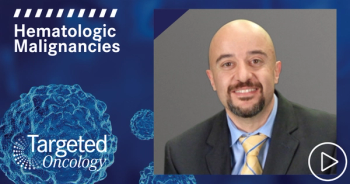
In an interview with Targeted Oncology, Pavlos Msaouel, MD, PhD, an associate professor at The University of Texas MD Anderson Cancer Center in Houston, shared his insights on this rare subtype of renal cell carcinoma.
RMC is a cancer that strikes young individuals, typically between the ages of 12 and 45, with a median age of just 29 years old, according to the interview transcript. In the United States, it disproportionately affects people of African descent, not because of race itself but because of the high prevalence of sickle cell trait within this population.1 Approximately 70% to 75% of cases present with a right-sided kidney mass, making RMC the only kidney cancer that prefers one side over the other.2
“You should always think of RMC when you see a young individual in the US of African descent, male, typically aged between 12 to 45 years old,” Dr Msaouel said. “The median age is around 29 years old, with an interquartile range of 23 to 38 years old, which means that about half of patients with RMC will be aged between 23 to 38 years old.”
Red Flags
Unlike more common renal cell carcinomas, RMC is almost always metastatic at the time of diagnosis. Approximately 85% of cases spread to the retroperitoneal lymph nodes, while about 65% metastasize to the lungs.1,3 For community oncologists, recognizing the constellation of clinical clues is critical because the treatment approach diverges so dramatically from standard kidney cancer care.
“Based just on that information, the conditional probability that this is RMC immediately exceeds essentially 50% ,” Msaouel explained. “So you need to think of RMC when you have all of these factors.”
The most definitive diagnostic test is immunohistochemistry for INI1, also known as SMARCB1. If the tumor does not express INI1, that confirms the diagnosis of RMC. Dr Msaouel emphasized a common pitfall: next-generation sequencing assays often fail to detect the molecular alterations that cause SMARCB1 loss. Only about 15% of RMC cases will have detectable mutations on standard DNA sequencing.4 This has led to confusion even among academic oncologists, who may mistakenly rule out RMC based on a clean sequencing report.
“It is very common to see SMARCB1 loss by immunohistochemistry and a completely clean next-generation sequencing,” Msaouel said. “This confuses even academic oncologists all the time.”
Additional clues include asking patients whether they know they carry the sickle cell trait. If they answer yes, the probability that the kidney mass is RMC exceeds 75%. However, about one third of patients do not know they carry the trait because it is otherwise typically benign and causes no symptoms. For those who are unsure, a hemoglobin electrophoresis can provide the answer.
Perhaps most intriguing is the link between RMC and high-intensity exercise.5 Approximately 60% to 70% of patients with RMC and sickle cell trait have a history of high intensity athletics, including professional athletes and military service members. When a patient presents with all the clinical characteristics, plus sickle cell trait, plus a history of high-intensity exercise, the chances of RMC exceed 90%.5 Another accessible clue for community oncologists is an elevated serum CA-125, a biomarker typically associated with ovarian cancer, which is elevated in about 70% of RMC patients.6
A Shift From Hopeless to Hopeful
The prognosis for RMC has historically been devastating. In 2017, the median survival from diagnosis was just 13 months, meaning half of patients died within a year. Msaouel and his team set ambitious goals:7 extend median survival to 2 years by the end of 2025 and to 5 years by the end of 2030. They have already achieved the first goal.
“Today, almost all patients with RMC who follow our strategies survive beyond one year from diagnosis,” Dr Msaouel said. “But still, only half of our patients survive beyond 2 years from diagnosis. So, we have work to do to get the median survival to 5 years by 2030, but we will get there.”
At least 10% and up to 15% of patients with RMC can now be cured with current therapeutic strategies. “Our goal is to get this to 100%. These patients are young, and most are otherwise completely healthy. We really owe it to them to try hard to eradicate their disease.”
What Works and What Does Not
Because RMC arises under conditions of extreme hypoxia, it does not rely on blood vessel growth the way clear cell renal cell carcinoma does. The loss of SMARCB1 appears to protect RMC from anti-VEGF therapies, rendering drugs such as cabozantinib (Cabometyx), bevacizumab (Avastin), and lenvatinib (Lenvima) ineffective.8-10 Similarly, single-agent immunotherapy with pembrolizumab (Keytruda) and combination immunotherapy with nivolumab (Opdivo) plus ipilimumab (Yervoy) are not only ineffective but may actually cause hyperprogression of the disease.11,12
“Standard immune checkpoint therapy should be avoided for RMC outside of clinical trials,” Msaouel said, though he noted that ongoing trials are attempting to harness the immune system against RMC in different ways.
What does work against RMC is platinum-based chemotherapy, certain EGFR targeting agents established by Dr Msaouel’s team, and antibody-drug conjugates against cell surface targets such as TROP2.13-15 Notably, these same treatments do not work against clear cell renal cell carcinoma. This stark divergence in treatment sensitivity is precisely why accurate diagnosis is so critical.
The Role of Exercise and Sickle Cell Trait
One of the more nuanced findings to emerge from Msaouel’s research concerns the relationship between exercise intensity and RMC risk among individuals with sickle cell trait. The relationship follows a U-shaped curve. Being sedentary carries a certain risk, moderate intensity exercise carries the lowest risk, and high-intensity exercise confers the highest risk. This suggests that moderate intensity exercise may actually prevent RMC in individuals with sickle cell trait.
Moderate intensity exercise is formally defined as achieving between 50% to 70% of your maximum heart rate. At this level, breathing picks up noticeably, but a person does not feel winded. A light sweat typically appears after around 5 to 10 minutes, and one can carry on a conversation comfortably. High-intensity exercise, by contrast, gets the heart rate above 80% of maximum. Breathing becomes deep and rapid, sweating begins within minutes, and a person can only manage a few words at a time before needing to pause for breath.
Dr Msaouel was careful to note that with proper conditioning, individuals with sickle cell trait can absolutely become professional athletes or serve in the military. Warming up properly, drinking water during exercise, and cooling down afterward can prevent the dehydration and vasoconstriction that are believed to increase RMC risk.
A Global Resource for a Rare Disease
Given the rarity of RMC, most community oncologists will see very few cases in their careers. Dr Msaouel sees between 3 and 8 patients with RMC per week and 1 to 2 new cases in his clinic each month. He personally helps guide the care of more than half of RMC patients in the world. His message to community oncologists is clear: reach out immediately, not after first-line chemotherapy fails.
“Most of these patients do not have the ability to come to MD Anderson and be seen and treated by our highly specialized RMC multidisciplinary team,” Msaouel said. “But if their local oncology teams contact us, we immediately share our latest knowledge with them, and this can replicate more than 80% of what we can do here, even if not 100%.”
He added that there are patients with RMC around the world have been cured of their disease thanks to advising of their local oncology teams, even though his team has never met those patients in person.
The Path Forward
Dr Msaouel’s message is one of urgency but also of hope. The correct diagnosis, made early, can change everything. For community oncologists who suspect RMC based on the clinical clues a young patient of African descent, a right sided kidney mass, sickle cell trait, a history of high intensity exercise, or an elevated CA 125 the next step is clear. Request immunohistochemistry for INI1. And then pick up the phone.
“We are available 24/7,” Dr Msaouel said.
REFERENCES
1. Lebenthal JM, Kontoyiannis PD, Hahn AW, et al. Clinical characteristics, management, and outcomes of patients with renal medullary carcinoma: a single-center retrospective analysis of 135 patients. Eur Urol Oncol. 2025;8(2):315-323. doi:10.1016/j.euo.2024.07.002
2. Msaouel P, Tannir NM, Walker CL. A model linking sickle cell hemoglobinopathies and smarcb1 loss in renal medullary carcinoma. Clin Cancer Res. 2018;24(9):2044-2049. doi:10.1158/1078-0432.CCR-17-3296
3. Khan A, Thomas N, Costello B, et al. Renal medullary carcinoma: sonographic, computed tomography, magnetic resonance and angiographic findings. Eur J Radiol. 2000;35(1):1-7. doi:10.1016/s0720-048x(99)00101-1
4. Whaley RD, Msaouel P, Cheville JC, Gupta S. Renal medullary carcinoma: a contemporary update. Kidney Cancer. 2025;9(suppl 1):50-60. doi: 10.3233/KCA-240001
5. Msaouel P, Malouf GG, Su X, et al. Comprehensive molecular characterization identifies distinct genomic and immune hallmarks of renal medullary carcinoma. Cancer Cell. 2020;37(5):720-734. doi: 10.1016/j.ccell.2020.04.002
6. Grimm SL, Karki M, Blum KA, et al. CA-125 as a Biomarker in renal medullary carcinoma: integrated molecular profiling, functional characterization, and prospective clinical validation. Clin Cancer Res. 2025;31(6):1057-1068. doi: 10.1158/1078-0432.CCR-24-3324
7. Msaouel P. Abstract IA028: Renal medullary carcinoma: Discovery and validation of tailored treatment strategies. Cancer Res. 2023;83 (suppl 16): IA028. doi:10.1158/1538-7445.KIDNEY23-IA028
8. Soeung M, Perelli L, Chen Z, et al. SMARCB1 regulates the hypoxic stress response in sickle cell trait. Proc Natl Acad Sci U S A. 2023;120(21):e2209639120. doi:10.1073/pnas.2209639120
9. Soeung M, Perelli L, Chen Z, et al. SMARCB1 regulates the hypoxic stress response in sickle cell trait. Proc Natl Acad Sci U S A. 2023;120(21):e2209639120. doi:10.1073/pnas.2209639120
10. Shah AY, Karam JA, Malouf GG, et al. Management and outcomes of patients with renal medullary carcinoma: a multicentre collaborative study. BJU Int. 2017;120(6):782-792. doi:10.1111/bju.13705
11. Soeung M, Yan X, Zanca C, et al. Nivolumab plus ipilimumab induce hyper-progression in renal medullary carcinoma: results of a phase II trial and preclinical evidence. Nat Commun. 2025;16(1):10474. Published 2025 Nov 25. doi:10.1038/s41467-025-65462-z
12. Nze C, Msaouel P, Derbala MH, et al. A phase II clinical trial of pembrolizumab efficacy and safety in advanced renal medullary carcinoma. Cancers (Basel). 2023;15(15):3806. Published 2023 Jul 27. doi:10.3390/cancers15153806
13. Msaouel P, Tannir NM, Meric-Bernstam F, et al. Identification of therapeutic targets for renal medullary carcinoma via integrated genomic and transcriptomic profiling. Cell Rep Med. 2025;6(11):102423. doi:10.1016/j.xcrm.2025.102423
14. Msaouel P. Identifying new targets for the treatment of renal medullary carcinoma: from biological hallmarks to precision therapies. Future Oncol. 2026;22(8):869-872. doi:10.1080/14796694.2026.2639730
15. Zacharias NM, Ozambela M, Karki M, et al. Differential efficacy of bevacizumab and erlotinib in preclinical models of renal medullary carcinoma and fumarate hydratase-deficient renal cell carcinoma. Mol Cancer Ther. 2025;24(11):1722-1732. doi:10.1158/1535-7163.MCT-24-0703
Related Content
Advertisement