Renal Cell Carcinoma
Latest News
Latest Videos



CME Content





























More News


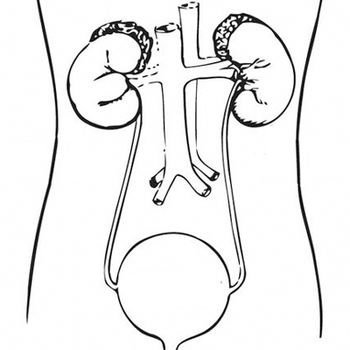
The findings from a phase II study of intermittent sunitinib in patients with previously untreated mRCC demonstrate that periodic extended sunitinib treatment breaks are feasible and the clinical efficacy does not seem to be compromised.

Patients with advanced hepatocellular carcinoma had objective responses and prolonged survival when treated with single-agent nivolumab, data from a dose escalation/expansion trial showed.
Elizabeth Plimack, MD, discusses the 2-year updated data from the CheckMate-025 trial in RCC, as well as the remaining questions with nivolumab in this setting.
In the treatment of patients with renal cell carcinoma, there has been a trend of underreporting and underemphasizing toxicities associated with PD-1 inhibitors.

Tian Zhang, MD, discusses the challenges associated with vaccine development in kidney cancer and the hope that vaccines can still be the answer to improving the response rates with anti¬–PD-1/PD-L1 treatment in RCC.
Supporting the concept of post-progression survival and the influence of different patterns of progression, a new analysis showed patients with advanced HCC had a worse survival following progression if they developed new extrahepatic lesions as opposed to other types of progression.
Thomas E. Hutson, DO, PharmD, discusses the power of the lenvatinib/everolimus combination and how and when the regimen should be used in patients with advanced renal cell carcinoma.
Chung-Han (Joe) Lee, MD, discusses recent treatment approvals in RCC, current and emerging treatments and strategies, and the significance of clinical trial enrollment.
A supplemental new drug application (sNDA) for the use of regorafenib (Stivarga) as a second-line treatment for patients with unresectable hepatocellular carcinoma (HCC) has been granted priority review by the FDA.
James J. Hsieh, MD, discusses differential overall survival (OS) results of the RECORD-3 study based on 3 distinct mRCC molecular subgroups, classified by patients who harbored <em>BAP1</em> and/or <em>PBRM1</em> mutations.
Anti-CD22 chimeric antigen receptor (CAR) T-cell therapy induced an 80% complete remission rate among children and young adults with relapsed/refractory B-cell acute lymphoblastic leukemia.
Among the new agents currently being explored in clinical trials, NKTR-214 stands out as a new cytokine therapy approach that could show additive benefit when combined with checkpoint inhibitors.
David F. McDermott, MD, discusses methods of expanding on progress seen in the field of immunotherapy, both in the case of kidney cancer and other tumor types at the PER® European Congress on Immunotherapies in Cancer held in Barcelona.

Toni Choueiri, MD, discusses some of the ongoing clinical trials in metastatic renal cell carcinoma (mRCC).
Robert S. Alter, MD discusses optimal sequencing for bladder cancer agents and how he determines the appropriate treatment for patients.
Toni Choueiri, MD, discusses the results of the ALLIANCE A031203 trial comparing cabozantinib and sunitinib in metastatic renal cell carcinoma (mRCC).
Elizabeth Plimack, MD, discusses recent pivotal findings in the field of genitourinary malignancies, specifically renal cell carcinoma (RCC) and bladder cancer.
Cabozantinib (Cabometyx) reduced the risk of progression or death by 31% compared with sunitinib (Sutent) in the frontline setting for patients with metastatic renal cell carcinoma (RCC).