


Ovarian Cancer
Latest News
Latest Videos





CME Content





























More News
UCLA researchers have discovered a new drug that helps reduce ascites in patients with ovarian cancer through inhibiting certain receptors.

Patients with ovarian cancer who have high-to-medium expression of folate receptor alpha responded well overall to mirvetuximab soravtansine.
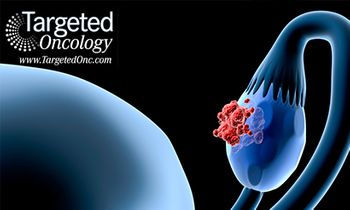
Neoadjuvant chemotherapy is increasingly used in advanced ovarian cancer, even though it has not been shown to improve survival versus primary cytoreduction.

Jeffrey R. Infante, MD director of Drug Development, Sarah Cannon Research Institute, talks about the anti-PD-L1 antibody avelumab in patients with previously treated, recurrent or refractory ovarian cancer.

While immune checkpoint inhibitors initially showed promise in patients with ovarian cancer, results still need to be validated by larger randomized trials.
Maurie Markman, MD, president of Medicine and Science, Eastern Regional Medical Center, talks about use of PD-1 inhibitors in ovarian cancer and the lack of evidence pointing toward their functionality.

Researchers note that chronic Hedgehog (Hh) pathway stimulation has been shown in prostate, lung, and ovarian cancers, and that zinc levels decrease early in prostate cancer continuing to castration-resistant disease. Researchers are exploring whether or not zinc may suppress the autocatalysis in the Hh precursor and inhibit production of biologically active Hh ligand.
Noah D. Kauff, MD, FACOG, gynecologist and geneticist, director, Ovarian Cancer Screening and Prevention, Gynecology Service, Department of Surgery, Memorial Sloan Kettering Cancer Center, discusses unanswered questions regarding the treatment of patients with uterine cancer.

Treatment with nivolumab demonstrated clinical efficacy and safety in patients with platinum-resistant, recurrent, or advanced ovarian cancer.

A novel immunotherapy, EGEN-001, combined with pegylated liposomal doxorubicin (PLD) has demonstrated clinical benefit in recurrent or persistent epithelial ovarian, fallopian tube, or primary peritoneal cancer patients.

The fully human PD-L1 IgG1 antibody, avelumab, demonstrated clinical activity in patients who have previously treated, recurrent/refractory (R/R) ovarian cancer.

Results of the CHORUS trial confirm the noninferiority of primary chemotherapy followed by surgery versus primary surgery and then chemotherapy, and show that performing chemotherapy first is associated with less morbidity and mortality in patients with newly diagnosed, advanced ovarian cancer.

Jeffrey N. Weitzel, MD, director, Clinical Cancer Genetics, director, Cancer Screening & Prevention Program Network, professor, City of Hope, discusses the impact of gene mutations on treatment.

Patients with epithelial ovarian cancer who took non-selective beta blockers (NSBBs) during chemotherapy had significantly improved overall survival (OS) than those who did not.

Young black women have a higher prevalence of BRCA mutations compared with that previously reported among non-Hispanic white women.

Evidence is mounting for multigene panel testing in women with suspected familial breast and/or ovarian cancer.
Robert L. Coleman, MD, professor, Ann Rife Cox Chair in Gynecology, Department of Gynecologic Oncology and Reproductive Medicine, vice chair, Clinical Research, The University of Texas MD Anderson Cancer Center, discusses the toxicities associated with rucaparib in patients with ovarian cancer.

Rosemary Cress, MPH, PhD, and colleagues sought to identify long-term survival of patients with epithelial ovarian cancer, as well as the epidemiological characteristics associated with such survival.

Combination therapy with birinapant and carboplatin may be more effective than either therapy alone for treatment of high-grade serous ovarian cancers (HGSCs) with high levels of cellular inhibitor of apoptosis protein (cIAP) in their CA125-negative cells.

Almost 10 years following a study that proved intraperitoneal (IP), or abdominal, chemotherapy, along with intravenous (IV) therapy, may add 16 months or more to the lives of women with ovarian cancer, less than half of these patients at US hospitals receive this type of treatment
Saeed Rafii, MD, PhD, MRCP, medical director, Sarah Cannon Research Institute, discusses the significant factors of clinical outcomes with olaparib in patients who have ovarian cancer.

The University of Texas MD Anderson Cancer Center in Houston has been selected as the site for one of two new Genome Characterization Centers (GCCs) funded by the National Cancer Institute (NCI) and National Institute of Health (HHSN261200800001E).

A team of scientists at Lawson Health Research Institute recently discovered that ovarian cancer spheroids activate a stress metabolism molecule, LKB1, which is crucial for the survival of ovarian cancer cells.

The immunotherapy DPX-Survivac has been granted orphan drug designation as treatment ovarian cancer, based on early-phase research showing a robust immune response with the therapy in combination with low-dose cyclophosphamide.

Research may hasten the effort to determine which strains of cancer will eventually become resistant to chemotherapy, paving the way for developing more effective targeted treatments.