


Ovarian Cancer
Latest News

Latest Videos




CME Content





























More News

Major objective responses to treatment were demonstrated in one-fourth of patients with relapsed or refractory BRCA-mutant ovarian cancer with the investigational PARP inhibitor, veliparib, according to results from a phase II study.
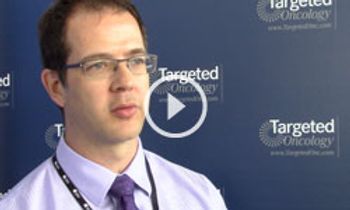
Sean C. Dowdy, MD, professor, chair, Division of Gynecologic Surgery, co-leader, Women’s Cancer Program, Mayo Clinic, discusses bevacizumab and improvement of progression-free survival (PFS) for patients with the mesenchymal molecular subtype of ovarian cancer.
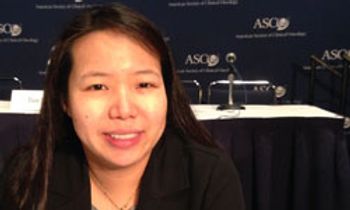
Combining the oral targeted agents olaparib and cediranib resulted in a near-doubling of median progression-free survival (PFS) among women with recurrent ovarian cancer.

A wide-ranging analysis of more than 5500 breast cancer tumors that combined genomic and protein expression testing has identified promising targets to explore for treating patients with poor prognoses, with particularly notable findings involving androgen receptor (AR) expression.

According to a new study, physicians now have a clearer understanding of the optimum age for prophylactic oophorectomy in patients with BRCA mutations who want to reduce their risk of ovarian, fallopian tube, and breast cancer.
Franco M. Muggia, MD, professor of oncology, New York University, director, Division of Medical Oncology, New York University Medical Center, discusses the impact of BRCA mutations in ovarian cancer.
Bradley J. Monk, MD, gynecologic oncologist, University of Arizona Cancer Center Phoenix Branch, discusses the TRINOVA-1 trial.

Franco M. Muggia, MD, professor of oncology, New York University, director, Division of Medical Oncology, New York University Medical Center, discusses the challenge of developing targeted therapies to treat ovarian cancer.

Treatment with decitabine prior to administration of chemotherapy and a cancer vaccine yielded clinical benefit for women with recurrent ovarian cancer, suggesting that this combinatorial chemoimmunotherapy may provide a new treatment option.

Elizabeth Garner, MD, MPH, vice president, Clinical Affairs, Preventive Care, Myriad Genetics, discusses the Myriad myRisk Hereditary Cancer Test.
Bradley Monk, MD, gynecologic oncologist, University of Arizona Cancer Center Phoenix Branch, discusses clinical trial endpoints and individualizing treatment in patients with ovarian cancer.

Trebananib added to paclitaxel significantly improved progression-free survival in patients with recurrent ovarian cancer compared with placebo plus paclitaxel in the large international TRINOVA- 1 trial.
Franco M. Muggia, MD, professor of oncology, New York University, director, Division of Medical Oncology, New York University Medical Center, discusses the identification and treatment of ovarian cancer.

Julie R. Brahmer, MD, from Johns Hopkins University School of Medicine, Sidney Kimmel Comprehensive Cancer Center, discusses the outlook for immunotherapies in cancer care.

James T. Thigpen, MD, discusses the comparison of treatment options in ovarian cancer.
Mark A. Morgan, MD, discusses the role of robotic surgery in gynecologic cancer.
Michael Birrer, MD, PhD, professor of medicine, Harvard Medical School, director, Gillette Center for Gynecologic Oncology, Massachusetts General Hospital, discusses other targets in ovarian cancer besides PARP.

Russell J. Schilder, MD, discusses new therapeutics and their role in gynecologic cancers.

Robert A. Burger, MD, Professor, Department of Surgical Oncology, Director, Women’s Cancer Center, Fox Chase Cancer Center, discusses ovarian cancer maintenance with bevacizumab.

James "Tate" T. Thigpen, MD, professor of medicine, director of medical oncology, University of Mississippi School of Medicine, discusses overall survival (OS) and progression-free survival (PFS) as endpoints in ovarian cancer trials.

Mark A. Morgan, MD, professor of obstetrics and gynecology, University of Pennsylvania, director, Gynecology Oncology for University of Pennsylvania Health Systems, discusses bulk reduction surgery prior to chemotherapy in patients with stage III ovarian cancer.

Russell J. Schilder, MD, discusses the GOG-9929 trial.

Don S. Dizon, MD, FACP, Medical Gynecologic Oncologist, Director of the Oncology Sexual Health Clinic, Massachusetts General Hospital, gives an overview of screening for ovarian cancer.
Michael Birrer, MD, PhD, discusses the role of PARP inhibitors in ovarian cancer.

Andreas du Bois, MD, a professor of gynecologic oncology at Kliniken Essen Mitte in Essen, Germany, discusses a phase III trial exploring the effectiveness of treatment with maintenance pazopanib for patients with advanced ovarian cancer.