


Ovarian Cancer
Latest News
Latest Videos





CME Content





























More News

Peter R. Dottino, MD, discusses the utilization of molecular methods to identify ovarian cancer following treatment with chemotherapy, and how this type of research impacts the field going forward.
Researchers in the Perelman School of Medicine at the University of Pennsylvania evaluated the genetic profiles of 160 breast and ovarian cancers associated with germline mutations in <em>BRCA1 </em>and <em>BRCA2 </em>and determined that there is a relationship between the genetics of <em>BRCA 1/2 </em>mutations and the risk of resistance to platinum-based chemotherapy.

Based on findings from the phase III ARIEL3 trial, a supplemental new drug application has been submitted to the FDA for rucaparib as maintenance therapy for patients with recurrent epithelial ovarian, fallopian tube, or primary peritoneal cancer who are in a complete or partial response to platinum-based chemotherapy.
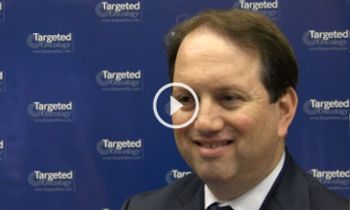
Douglas A. Levine, MD, professor, Department of Obstetrics and Gynecology, and director, Division of Gynecologic Oncology, NYU Langone Medical Center, discusses the efficacy of niraparib (Zejula) on progression-free survival in patients with recurrent ovarian cancer with partial response to the last platinum-based chemotherapy.
Dmitriy Zamarin, MD, PhD, discusses the potential for immunotherapy in the treatment of ovarian cancer.

There is genuine excitement within the gynecologic cancer clinical and research communities for the potential role of PARP inhibitors in the management of ovarian cancer.
Michael J. Birrer, MD, PhD, discusses the introduction of poly ADP-ribose polymerase inhibitors to the ovarian cancer treatment landscape.
Investigators recently evaluated the genetic profiles of 160 breast and ovarian cancers associated with germline mutations in <em>BRCA1 </em>and <em>BRCA2 </em>and<em> </em>determined that there is a relationship between the genetics of <em>BRCA</em>1/2 mutations and the risk of resistance to platinum-based chemotherapy.
Today, ABP-215, a biosimilar for bevacizumab developed by Amgen and Allergan, received FDA approval for the treatment of several different cancer types, making it the first biosimilar approved for the treatment of cancer.

The PARP inhibitor Rucaparib (Rubraca) improved median progression-free survival by 11.2 months compared with placebo as a maintenance treatment for patients with <em>BRCA</em>-mutant platinum-sensitive ovarian cancer, according to findings from the phase III ARIEL3 trial presented at the 2017 ESMO Congress.

Jonathan Ledermann, MD, professor of medical oncology in the University College London Cancer Institute and director of Cancer Research UK and UCL Cancer Trials Centre, discusses the toxicities associated with rucaparib (Rubraca) for the treatment of ovarian cancer.
A look back at all the FDA news that occurred in the month of August.
The FDA has granted its approval to olaparib tablets (Lynparza) as a maintenance therapy for patients with recurrent epithelial ovarian, fallopian tube, or primary peritoneal cancer, who are in a complete or partial response to platinum-based chemotherapy, regardless of <em>BRCA</em> status.

Kathleen N. Moore, MD, assistant professor in the section of gynecologic oncology and director of the Oklahoma TSET Phase I Clinical Trials Program at the University of Oklahoma Health Sciences Center, discusses challenges with PARP inhibitors in ovarian cancer.
The risk of progression or death was reduced by 70% with maintenance olaparib (Lynparza) compared with placebo for patients with platinum-sensitive, relapsed, <em>BRCA</em>-mutant ovarian cancer.
Julia A. Elvin, MD, PhD, discusses her genomic research in ovarian cancer and how it could potentially impact treatment decisions for patients.
Douglas Levine, MD, provides his insight on some of the recent data with PARP inhibitors in ovarian cancer, as well as his predictions for the field in the next several years.<br />

Ursula A. Matulonis, MD, professor of Medicine, Harvard Medical School, medical director of Gynecologic Oncology, Dana-Farber Cancer Institute, discusses the toxicities that are associated with PARP inhibitors in ovarian cancer.
Rucaparib improved progression-free survival versus placebo as a maintenance treatment for women with platinum-sensitive, high-grade ovarian, fallopian tube, or primary peritoneal cancer, according to results from the phase III ARIEL3 trial.
A recent study is offering insight into the age at which BRCA1/2-positive women are most at risk for deveoping breast and ovarian cancer.
Immunotherapy combinations with PARP inhibitors or checkpoint inhibitors may represent the future of treatment for patients with ovarian cancer, said Samir N. Khleif, MD, during the 2017 ASCO Annual Meeting.
Douglas A. Levine, MD, professor, Department of Obstetrics and Gynecology, and director, Divison of Gynecologic Oncology, NYU Langone Medical Center, discusses the impact of PARP inhibitors on the landscape of ovarian cancer.
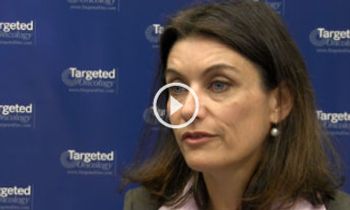
Julia Elvin, MD, PhD, vice president and senior associate medical director, Foundation Medicine, discusses a study of comprehensive genomic profiling with loss of heterozygosity to identify therapeutically relevant subsets of ovarian cancer.

Approximately 25% of patients with <em>BRCA</em> wild-type serous ovarian cancer may benefit from treatment with PARP inhibitors, along with 12.7% of patients with a non-serous histology, according to findings of genomic analyses in patients with ovarian cancer presented during the 2017 ASCO Annual Meeting that demonstrate that comprehensive genomic profiling is a valuable tool to integrate into routine ovarian cancer treatment decision making and clinical trial design.
Kathleen N. Moore, MD, assistant professor, The Stephenson Cancer Center, The University of Oklahoma, discusses results of an ongoing clinical trial exploring mirvetuximab soravtansine (IMGN853), a folate receptor alpha-targeting antibody-drug conjugate, in platinum-resistant epithelial ovarian cancer patients, during the 2017 ASCO Annual Meeting.