

MULTIPLE MYELOMA
Latest News
Latest Videos


CME Content





























More News

During a live virtual event, Saad Zafar Usmani, MD, discussed the findings of the CASSIOPEIA and GRIFFIN studies of daratumumab and lenalidomide in patients with newly diagnosed multiple myeloma.
During a live virtual event, Saad Zafar Usmani, MD, discussed 2 studies of drug combinations in patients with multiple myeloma with or without stem cell transplants.
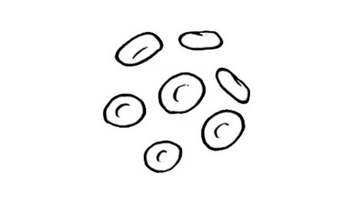
In an interview with Targeted Oncology, Shaji Kumar, MD, discussed the current standard of care in multiple myeloma, along with the need for risk stratification in this patient population.

Innovative approaches in multiple myeloma that focus on cellular therapies offer hope to patients with multiple myeloma.
Gurbakhash Kaur, MD, discusses the use of bispecific T-cell engagers as an alternative to chimeric antigen receptor (CAR) T-cell therapy for the treatment of multiple myeloma.

An application for FDA approval has been filed for teclistamab as a potential treatment for patients with relapsed or refractory multiple myeloma.
A 51-year-old man presented with pallor and worsening fatigue on exertion but had adequate liver and heart function.
A 51-year-old man presented with pallor and worsening fatigue on exertion.
Two years after being diagnosed with multiple myeloma and being treated, a patient reported mild fatigue but continued to work full time.

Ruben Niesvizky, MD, discusses the shift in standard of care treatment for multiple myeloma.
Updated findings from the CARTITUDE-1 trial presented at the 2021 ASH Annual Meeting and Exposition show that the use of a CAR T-cell therapy resulted in durable responses that lasted at nearly 2 years of follow-up across most subgroups with relapsed/refractory multiple myeloma.
Venetoclax dosed at either 400 mg or 800 mg in combination with daratumumab and dexamethasone showed promising preliminary results in a phase 1/2 study.
Having knowledge that their multiple myeloma was incurable was associated with poor quality of life outcomes in patients.
The XVd regimen appears effective at prolonging progression-free survival with decreased toxicity when administered at lower doses of selinexor or the standard dose.
Updated results from CARTITUDE-1 reveal deep and durable response to ciltacabtagene autoleucel treatment in patients with multiple myeloma.

An early and deep response was seen with a single infusion of cilta-cel in patients with multiple myeloma who experienced early clinical relapse.
A more durable and deep responses was produced with the recommended phase 2 dose of selinexor plus pomalidomide and dexamethasone compared with the lesser selinexor dose for relapsed or refractory multiple myeloma.
In patients with relapsed/refractory multiple myeloma with t(11;14), Selinexor plus venetoclax induced decreases in cyclin D1, XPO1, and MCL-1.
Compared with standard of care, ciltacabtagene autoleucel produces better responses in the setting of heavily pretreated multiple myeloma.

Results from the phase 2 IFM 2018-01 trial show positive safety and efficacy for the combination of daratumumab with ixazomib, lenalidomide, and dexamethasone.
The XVd regimen demonstrated comparable efficacy and safety in patients with multiple myeloma who had high-risk or standard-risk cytogenetic features.
The use of isatuximab with the RVd regimen in the induction phase may improve minimal residual disease negativity rates in patients with multiple myeloma, phase 3 results show.
No overlapping toxicities and a tolerable safety profile were seen with the addition of talquetamab to daratumumab in a population of patients with relapsed/refractory multiple myeloma.
Higher sustained MRD-negativity rates were observed among patients with transplant-eligible newly diagnosed multiple myeloma receiving D-VTd over VTd alone
In frail and elderly patients with multiple myeloma who are treated in the relapsed setting, a phase 2 trial shows promise of the daratumumab/ixazomib combination when given without dexamethasone.