
MULTIPLE MYELOMA
Latest News

Latest Videos


CME Content





























More News

Data presented at the 19th International Myeloma Society Annual Meeting show that carfilzomib plus lenalidomide and dexamethasone after transplant prolongs progression-free survival compared with lenalidomide alone in patients with myeloma.
A study of real-world outcomes of patient with relapsed or refractory multiple myeloma treated with isatuximab in now enrolling.
Patients with treatment-naive myeloma treated with humanized IgGx CD38-targeted monoclonal antibody daratumumab in combination with lenalidomide and dexamethasone for at least 18 months had a overall survival benefit in the phase 3 MAIA study.
Updated analysis of the IKEMA trial showed the combination of isatuximab, carfilzomib, and dexamethasone to elicit superior progression-free survival vs carfilzomib and dexamethasone alone in patients with multiple myeloma.
Findings from the phase 3 DETERMINATION trial show lenalidomide plus bortezomib, dexamethasone, and autologous stem cell transplantation to improve progression-free survival in patients with multiple myeloma.
Daratumumab, carfilzomib, lenalidomide, and dexamethasone induction and consolidation allowed 70% of patients with high-risk, newly diagnosed multiple myeloma to complete a second autologous stem cell transplant.
Meaningful progression-free survival and safety elicited with isatuximab plus pomalidomide and dexamethasone treatment in real-world multiple myeloma population.
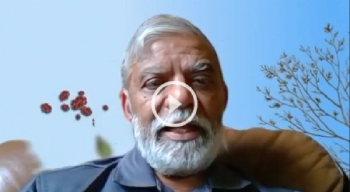
Kashyap Patel, MD, discusses the current disparities in the myeloma space and the ways in which oncologists are handling them.
In real-world patients with relapsed or refractory multiple myeloma, isatuximab-based regimens were found to be tolerable.

Promising responses including a positive safety profile were seen with teclistamab when used as treatment for patients with relapsed/refractory multiple myeloma.
Final overall survival results of the phase 2 ELOQUENT-3 trial reveal benefit with elotuzumab plus pomalidomide, and dexamethasone in patients with relapsed/refractory multiple myeloma.

During a Targeted Oncology case-based roundtable event, Peter Forsberg, MD and Robert M. Rifkin, MD, FACP, discussed the trials supporting the use of BCMA-targeted agents for relapsed/refractory multiple myeloma.
The combination of talquetamab and daratumumab has the potential to demonstrate synergistic clinical activity, and preclinical studies have shown that the addition of daratumumab enhanced talquetamabmediated lysis of multiple myeloma cells.

In an interview with Targeted OncologyTM Nina Shah, MD, discusses the findings from several trials that show the efficacy of daratumumab for patients with multiple myeloma.
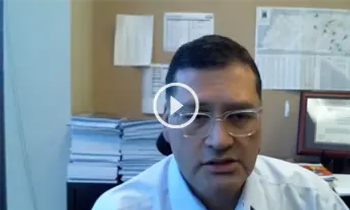
Jesus G. Berdeja, MD, discusses the potential of chimeric antigen receptor T-cell therapy to be approved for earlier lines of treatment in multiple myeloma.
Results from the interim analysis of phase 3 KarMMa-3 study indicate improvement in progression-free survival with idecabtagene vicleucel compared with standard combination regimens, as well as better responses.

With a median progression-free survival of 46.2 months in the RVD-alone group and 67.5 months in the transplantation group, lenalidomide, bortezomib, and dexamethasone plus autologous stem cell transplantation extends overall survival in patients with newly diagnosed multiple myeloma.

During a Targeted Oncology live virtual event, Caitlin Costello, MD, discussed treatment of a patient who previously received systemic therapy and autologous stem cell transplant for multiple myeloma. This is the second of 2 articles based on this event.

During a Targeted Oncology case-based roundtable event, Larry D. Anderson, MD, PhD, discussed the results of the DREAMM-2 trial and management of belantamab mafodotin for patients with multiple myeloma.
During a live virtual event, Caitlin Costello, MD, discussed the rationale for choosing a triplet or quadruplet regimen for patients with transplant-eligible newly diagnosed multiple myeloma.
Paul G. Richardson, MD, discusses the unmet medical needs that still exist in the multiple myeloma space.
The FDA has granted breakthrough therapy designation to talquetamab for the treatment of previously-treated adult patients with relapsed or refractory multiple myeloma based on positive results from the phase 1/2 MonumenTAL-1 study.

During a Targeted Oncology case-based roundtable event, Peter Voorhees, MD, discussed therapy options and transplant eligibility for patients with multiple myeloma.
Jesus G. Berdeja, MD, director of multiple myeloma research at Sarah Cannon Research Institute and hematology specialist at Tennessee Oncology, discusses the results of the CARTITUDE-1 trial for chimeric antigen receptor T-cell therapy with the newly-approved agent ciltacabtagene autoleucel for relapsed/refractory multiple myeloma.

During a Targeted Oncology case-based roundtable event, Binod Dhakal, MD, MS, discussed key data related to the treatment of newly diagnosed multiple myeloma.