

LUNG CANCER
Latest News
Latest Videos



CME Content





























More News

Treatment for non-small cell lung cancer (NSCLC)—which includes adenocarcinoma, squamous cell carcinoma, and large cell carcinoma—has traditionally consisted of surgery, chemotherapy, and radiation therapy.
Lecia V. Sequist, MD, medical oncologist, associate professor, Massachusetts General Hospital, Harvard Medical School, discusses adverse events (AEs) associated with CO-1686 for patients with non-small cell lung cancer (NSCLC).
Karen L. Reckamp, MD, discusses a phase II, single-arm study of cabozantinib plus erlotinib for the treatment of patients with advanced EGFR-mutant non-small cell lung cancer (NSCLC).
Bilal Piperdi, MD, discusses an analysis presented at the 2014 ASCO Annual Meeting that looked at RICTOR amplification to define a subset of patients with lung cancer.

Some of our top key opinion leaders gathered recently for a discussion on evolving treatment approaches in NSCLC. The following transcript comes from segments that discuss maintenance therapy in detail.

Despite standard chemotherapy and the availability of targeted therapies such as bevacizumab, cetuximab, and tyrosine kinase inhibitors (TKIs) such as erlotinib, afatinib, and crizotinib, survival rates are far from optimal for patients with NSCLC.
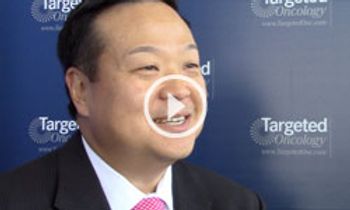
Edward S. Kim, MD, chairman, Solid Tumor Oncology and Investigational Therapeutics, Levine Cancer Institute, Carolinas HealthCare System, discusses some of the challenges researchers face when it comes to biomarkers in lung cancer.

Treatment with enobosarm demonstrated an increase in lean body mass compared with a decline in LBM observed with placebo for patients with NSCLC.

The PD-1 inhibitor nivolumab and the second-generation ALK inhibitor alectinib have each gained their first approvals as treatments for patients in Japan.

Naiyer A. Rizvi, MD, an associate attending physician, Memorial Sloan Kettering Cancer Center, discusses pembrolizumab (MK-3475) for the treatment of non-small cell lung cancer (NSCLC).
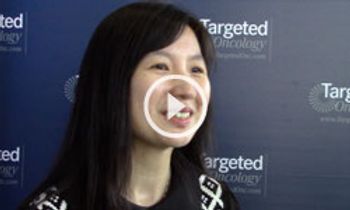
Haiying Cheng, MD, medical oncologist, Montefiore Einstein Center for Cancer Car, assistant professor, Department of Medicine (Oncology), Albert Einstein College of Medicine, discuses RICTOR amplification in patients with lung cancer.

Continuing EGFR inhibition beyond progression with afatinib (Gilotrif) plus paclitaxel significantly improved PFS and ORR compared with chemotherapy alone in patients with heavily pretreated metastatic NSCLC.

The anti-PD-1 humanized antibody pembrolizumab (MK-3475) has robust antitumor activity as a first-line treatment for patients with advanced PD-L1-positive non–small cell lung cancer (NSCLC).

The FDA has approved the radioactive diagnostic imaging agent Lymphoseek injection to guide sentinel lymph node biopsy in patients with cancer of the head and neck.

Karen L. Reckamp, MD, co-director, Lung Cancer and Thoracic Oncology Program, associate professor, City of Hope, the results of a phase II study of the AKT inhibitor MK-2206 plus erlotinib in patients with advanced non-small cell lung cancer (NSCLC) who progressed on erlotinib.

Adding necitumumab to standard of care with gemcitabine-cisplatin improves survival compared with chemotherapy alone as first-line treatment in patients with stage IV non–small cell lung cancer (NSCLC) of squamous histology.

Luiz H. Araujo, MD, medical oncologist, Corporate Cancer Foundation fellow, Ohio State’s Comprehensive Cancer Center – James Cancer Hospital and Solove Research Institute, discusses the discovery of oncogenic ARAF as a new driver for lung cancer.

David Spigel, MD, director, Lung Cancer Research Program, Sarah Cannon Research Institute, provides an update on research into MPDL3280A for the treatment of patients with lung cancer.

The third-generation EGFR inhibitor CO-1686 continues to demonstrate promising activity in patients with non–small cell lung cancer (NSCLC) who developed resistance after prior treatment with an EGFR tyrosine kinase inhibitor (TKI).
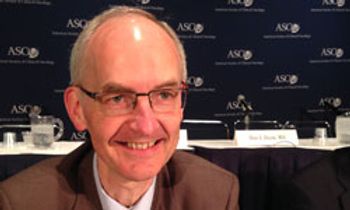
Adding the VEGFR-2 inhibitor ramucirumab (Cyramza) to standard docectaxel improved overall survival (OS) by 1.4 months versus docetaxel alone in patients with advanced non–small cell lung cancer (NSCLC).

Suresh S. Ramalingam, MD, a professor of medical oncology at the Winship Cancer Institute of Emory University in Atlanta, Georgia, discusses data presented at the 2014 ASCO Annual Meeting examining EGFR inhibitors for lung cancer.

Gregory J. Riely, MD, PhD, vice chair, Clinical Trials Office, Department of Medicine, Memorial Sloan Kettering Cancer Center, discusses the impact of the stigma of cigarette smoking on lung cancer research.
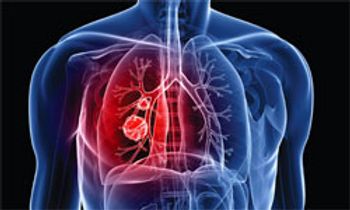
The EGFR inhibitor CO-1686 has received a breakthrough therapy designation from the FDA for its potential as a treatment for patients with metastatic T790M mutation-positive non-small cell lung cancer (NSCLC) who have received at least one prior line of EGFR-targeted therapy.

Todd Demmy, MD, clinical chair, Department of Thoracic Surgery, professor of oncology, Roswell Park Cancer Institute, describes lung suffusion.

In December 2013, the US Preventive Services Task Force (USPSTF) recommended that asymptomatic, high-risk individuals receive annual screening for lung cancer with low-dose computed tomography (LDCT).