


HEAD & NECK CANCERS
Latest News
Latest Videos



CME Content





























More News

Neratinib, an experimental TKI being developed for breast cancer, achieved a 36% clinical benefit rate in a phase II trial, according to a poster presented June 5, 2016 at the ASCO Annual Meeting in Chicago.

Since its first FDA approval in squamous cell carcinoma of the head and neck (SCCHN) in 2006, cetuximab (Erbitux) has helped oncologists make significant strides in treating patients with the disease.

Sue Naeyaert, senior director of Biosimilars Policy, EMD Serono, discusses the long-term impact that biosimilars could potentially have on the field of oncology.

Nivolumab (Opdivo) has been granted a breakthrough therapy by the FDA as a treatment for patients with recurrent or metastatic squamous cell carcinoma of the head and neck (SCCHN) following a platinum-based therapy.
The FDA has granted a priority review designation to pembrolizumab (Keytruda) as a treatment for patients with recurrent or metastatic head and neck squamous cell carcinoma (HNSCC) following a platinum-based chemotherapy, according to a statement from Merck, the company developing the PD-1 inhibitor.
The combination of pazopanib (Votrient) and cetuximab (Erbitux) showed a disease control rate of 77% in patients with recurrent or metastatic head and neck squamous cell carcinoma (HNSCC).
Adding cetuximab (Erbitux) to induction chemotherapy and hyperfractionated or accelerated chemoradiation therapy produced long-term control for patients with HPV-, locoregionally advanced head and neck squamous cell carcinoma with a poor prognosis.
The multikinase inhibitor lenvatinib (Lenvima) has quickly become the frontline standard of care for patients with progressive, radioactive iodine (RAI)-refractory differentiated thyroid cancer (DTC), just one year following its initial approval, according to Renato Martins, MD.
The panel, which included experts in oncology, dentistry, nursing, speech pathology, and primary care, conducted a systematic literature review to develop these consensus-based management strategies for HNC survivors. Their search identified 2081 articles, of which 184 were ultimately included in the evidence base.

Carnaby says prophylactic gastrostomy tube placement may not be as supportive as previously thought in the health of the muscles in these patients.
Cohen says while the data from the study looking at nivolumab has not been released yet, the halting of the trial due it having met its primary OS endpoint likely means good news.

Cabanillas says her and her team set a goal of reducing the time between when they are contacted about a patient with anaplastic thyroid cancer, and when the patient is given an appointment time, to fewer than 5 business days.
Zevallos says that while HPV-positive oropharyngeal SCC has a positive outcome for patients, smoking status should be taken into account for these patients when making a decision to deintensify therapy.

Melotek says the trial's primary endpoint was comparison of efficacy when cetuximab is added to both therapies with historical control, with a secondary endpoint being further investigation of the usefulness of both chemotherapy platforms.
In an interview, Frakes discusses a recent study and the impact these data have on follow-up frequency and the overall treatment paradigm for patients with OPSCC.
Biomarkers ultimately hold the key to improving both progression-free survival and overall survival with second-line afatinib in patients with recurrent or metastatic head and neck squamous cell carcinoma.
A neoadjuvant combination of motolimod plus cetuximab was found to increase the immune responses in both the blood and tumor microenvironment for patients with head and neck squamous cell carcinoma.
The use of induction chemotherapy for advanced head and neck squamous cell carcinoma (HNSCC) does not improve overall survival (OS) when compared to concurrent chemotherapy plus radiation.
The 5-year overall survival (OS) in elderly patients with locally advanced head and neck cancers was drastically improved with concurrent chemoradiation versus radiation therapy alone, according to an analysis of the National Cancer Data Base.
Patients with HPV-positive oropharyngeal squamous cell cancer (OPSCC) who smoke can develop tobacco-associated mutations over time. These accumulated mutations result in less dependence on E6/E7 and other HPV-associated mutations.
Barbara Burtness, MD, discusses the explosion of immunotherapies on the horizon for patients with metastatic head and neck cancer.
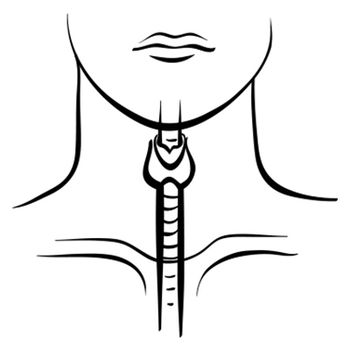
Anaplastic thyroid cancer is an extremely aggressive form of cancer that cannot be cured by surgery and has a median survival of about 6 months. The malignancy normally occurs in patients over the age of 60, and there is not a standard of care, according to John A. Copland III, PhD, professor, Cancer Biology, Mayo Clinic.
Patients with a certain type of oral human papilloma virus (HPV) have an increased risk of developing head and neck squamous cell carcinoma, as well as oropharyngeal cancer, according to a new study.
With the phase III CheckMate-141 trial being stopped early due to the anti-PD-1 agent nivolumab having met its primary endpoint of overall survival improvement in head and neck cancer, Robert Ferris, MD, PhD, couldn't be more elated.

Anti–PD-1 agent nivolumab boosted overall survival versus an investigator's choice of therapy in platinum-refractory squamous cell carcinoma of the head and neck (SCCHN) during a recent trial.