

HEAD & NECK CANCERS
Latest News
Latest Videos






CME Content





























More News

D Neil Hayes, MD, MPH, has been appointed scientific director of the University of Tennessee Health Science Center Institute for Cancer Research and the Van Vleet Endowed Professor in Medical Oncology in the Department of Medicine.
Theodoros N. Teknos, MD, has been chosen as the new president and scientific officer of the University Hospitals Seidman Cancer Center. He will be taking over for the current president Nathan Levitan, MD, who will be retiring this year after 9 years in this position.
Lori J. Wirth, MD, discusses the era of precision genotype targeted therapy in advanced thyroid cancer, with a focus on individual targets in subtypes of thyroid cancer.
Supplemental Biologics License Applications (sBLAs) were sent to and accepted by the FDA for a new dosing schedule for nivolumab (Opdivo) across all of the agent's indications as a montherapy, according to Bristol-Myers Squibb (BMS), the manufacturer of the PD-1 inhibitor.
Robert L. Ferris, MD, PhD, a renowned expert in immunotherapy and a specialist in head and neck cancer, has been named director of the University of Pittsburgh Medical Center (UPMC) Hillman Cancer Center. His new position will start July 1.
Combining the IDO inhibitor epacadostat with nivolumab demonstrated promising signs of activity for patients with squamous cell carcinoma of the head and neck and those with melanoma.
A strong association was found between high PD-L1 expression and local failure following radiotherapy in HPV-negative head and neck squamous cell carcinomas.
Aarti Bhatia, MD, discusses newer single agents and combination treatments being investigated for patients with head and neck cancer.
Benjamin L. Judson, MD, highlights the importance of a multidisciplinary team and shares insight on some of the advancements related to surgery for patients with head and neck cancer.
Lynn Acton, MS, CCC (SLP) discusses the significance of swallowing modalities for patients with head and neck cancer during and after radiation therapy.
The use of low-dose radiotherapy may offer transient benefits; nonetheless the potential for palliative care exists.
Beyond hematologic malignancies, adoptive therapy could potentially be effective in solid tumors, such as head and neck cancer, according to early results of a clinical trial.
Immunotherapy agents have shown great promise for the treatment of patients with head and neck cancer; however, only a small subset of patients reap these benefits. Thus, the question becomes: which patients are more likely to benefit from these therapies, and why?
Dhanya Nambiar, PhD, discusses he role of galectin-1 in the tumor microenvironment, and the potential for targeting this protein in patients with head and neck cancer.
The IDO1 inhibitor BMS-986205 had "best-in-class" activity as demonstrated by kynurenine reductions and IDO1 inhibition for patients with advanced tumors in a phase I/IIa study.
Tanguy Seiwert, MD, discusses advances and next steps with immunotherapy, as well as the overall challenges and goals for treating patients with head and neck cancer.
Nivolumab (Opdivo) has been recommended for approval by EMA’s Committee for Medicinal Products for Human Use for the treatment of patients with squamous cell cancer of the head and neck following progression on platinum-based therapy.
A study presented at the 2017 Cancer Survivorship Symposium revealed a long-term cardiovascular risk associated with administration of levothyroxine.
The International Federation of Head and Neck Oncologic Societies recently completed its fourth tour, with 8 experts in the field of head and neck oncology traveling to 8 countries over a month to offer continuing medical education courses on treatment paradigms and surgical techniques in head and neck cancer across the world.
Following the approval of 2 immunotherapy agents, pembrolizumab and nivolumab for the treatment of patients with head and neck cancer over the last 6 months, immunotherapy is making its mark on the treatment paradigm for HNC.
Researchers in the Netherlands have found that using a gradual or “stepped” approach to providing psychosocial support for patients diagnosed with head and neck or lung cancers not only improves their quality of life but is also cost-effective.
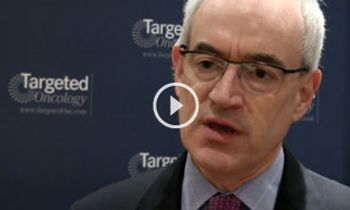
Everett Vokes, MD, John E. Ultmann Professor of Medicine and Radiation Oncology, physician-in-chief, University of Chicago Medical Center, chair, Department of Medicine, University of Chicago Medicine, discusses current treatment strategies in head and neck cancer.
The addition of chemotherapy, either adjuvant or induction, to concomitant chemoradiotherapy (CRT) achieved a significantly high survival benefit for patients with locally advanced nasopharyngeal carcinoma.
The number of positive lymph nodes is an appropriate selection factor in deciding adjuvant chemoradiotherapy use in some patients with locally advanced head and neck cancer, according to the results of a recent retrospective analysis .
With the objective of identifying patients who would derive greater benefit from CRT, a recent retrospective, observational cohort study examined use and survival outcomes with adjuvant CRT in patients with resected locally advanced head and neck cancer.