


GYNECOLOGIC CANCERS
Latest News
Latest Videos



CME Content





























More News

A correlation was drawn between adjuvant hormone therapy (AHT) and a 37% reduction in the risk of death in women with epithelial ovarian cancer, according to results of a 24-year study.

A new method of screening utilizing CA-125 and a risk assessment algorithm could drop risk of mortality from ovarian cancer in certain women, according to findings from the UK Collaborative Trial of Ovarian Cancer Screening.

A follow-up benefits analysis of adding denosumab to aromatase inhibitor (AI) therapy shows the agent not only helps prevent fractures, it also reduces risk of recurrence and death in postmenopausal women with HR-positive breast cancer.

Implementation of the Affordable Care Act (ACA) may have helped increase the number of women whose cases of cervical cancers were found and treated early, according to a study published in JAMA.

Ovarian cancer outcomes appear to be improved in women with a history of oral contraceptive use, according to a retrospective study recently published in BMC Cancer.

Details of a new technology for studying tumor metabolism have been published in Nature Materials, whereby a cellulose strip containing tumor cells was wrapped around a metal core and incubated, mimicking conditions consistent with in vivo tumors.

Tamar Safra, MD, talks about research into treatments for specific types of ovarian cancer.
Michael Birrer, MD, PhD, on treatments targeting either VEGF or ANG2 in gynecologic cancers.

Thomas Herzog, MD, on the cautions of interval debulking surgery in ovarian cancer and its difference from neoadjuvant treatment. Herzog said interval debulking surgery entails an initial, maximum surgical effort that is followed up by chemotherapy.
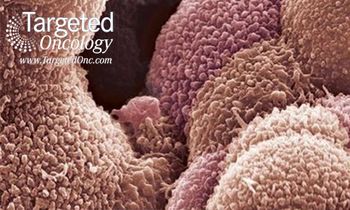
UCLA researchers have discovered a new drug that helps reduce ascites in patients with ovarian cancer through inhibiting certain receptors.

Patients with ovarian cancer who have high-to-medium expression of folate receptor alpha responded well overall to mirvetuximab soravtansine.

Neoadjuvant chemotherapy is increasingly used in advanced ovarian cancer, even though it has not been shown to improve survival versus primary cytoreduction.

Jeffrey R. Infante, MD director of Drug Development, Sarah Cannon Research Institute, talks about the anti-PD-L1 antibody avelumab in patients with previously treated, recurrent or refractory ovarian cancer.

While immune checkpoint inhibitors initially showed promise in patients with ovarian cancer, results still need to be validated by larger randomized trials.
Maurie Markman, MD, president of Medicine and Science, Eastern Regional Medical Center, talks about use of PD-1 inhibitors in ovarian cancer and the lack of evidence pointing toward their functionality.

Acute lymphoblastic leukemia (ALL) is a relatively rare malignancy in adults, with an estimated 6250 new cases and 1450 deaths expected in the United States in 2015. Although most patients achieve complete remission with conventional combination chemotherapy regimens, at least two-thirds of high-risk patients relapse.2 While overall survival for children has significantly improved in the last 30 years, newly diagnosed adults continue to have a poor 5-year OS rate, approximating 35%, depending on age and risk factors.

Intensity-modulated radiation therapy (IMRT) for cervical cancer has led to a double-digit decrease in late bowel toxicity compared with 3-D conformal radiation therapy without statistical significance.

The anti-CD22 antibody-drug conjugate inotuzumab ozogamicin has been granted breakthrough therapy designation by the FDA as a potential treatment for relapsed or refractory acute lymphoblastic leukemia patients.

Researchers note that chronic Hedgehog (Hh) pathway stimulation has been shown in prostate, lung, and ovarian cancers, and that zinc levels decrease early in prostate cancer continuing to castration-resistant disease. Researchers are exploring whether or not zinc may suppress the autocatalysis in the Hh precursor and inhibit production of biologically active Hh ligand.

The USPSTF recently posted a draft recommendation statement and draft evidence review on screening for colorectal cancer prompting responses from organizations and industry.
Noah D. Kauff, MD, FACOG, gynecologist and geneticist, director, Ovarian Cancer Screening and Prevention, Gynecology Service, Department of Surgery, Memorial Sloan Kettering Cancer Center, discusses unanswered questions regarding the treatment of patients with uterine cancer.

A more than 25-month improvement in overall survival was seen with lyso-thermosensitive liposomal doxorubicin (LTLD; ThermoDox) combined with optimized (?45 minutes dwell time) radiofrequency ablation in patients with hepatocellular carcinoma.

Frederic Amant, MD, PhD, assistant professor, gynecologic oncologist, head of the scientific section of gynecologic oncology at Katholieke Universiteit in Leuven, Belgium, the impacts of chemotherapy on pregnant woman and their babies.

Tom Herzog, MD, clinical director, University of Cincinnati Cancer Institute, explains the impact ADXS11-001 may have on patients with recurrent metastatic cervical cancer who currently have limited effective treatment options.

Significantly improved emesis control was seen when fosaprepitant was added to an antiemetic regimen compared with standard care, in women receiving radiotherapy and cisplatin for cervical cancer.