





GYNECOLOGIC CANCERS
Latest News
Latest Videos









CME Content





























More News

Robert L. Coleman, MD, FACOG, FACS, professor, Department of Gynecologic Oncology and Reproductive Medicine, University of Texas MD Anderson Cancer Center, discusses a study which examined the impact of bevacizumab in ovarian cancer.

The chimeric antigen receptor (CAR) T-cell therapy JCAR017 elicited a 91% complete remission rate in pediatric patients with relapsed/refractory acute lymphoblastic leukemia (ALL).

Despite their promise, checkpoint inhibitors are not effective in every patient, and research suggests the STING (stimulator of interferon genes) pathway may hold important clues as to why some tumors fail to respond.

A new study has found that a psychosocial telephone counseling intervention helps improve mood and quality of life in cervical cancer survivors.

To gain insight into this novel approach and its potential benefit, Targeted Oncology interviewed Bradley J. Monk, MD, FACOG, FACS, who presented phase II results at the 2015 SGO's Annual Meeting on Women's Cancer.
Sharyn N. Lewin, MD, discusses the importance of screening patients with ovarian cancer for a BRCA mutation.

The FDA has granted a breakthrough therapy designation to the PARP1/2 inhibitor rucaparib for the treatment of women with BRCA-mutated advanced ovarian cancer.

Intraperitoneal (IP) chemotherapy offers a median 10-month survival advantage over IV chemotherapy for women with advanced ovarian cancer. Result from a retrospective analysis were recently published in the Journal of Clinical Oncology.

In mid-December of 2014, the FDA approved the BRACAnalysis CDx diagnostic test to accompany the use of Lynparza (olaparib) in advanced ovarian cancer.
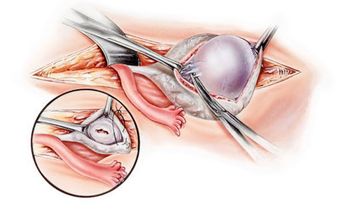
In a single-institution randomized prospective controlled trial of women with advanced epithelial ovarian cancer, 52.6% of patients in the PDS study arm had major complications with an MSKCC score of 3 or greater.

The angiogenesis inhibitor cediranib demonstrated acceptable activity and a tolerable safety profile as a monotherapy for patients with recurrent or persistent endometrial cancer.

Krishnansu S. Tewari, MD, FACOG, FACS, discusses a trial looking at the impact of CTCs on overall survival among patients treated with chemotherapy plus bevacizumab for advanced cervical cancer.
The addition fosbretabulin tromethamine to bevacizumab lowered the risk of progression by 31.5% but doubled the rate of hypertension compared with bevacizumab alone in pretreated patients with recurrent ovarian cancer enrolled in the phase II GOG186i study.

Circulating tumor cells have previously been reported to be prognostic in other solid tumors: can they become a prognostic biomarker in cervical cancer?

A triage algorithm may identify patients with presumed advanced ovarian cancer who represent preoperatively defined candidates for diagnostic laparoscopy.

Barbara Ann Goff, MD, discusses an analysis looking at the care of ovarian cancer.

Two newly reported studies are providing more insight into the efficacy and safety profile of the PARP inhibitor olaparib in ovarian cancer.

Bradley J. Monk, MD, FACOG, FACS, on bevacizumab in combination with the vascular disrupting agent fosbretabulin for the treatment of patients with recurrent ovarian, tubal, or peritoneal carcinoma.
The addition of bevacizumab to a doublet chemotherapy regimen extended OS by nearly 5 months compared with standard chemotherapy alone in women with platinum-sensitive recurrent ovarian cancers.

A 2:1 open-label phase II trial of the FANG vaccine achieved a marked delay in time to progression, in all 14 of 21 patients with stage III/IV ovarian cancer who participated. The other 7 patients did not receive the vaccine.

Robert L. Coleman, MD, FACOG, FACS, professor, The University of Texas MD Anderson Cancer Center, discusses the results and key takeaways from GOG0213.

Cancer proliferates when a rogue, transformed cell wins a sophisticated hide-and-seek game against the immune system. Immunotherapy activates the patient’s immune system to recognize and fight the tumor cells.

Recent advancements in the treatment of ovarian cancer have led the National Comprehensive Cancer Network to make changes to their clinical practice guidelines in its 20th annual edition.
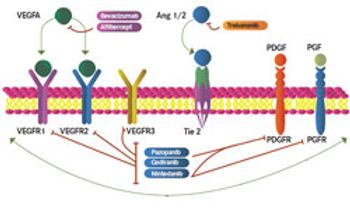
Novel antitumor agents are currently being evaluated in clinical trials for use in various gynecological cancers.

Growth in healthcare spending in the United States continues to outpace growth in European countries that enjoy a similar standard of living.