


GYNECOLOGIC CANCERS
Latest News
Latest Videos






CME Content





























More News
Ovarian Cancer

Given the frequency of <em>FGFR2</em> alterations in intrahepatic cholangiocarcinoma, investigators have identified it as a potential prognostic indicator of survival and a rational target of systemic cancer therapies.

The early development of PARP inhibitors in 2003 focused on their use in combination with cytotoxic chemotherapy agents, but this was eventually abandoned because of excess toxicity.
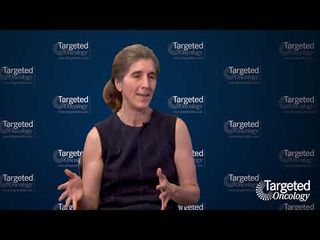
In an interview with Targeted Oncology, Kathleen Moore, MD, discussed the data surrounding mirvetuximab soravtansine in this patient population and the plans to reevaluate the ADC following the results from the FORWARD I/GOG 3011 clinical trial. She also highlighted other areas of investigation for women with platinum-resistant ovarian cancer.









Kathleen Moore, MD, discusses the findings from the phase III FORWARD-1 trial that investigated mirvetuximab soravtansine in women with folate receptor alpha–positive platinum-resistant ovarian cancer. These findings were presented at the 2019 ESMO Congress.

In an interview with Targeted Oncology, Willemina R. Geurts-Giele, PhD, discussed the accuracy of detecting MET exon 14 skipping mutations in patients with NSCLC with DNA-based NGS panels. These findings were presented at The Association for Molecular Pathology Annual Meeting and Expo.

TT-00420, an investigational spectrum-selective multiple kinase inhibitor received an orphan drug designation from the FDA for the treatment of cholangiocarcinoma, TransThera Biosciences Co. Ltd announced in a press release.

PARP inhibitors are increasingly relevant for frontline maintenance indications and potentially in combination with chemotherapy for treatment-naïve ovarian cancer, including for those with <em>BRCA</em>-wildtype disease, Leslie M. Randall, MD, said to the audience at the <em>37th Annual</em> CFS.
The American Cancer Society has estimated that in 2019 in the United States, approximately 13,240 new patients will receive a diagnosis of cervical cancer and 4170 individuals will die from the disease. However, because of effective screening programs using cytology and/or high-risk human papillomavirus DNA testing in industrialized nations, incidence and mortality rates have declined.
A number of promising biologic therapies are beginning to transform the treatment of adult patients with acute lymphoblastic leukemia, with the greatest potential seen with blinatumomab and inotuzumab ozogamicin in combination with chemotherapy, according to a presentation by Hagop M. Kantarjian, MD, at the 37th Annual CFS.<br />
Although a vaccine for the human papillomavirus (HPV) is widely available, an average of 34,800 HPV-associated cancers attributable to the virus, including cervical, vaginal, vulva, penile, anal, and oropharynx were reported in the United States from 2012 through 2016, according to data published in Morbidity and Mortality Weekly Report.
Daniel Catenacci, MD, discusses how he makes decisions with immunotherapeutic agents for the treatment of patients with gastroesophageal junction cancer. He says he bases his sequencing decisions on a number of factors.
In October 2019, the FDA approved a new treatment option for patients with advanced ovarian, fallopian tube, or primary peritoneal cancer, as well as a new dosing regimen for patients receiving moderately emetogenic chemotherapy. Additionally, the FDA granted breakthrough therapy designations to 2 therapies, as well as an orphan drug designation, a priority review, and 2 fast track designations.
The FDA has approved niraparib for the treatment of patients with advanced ovarian, fallopian tube, or primary peritoneal cancer treated with ≥3 prior chemotherapy regimens and whose cancer is associated with homologous recombination deficiency positivity.
The FDA has approved a supplemental New Drug Application for a single dose of aprepitant injectable emulsion for intravenous use in patients receiving moderately emetogenic chemotherapy. The approval expands the dose for aprepitant to include a 130 mg single-dose regimen for the prevention of acute and delayed chemotherapy-induced nausea and vomiting.<br />