


GI CANCERS
Latest News


Increased Dose of Ripretinib Improves Survival in Heavily Pretreated Advanced GIST
By Jason Harris
Latest Videos



CME Content





























More News
The FDA granted approval to adjuvant nivolumab as treatment of completely resected esophageal or gastroesophageal junction cancer with residual pathologic disease in patients who have received neoadjuvant chemoradiotherapy.

Research characterizing the relationship between this heterogeneity and response to targeted therapies can lead to improved selection of patients who will benefit from specific therapies.
The latest updates on gastric and esophageal cancers focus on greater use of biomarkers, next-generation sequencing (NGS), and immunotherapies.
Jaffer A. Ajani, MD led a discussion around biomarkers to consider when determining systemic therapy for patients with stage IV gastric adenocarcinoma.
The FDA has granted orphan drug designation to the first-in-class ruthenium-based small molecule, BOLD-100, for the treatment of patients with gastric cancer.
The FDA has granted accelerated approval to pembrolizumab plus trastuzumab, fluoropyrimidine- and platinum-containing chemotherapy for the frontline treatment of patients with locally advanced unresectable or metastatic HER2 positive gastric or gastroesophageal junction cancer.
The FDA accepted a supplemental new drug application for ivosidenib tablets and granted it priority review for the treatment of patients with previously treated IDH1-mutated cholangiocarcinoma.
A rolling submission of a new drug application to the FDA has been initiated for surufatinib as a potential treatment option for patients with pancreatic and extra-pancreatic neuroendocrine tumors.
In an interview with Targeted Oncology, Mark E. Johns, MD, discussed landmark esophageal cancer studies, newly approved treatments, and the future of the space.
Although chemotherapy is the mainstay of systemic treatment for advanced cholangiocarcinoma, there are limited treatment options when the disease progresses
The FDA has granted breakthrough therapy designation to bemarituzumab for the first-line treatment of patients with HER2-negative metastatic and locally advanced gastric and gastroesophageal adenocarcinoma who harbor FGFR2b overexpression or amplification.
The FDA has lifted a partial clinical hold on a phase 1 clinical trial of SBP-101 in combination with the standard-of-care agents gemcitabine and nab-paclitaxel as treatment of patients with metastatic pancreatic ductal adenocarcinoma.

The FDA has approved nivolumab in combination with certain chemotherapies for the initial treatment of advanced or metastatic gastric cancer, gastroesophageal junction cancer, and esophageal adenocarcinoma.
The FDA has approved a higher dose of cetuximab for the treatmen of patients with KRAS wild-type, EGFR-expressing metastatic colorectal cancer or squamous cell carcinoma of the head and neck.
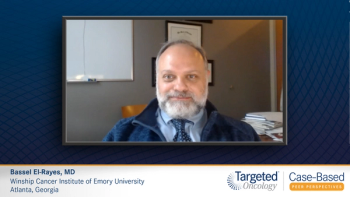
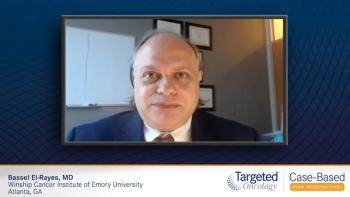
Bassel El-Rayes, MD, an expert in oncology, discusses the DESTINY-Gastric01 trial of trastuzumab deruxtecan in HER2+ gastric cancer and comments on implications for second-line treatment and beyond.

In an interview with Targeted Oncology, Axel Grothey, MD, discussed how HER2 has become an actionable target for gastrointestinal cancers and potential HER2-targeted treatments in the field as well as other interesting studies from the role trastuzumab plays in the space.
A proprietary noninvasive test designed to detect pancreatic cancer has been granted breakthrough device designation by the FDA for patients with new-onset diabetes.
A key advance in treating patients with gastrointestinal cancer is molecular profiling of the tumor that results in specific targets being identified. The standard of care for GI cancer has consisted of surgery, radiotherapy, and chemotherapy, but these standards have had limited efficacy and considerable toxicity that impact patients’ quality of life.
The use of a fitness tracking device as a prognostic tool was feasible and acceptable in a study evaluating 80 patients with colorectal cancer.

Half of all patients with hepatocellular carcinoma treated with the combination of regorafenib and nivolumab following progression on 2 lines of chemotherapy achieved disease control, according to initial results from a phase 2 proof-of-concept trial.