

GI CANCERS
Latest News
Infigratinib Promotes Clinical Activity in Patients With Chemo-Refractory, FGFR2+ Cholangiocarcinoma
By Kristi Rosa
Latest Videos



CME Content





























More News
In patients with esophageal cancer, chemotherapy with or without added pembrolizumab led to similar health-related quality of life results over 18 weeks, according to findings from the phase 3 KEYNOTE-590 study.
In the frontline setting of FGFR2b-positive advanced gastric or gastroesophageal junction adenocarcinoma, the combination of bemarituzumab combined with mFOLFOX6 achieved a 56% reduction in the risk of disease progression or death compared with placebo.
Neoadjuvant chemotherapy regimens were not found to increase the risk for perioperative complications in patients who have potentially resectable advanced thoracic esophageal cancer, according to data from the phase 3 JCOG 1109 trial that were virtually presented at the 2021 Gastrointestinal Cancers Symposium.
The FDA has approved fam-trastuzumab deruxtecan-nxki for the treatment of adult patients with HER2-positive locally advanced or metastatic gastric or gastroesophageal junction adenocarcinoma who have received a prior trastuzumab-based regimen.
In multiple gastrointestinal tumor types, the combination of the anti-angiogenic multikinase inhibitor lenvatinib plus the anti-PD-1 antibody pembrolizumab demonstrated promising antitumor activity and a manageable safety profile, according to data presented at the 2021 ASCO Gastrointestinal Cancers Symposium.
Esophageal-specific and general quality of life was improved in patients with esophageal/gastroesophageal cancer who received nivolumab in the Checkmate 577 clinical trial, according to subgroup analysis data presented during the 2021 American Society of Clinical Oncology Gastrointestinal Cancers Symposium.
The addition of pembrolizumab and trastuzumab to the combination cisplatin plus capecitabine was able to effectively treat HER2-positive advanced gastric and gastroesophageal junction cancer, regardless of PD-L1 expression in the phase 1b/2 PANTHERA trial.
Camrelizumab in combination with apatinib demonstrated encouraging clinical efficacy as a second-line treatment of patients with esophageal squamous cell carcinoma and demonstrated acceptable safety in a single-arm, open-label phase 2 clinical trial.
Roughly 40% of patients with advanced, progressive gastroenteropancreatic neuroendocrine tumors treated with pembrolizumab in combination with lanreotide achieved stable disease, according to results from the phase 1b/2 PLANET clinical trial presented during the 2021 American Society of Clinical Oncology Gastrointestinal Cancer Symposium.

Myriam Chalabi, MD, discussed the utility of microsatellite instability testing in gastrointestinal cancers and highlights the current role of immunotherapy for these patient populations.

Significant progress was made this year toward effectively hitting KRAS-driven tumors, leading to a great deal of excitement in the field.

Experts in oncology and hematology review some of the most impactful FDA approvals from 2020 in lung, breast, blood, gastrointestinal, and genitourinary cancers.
The FDA granted a Priority Review designation to pembrolizumab for potential approval with platinum and fluoropyrimidine-based chemotherapy as frontline treatment of patients with locally advanced unresectable or metastatic carcinoma of the esophagus and gastroesophageal junction.
The FDA has accepted a New Drug Application for the oral FGFR1-3 selective inhibitor, infigratinib and granted it Priority Review for the treatment of patients with cholangiocarcinoma.
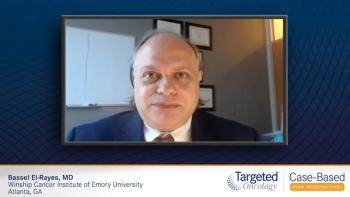
Bassel El-Rayes, MD, reviews the case of a 66-year old man with gastric carcinoma and discusses the disease from diagnosis to unmet needs.
The FDA granted a Breakthrough Therapy designation to zanidatamab as treatment of patients with previously treated HER2-amplified biliary tract cancer.
In the future, scientists may identify additional actionable alternations, allowing clinicians to target various subsets of pancreatic cancer more precisely.
Following a long history with minimal advances, neoadjuvant therapy provides hope on future avenues to further explore in order to continue improving outcomes for patients with pancreatic cancer.

In an interview with Targeted Oncology during the 2020 Association for Molecular Pathology Annual Meeting, Ozge Ceyhan-Birsoy, PhD, discussed genetic testing methods for patients with hereditary predisposition and the molecular research underway at MSKCC to improve testing in this patient population.
In an interview with Targeted Oncology, John L. Marshall, MD, provided an overview of the evolution of treatments for patients with pancreatic cancer, as well as the current therapeutic approaches for these patients and what’s next for this treatment paradigm.
Three efficacy end points met pre-specified statistical significance in the phase 2 FIGHT study of bemarituzumab plus modified FOLFOX6 in patients with FGFR2b-positive non-HER2-positive frontline advanced gastric or gastroesophageal junction cancer.
In an interview with Targeted Oncology, Anant Ramaswamy, MD, discussed the findings from the phase 2 study of capecitabine plus irinotecan compared with irinotecan alone as treatment of patients with advanced gallbladder cancer.
The FDA has granted a Fast Track designation to CPI-613 for the treatment of metastatic pancreatic cancer.
Historically, in gastrointestinal malignancies, chemotherapy and radiation were utilized to improve outcomes for patients. Although these treatments were effective, disease recurrence was always imminent, demonstrating a need for novel therapies.
During Case Based Peer Perspectives event, Damian Laber, MD, discussed the case of a 53-year-old male patient with stage IV colorectal cancer.