




CAR T-Cell Therapy
Latest News
Latest Videos


CME Content





























More News

Results from 2 trials of lisocabtagene maraleucel presented at ICML 2023 demonstrated efficacy and tolerability in patients with follicular lymphoma and mantle cell lymphoma.

Ciltacabtagene autoleucel was recently said to be a new standard-of-care for relapsed or refractory multiple myeloma. Soon, it may be an FDA-approved therapy.

CLDN6-directed CAR T-cell therapy used with or without a CLDN6-encoding mRNA vaccine continues to show promise in advanced solid tumors.
In a real-world population of patients with relapsed or refractory B-cell acute lymphoblastic leukemia, modest efficacy was demonstrated with brexucabtagene autoleucel.

A phase 1 study is exploring gamma delta T-cell therapy for the first time in patients with relapsed or refractory B-cell malignancies.

A comprehensive analysis of the phase 1 LEGEND-2 study shows a correlation between cytokine release syndrome and coagulation disorders inpatient with multiple myeloma treated with CAR T cells.
Retrospective research suggests that low skeletal muscle mass at baseline may negatively impact outcomes in patients receiving chimeric antigen receptor T-cell therapy.
Data on SC-DARIC33 reinforce the potential of the agent as a new T-cell therapy approach for patients with acute myeloid leukemia.
A study of patients with relapsed/refractory diffuse large B-cell lymphoma has showed that continuous administration of PD-1 inhibitors as a maintenance treatment may be feasible to maintain the efficacy of anti-CD19-CAR T cells.
Samer A. Srour, MD, explains the history of researching chimeric antigen receptor T-cell therapy in solid tumors.
Researchers are working to optimize the outcomes associated with CAR T-cell therapy, focusing on unique combinations that may enhance T-cell fitness, improving tumor eradication and treatment outcomes.
Complete remission was achieved in 99% patients with refractory leukemia or hematologic relapse when treated with CD19- and CD22-chimeric antigen receptor T-cell therapy in a phase 2 trial.

Omidubicel showed encouraging clinical benefit in a phase 3 study vs standard myeloablative umbilical cord blood in patients with blood cancers in need of an allogeneic hematopoietic stem cell transplant. Now, the FDA has approved the agent for this indication.
The phase 3 Karmma-3 trial of ide-cel in patients with triple-class-exposed relapsed/refractory multiple myeloma generated significantly improved progression-free survival and overall response rates vs standard regimens.

Michael T. Tees, MD, discusses chimeric antigen receptor T-cell therapies, including ALLO-501A, and its use for patients with relapsed or refractory large B-cell lymphoma.
After 3 years of follow-up in the ZUMA-5 trial, patients with relapsed/refractory indolent non-Hodgkin lymphoma treated with axicabtagene ciloleucel had durable responses.
Next-generation CAR T cells, including 1928T2Z and WZTL-002, continue to be investigated for the treatment of patients with large B-cell lymphoma.
Michael Tees, MD, discusses the preliminary safety outcomes observed for an allogeneic chimeric antigen receptor T-cell therapy for large B-cell lymphoma.

In the largest study of CAR T-cell therapy, ZUMA-7, a key secondary end point was met with axicabtagene ciloleucel treatment in patients with relapsed or refractory large B-cell lymphoma.
At a prespecified analysis of the CARTITUDE-1 trial with a median follow-up of approximately 28 months, treatment with cilta-cel continued to elicit positive responses and maintained a favorable risk/benefit profile for patients with multiple myeloma.
In an interview with Targeted Oncology, Hitomi Hosoya, MD, discussed the potential use of ctDNA in the myeloma space, including its ability to sequence BCMA-targeted therapies and reduce the need for bone marrow exams.
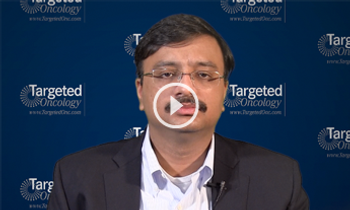
Nitin Jain, MD, discusses future improvements he anticipates for autologous and allogeneic chimeric antigen receptor T-cell therapies for B-cell acute lymphoblastic leukemia and other hematologic malignancies.
CYAD-01, an autologous CAR T-cell therapy, was tolerable and showed activity in patients with acute myeloid leukemia, myelodysplastic syndromes, and multiple myeloma.

Lori Leslie, MD, discusses ongoing clinical trials that are exploring chimeric antigen receptor T-cell therapy for the treatment of B-cell malignancies.
An analysis with longer follow-up of the ZUMA-3 study showed patients with relapsed/refractory B-cell acute lymphoblastic leukemia treated with brexu-cel had a median overall survival of 26 months and a complete response plus CR with incomplete count recovery rate of 71%.