CAR T-cell therapy for DLBCL shows promise in outpatient settings, reducing hospital stays and improving patient quality of life while managing toxicities effectively.
Lori A. Leslie, MD, is a hematologist-oncologist at Hackensack University Medical Center.
CAR T-cell therapy for DLBCL shows promise in outpatient settings, reducing hospital stays and improving patient quality of life while managing toxicities effectively.
Lori Leslie, MD, discusses ongoing clinical trials that are exploring chimeric antigen receptor T-cell therapy for the treatment of B-cell malignancies.
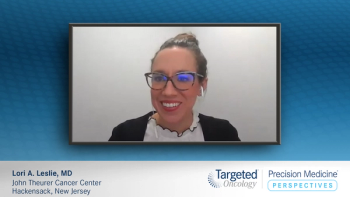
In an interview with Targeted OncologyTM, Leslie, assistant professor, Hackensack Meridian School of Medicine, director, Indolent Lymphoma and Chronic Lymphocytic Leukemia Research Programs, John Theurer Cancer Center, discussed the CAR T-cell product, brexucabtagene autoleucel, and its influence on both MCL and indolent lymphomas.
Lori A. Leslie, MD, discusses the impact that brexucabtagene autoleucel had on the treatment landscape for patients with relapsed or refractory mantle cell lymphoma.
Lori A. Leslie, MD, discusses her recent presentation around chimeric antigen receptor T-cell therapy for mantle cell lymphoma and indolent lymphomas.

Lori A. Leslie, MD, discusses the approval of tazemetostat in the follicular lymphoma setting and the data that that led to its FDA approval.

Lori A. Leslie, MD, discusses the current treatment options for patients with mantle cell lymphoma.
Lori A. Leslie, MD, discusses options for patients with relapsed/refractory mantle cell lymphoma.
Lori A. Leslie, MD, discusses chimeric antigen receptor T-cell therapy as a treatment for diffuse large B-cell lymphoma and the positive results demonstrated for this agent in patients with relapsed/refractory disease.
Lori A. Leslie, MD, discusses the rationale for investigating the PI3K-delta inhibitor umbralisib in patients with relapsed or refractory marginal zone lymphoma in a multi-center, open-label phase II study. On trial, only patients with MZL were enrolled who had received at least 1 prior line of therapy. These patients received single-agent umbralisib once daily until progression or unacceptable toxicity.
April 28th 2022
February 25th 2020