


CAR T-Cell Therapy
Latest News
Latest Videos


CME Content





























More News

Until recently, the CAR gene modification has been focused on T cells, thought for decades to be the main effector population for controlling cancer or for harnessing cancer immunotherapy.
Natural killer–cell therapies are increasingly being explored as an alternative and promising approach to immunotherapy.

A novel CAR T-cell therapy being developed at City of Hope offers a potential new treatment avenue for patients with recurrent glioblastoma and high-grade glioma.
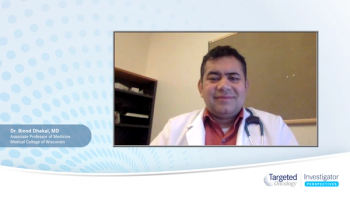
Binod Dhakal, MD, explores how CAR-T therapy may impact the future treatment landscape for R/R MM, including current unmet needs and clinical pearls for community oncologists treating patients with R/R MM.
Binod Dhakal, MD, shares clinical perspectives on using CAR-T therapy in R/R MM, highlighting the implications of the latest data for community oncologists and their patients.
Binod Dhakal, MD, discusses the current approach to sequencing CAR-T therapy for patients with R/R MM, including the impact of emerging bispecific antibodies and the potential role of CAR-T in earlier lines of therapy.
Binod Dhakal, MD, explores clinicians' safety concerns with using CAR-T therapy in R/R MM, including notable adverse events from recent clinical data and strategies for managing these events in practice.
Binod Dhakal, MD, discusses the latest results from the KarMMA-3 study, which investigated idecabtagene vicleucel (ide-cel) for patients with R/R MM, covering study design, patient population, and key takeaways.
Binod Dhakal, MD, reviews the latest results from the CARTITUDE-4 study, which evaluated ciltacabtagene autoleucel (cilta-cel) versus standard of care in patients with R/R MM, including study design, patient population, and key efficacy findings.
Binod Dhakal, MD, explores the role of CAR-T cell therapy in R/R MM, including an overview of the process, patient selection criteria, and identifying suitable candidates.
Binod Dhakal, MD, discusses the current standard of care for R/R MM, highlighting how treatment decision-making changes for patients who are refractory to lenalidomide and/or bortezomib.

The result of the FDA's Oncologic Drug Advisory Committee vote on idecabtagene vicleucel for the proposed indication is favorable.
During an Oncologic Drugs Advisory Committee Meeting, the FDA found that ciltacabtagene autoleucel has a favorable benefit/risk profile in relapsed/refractory multiple myeloma who have received at least 1 prior line of therapy and are refractory to lenalidomide.

Introducing a checkpoint inhibitor like nivolumab for patients where chimeric antigen receptor T-cell therapy failed in multiple myeloma is a potential area of interest for researchers.

Six CAR T-cell therapies have gained FDA approval across hematologic malignancy settings. These approvals have spurred further exploration for their use in solid tumors.

The novel cell therapy A2B530 is the first logic-gated cell therapy aimed at selectively killing tumor cells and protecting healthy cells in colorectal cancer.
The latest developments across the fields of stem cell transplantation and cellular therapy were presented at the 2024 Tandem Meetings in San Antonio, Texas, from February 21-24, 2024.
A retrospective study of real-world patients showed that immune engager therapies had the best response and progression-free survival rates in patients with multiple myeloma who had a relapse after idecabtagene vicleucel treatment.
A retrospective study demonstrated the feasibility and efficacy of brexucabtagene autoleucel in treating central nervous system involvement in adult patients with relapsed/refractory B-cell acute lymphoblastic leukemia.

A study suggests that a novel CAR T-cell therapy could be a curative treatment for some patients with chronic lymphocytic leukemia, with 25% of responders still in remission after 6 years.
The phase 1 study of HEMO-CAR-T in patients with acute myeloid leukemia can proceed following the lifted clinical hold.
The FDA’s Oncologic Drug Advisory Committee will be held on March 15, 2024, to review data pertaining to the supplemental biologics license application of ide-cel in relapsed or refractory multiple myeloma.
The axicabtagene ciloleucel manufacturing process has received FDA approval for a change to reduce the median turnaround time.
Matthew J. Frigault, MD, MS, discussed follow-up data on the efficacy and safety of CART-ddBCMA for the treatment of patients with relapsed/refractory multiple myeloma, particularly in later-line settings.

Findings from a phase 2 study found that treatment with axicabtagene ciloleucel in relapsed or refractory large B-cell lymphoma led to a complete metabolic response of 71%.