






























Jeffrey J. Raizer, MD, provides an overview of a study that analyzed the overall survival and toxicity profile of proton therapy for large-volume re-irradiation for patients with recurrent glioma.
Jeffrey J. Raizer, MD, provides an overview of a study that analyzed the overall survival and toxicity profile of proton therapy for large-volume re-irradiation for patients with recurrent glioma.
Roeland GW Verhaak, PhD, assistant professor, Department of Bioinformatics and Computational Biology, Division of Quantitative Sciences, The University of Texas MD Anderson Cancer Center, discusses a study that examined the alteration of the p53 pathway and ancestral progenitors to determine if they were associated with tumor recurrence in glioblastoma.
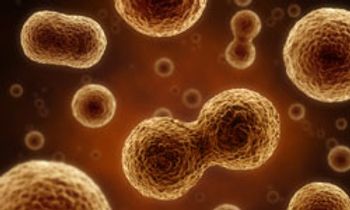
A plenary session held November 15 at the Society of Neuro-Oncology’s (SNO) 2014 Annual Meeting in Miami Beach focused on immunotherapy’s promise as well as its challenges as a treatment for patients with brain cancer.

According to data from a phase I study, the oncolytic virus Delta-24-RGD can infect, replicate, and kill glioma cells in patients.
Steven A. Toms, MD, director, neurosurgery, Geisinger Health System, discusses the combination of the Novo Tumor Treating Fields (NovoTTF) system and temozolomide for patients with glioblastoma.
David Reardon, MD, clinical director, Center for Neuro-Oncology, Dana-Farber Cancer Institute, president, Society for Neuro-Oncology, describes the mechanism of action of rindopepimut for recurrent glioblastoma.

Adjuvant temozolomide and the use of the Novo Tumor Treating Fields (NovoTTF) system led to longer progression-free survival and overall survival in patients with glioblastoma.
The vaccine rindopepimut appears to benefit patients with epidermal growth factor receptor variant III mutation (EGFRvIII) in glioblastoma with regard to progression-free survival (PFS) and overall survival (OS).
The vaccine rindopepimut (CDX110) in combination with bevacizumab induced tumor regression in a subset of patients with recurrent glioblastoma.

The addition of lomustine to bevacizumab showed superior efficacy compared with either agent alone in patients with recurrent glioblastom, according to the phase II BELOB study presented by Martin van den Bent, MD.

The combination of radiation therapy and procarbazine, CCNU, and vincristine (PCV) prolonged both overall survival (OS) and progression-free survival (PFS) compared with radiation therapy (RT) alone in a phase III study of patients with grade 2 glioma.
Walter J. Curran, Jr, MD, discusses a study that looked at radiation therapy with or without procarbazine, CCNU, and vincristine (PCV) for the treatment of low-grade glioma.

The FDA has approved the radioactive diagnostic imaging agent Lymphoseek injection to guide sentinel lymph node biopsy in patients with cancer of the head and neck.
Boris Kuvshinoff II, MD, MBA, associate professor, Division of Gastrointestinal/Endocrine Surgery, Department of Surgical Oncology, director, Liver and Pancreas Tumor Center, Roswell Park Cancer Institute, discusses microwave ablation therapy for the treatment of liver cancer.
Hassan Arshad, MD, assistant professor of oncology, head and neck surgeon, Department of Head and Neck Surgery/Plastic and Reconstructive Surgery, Roswell Park Cancer Institute, discusses a new study that will be evaluating a new approach to photodynamic therapy in patients with head and neck cancer.
Julie R. Brahmer, MD, from Johns Hopkins University School of Medicine, Sidney Kimmel Comprehensive Cancer Center, discusses the outlook for immunotherapies in cancer care.
Andrew T. Parsa MD, PhD, from the University of California, San Francisco, discusses the background of the prophage G-200 vaccine for recurrent glioblastoma multiforme.

Over the past two decades, there has been a shift away from indiscriminate cell-killing by anticancer agents toward the development of more specific drugs that target key aspects of cancer cell biology.

Paul A. Bunn, Jr, MD, from the University of Colorado, discusses afatinib for patients with activating epidermal growth factor receptor mutation.
Carol Aghajanian, MD, from the Memorial Sloan-Kettering Cancer Center, discusses the difficulties with a gold standard clinical trial endpoint in ovarian cancer.

Andrew T. Parsa MD, PhD, from the University of California, San Francisco, describes the administration of the prophage G-200 for recurrent glioblastoma multiforme.
Antoni Ribas, MD, PhD, the director of the Tumor Immunology Program Area at UCLA's Jonsson Comprehensive Cancer Center, discusses PD-1 and PD-L1 in various cancers.

Richard Finn, MD, from the Jonsson Comprehensive Cancer Center, UCLA, describes the development of cyclin-dependent kinases (CDKs) for the treatment of cancer.

Researchers at the NCI have developed the most comprehensive analysis of coding variants in the most frequently studied human tumor cell lines in cancer research.
Mark R. Gilbert, MD, reviews the trial design and findings from the RTOG 0825 phase III trial evaluating bevacizumab in patients with newly diagnosed glioblastoma.