

BRAIN CANCER
Latest News
Latest Videos


CME Content





























More News

The FDA has approved a lighter and more convenient version of the Optune system for patients with glioblastoma multiforme.
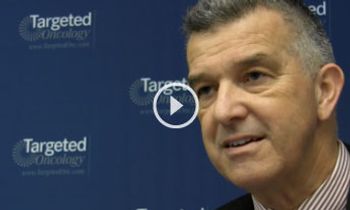
David A. Reardon, MD, clinical director, Center for Neuro-Oncology, Dana-Farber Cancer Institute, discusses the important considerations and challenges in using immune checkpoint inhibitors to treat patients with glioblastoma.
Adding temozolomide to short-course radiotherapy after surgery in elderly patients with glioblastoma boosted overall survival by nearly 2 months, bringing 1-year survival rates up from 22.2% to 37.8%.
An immunotherapy/antiangiogenesis combination proved to be safe and tolerable for patients with recurrent glioblastoma.
Dual autologous stem-cell transplant (ASCT) led to a 13% absolute increase in 3-year event-free survival (EFS) for children with high-risk neuroblastoma as compared with a single transplant, a large randomized trial showed.
Patients with anaplastic glioma who did not have a co-deleted 1p/19q chromosome, may have a new standard of care, according to Martin J. van den Bent, MD.
Patients with high-risk, low-grade glioma may soon benefit from radiation plus procarbazine, CCNU, and vincristine (PCV), according to Erica Bell, MD.
The combinations of nivolumab (Opdivo) plus ipilimumab (Yervoy) and pembrolizumab (Keytruda) plus bevacizumab (Avastin ), both show promising efficacy in recent trials, possibly paving the way toward a new era of treatment for patients with glioblastoma.
Patients with recurrent glioblastoma mutliforme reacted well to nivolumab (Opdivo) monotherapy, according to findings from the CheckMate-143 trial that were presented at the 2016 ASCO Annual Meeting. The single agent showed a manageable safety profile and promising efficacy signs during the course of the study.
Neratinib, an experimental TKI being developed for breast cancer, achieved a 36% clinical benefit rate in a phase II trial, according to a poster presented June 5, 2016 at the ASCO Annual Meeting in Chicago.
Despite previous unclear data, recent research suggests that aspirin use is associated with a lower risk of glioma.

Sue Naeyaert, senior director of Biosimilars Policy, EMD Serono, discusses the long-term impact that biosimilars could potentially have on the field of oncology.
The FDA has granted a genetically modified version of the poliovirus known as PVS-RIPO a breakthrough therapy designation as a potential therapy for patients with advanced glioblastoma multiforme.
Despite the letdown of prior research, the future looks bright for immunotherapies and novel targeted approaches for patients with gliomas, many of which have already been developed for other types of cancer.
The combination of rindopepimut plus temozolomide did not improve overall survival (OS) when compared with temozolomide plus a control in patients with newly diagnosed EGFRvIII-positive glioblastoma multiforme (GBM).
A new treatment delivery method is being explored that combines real-time imaging with convection-enhanced delivery of chemotherapy for patients with high-grade gliomas, according to the lead investigator of early phase research exploring the approach, Nicholas A. Butowski, MD.
Preclinical research conducted on tumor samples and mouse models showed that FGL2 is secreted by glioblastoma, which causes the upregulation of immune suppression mechanisms. Additionally, in these early studies, an anti

David Reardon, MD, clinical director, Center for Neuro-Oncology, Dana-Farber Cancer Institute, discusses the future of immunotherapy in glioblastoma and how rindopepimut fits into that paradigm.
Mark Gilbert, MD, neuro-oncologist, chief of neuro-oncology, National Institute of Health, discusses predicting how a patient's brain tumor might act and respond to treatment based on their genetics.
The understanding that medulloblastoma is comprised of 4 distinct molecular subtypes of disease, each representing a unique opportunity for new drug development, has set the groundwork for a wave of advances in the treatment of pediatric brain cancer, according to Matthias A. Karajannis, MD.
Maciej Michal Mrugala MD, PhD, MPH, chief of the Division of Neuro-Oncology, University of Washington
Michael Lim, MD, director of Brain Tumor Immunotherapy, associate professor of Neurosurgery, Johns Hopkins Medicine, discusses checkpoint inhibitors in glioblastoma.
Targeted Oncology spoke with Andrew S. Chi, MD, PhD, head of Neuro-Oncology at NYU Langone's Laura and Isaac Perlmutter Cancer Center, on recent developments in the treatment paradigm for patients with brain cancer, including his recent study into mutant IDH1 gliomas and the role of the NAD metabolite.

Dr. Nicholas A. Butowski on Convection-Enhanced Delivery of Nanoliposomal Irinotecan in Brain Cancer
Nicholas A. Butowski, MD, director, Translational Research in Neuro-Oncology, University of California, San Francisco, discusses the eligibility of patients with glioblastoma to receive a convection-enhanced delivery of nanoliposomal irinotecan with real-time imaging.
​Rimas Lukas, MD, director, Medical Neuro-Oncology, co-director, Neurology Medical Student Clerkship Program, The University of Chicago Medical Center, discusses the next steps following a phase I study looking at atezolizumab in glioblastoma.