

Bladder Cancer
Latest News

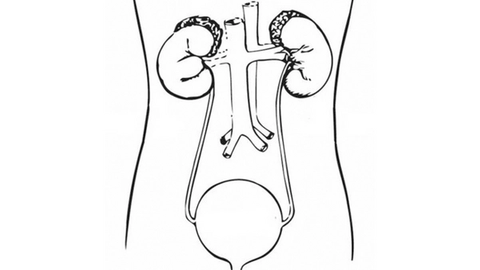
Durable Responses Seen in Low-Grade Upper Tract Urothelial Carcinoma After UGN-101 Induction
By Kristi Rosa
Latest Videos
CME Content

























More News

A phase 3 study is underway to evaluate the potential superiority of TAR-200 in combination with cetrelimab to chemoradiotherapy for the treatment of muscle invasive bladder cancer.
Patients with BCG-unresponsive, non-muscle invasive bladder cance carcinoma in situ had promising responses to Bacille Calmette-Guérinplus N-803, updated data from cohort A of the phase 2/3 QUILT-3.032 study.
According to secondary analysis results of a phase 3 study, antibody titers and fold changes are possibly predictive of nadofaragene firadenovec efficacy in patients with bacillus Calmette-Guérun unresponsive non-muscle invasive bladder cancer.

The first patient with a locally advanced or metastatic solid tumor has been dosed with buparlisib in combination with A0025 with or without atezolizumab in a phase 1a clinical trial.
Bishoy M. Faltas, MD, discussed the use of genomic testing in urothelial canncer in greater detail, in an interview with Targeted Oncology.
The FDA has approved pembrolizumab for the treatment of patients with locally advanced or metastatic urothelial carcinoma who are not eligible for any platinum-containing chemotherapy.
Adding berzosertib, a novel ataxia telangiectasia and Rad3-related inhibitor drug, to standard-of-care chemotherapy does not extend progression-free survival for patients with metastatic urothelial cancer.
Sacituzumab goveitecan has been administered to the first time in a patient with metastatic or locally advanced unresectable urothelial carcinoma as part of the phase TROPICS-04 study.
In an interview with Targeted Oncology™, study co-investigator Yousef Zakharia, explained the background and results of the DUART study.
In treating patients with bladder cancer, criteria for treatment differ across practices. Ten oncologists from community practices and academia discussed how they would approach treatment of a 66-year old man with advanced bladder cancer.

Bishoy M. Faltas, MD, Fellow, Hematology/Oncology, Weill Cornell Medical College, discusses genomic testing in urothelial cancer.
Cora N. Sternberg, MD, discusses the case of a 66-year-old woman with bladder cancer.

The FDA has granted approval to nivolumab as an adjuvant treatment of patients with urothelial carcinoma who are at high risk of recurrence after undergoing radical resection, regardless of prior neoadjuvant chemotherapy, nodal involvement or PD-L1 status.
The FDA has issued a complete response letter to Sesen Bio, denying the approval of the Biologics License Application for Vicinium for the treatment of BCG-unresponsive non-muscle invasive bladder cancer.
A post hoc analysis from the IMvigor010 study evaluating circulating tumor ctDNA in patients receiving adjuvant atezolizumab in high-risk muscle-invasive urothelial cancer after surgery was presented at the European Society of Medical Oncology Immuno-Oncology Virtual Congress in 2020.

Shaakir Hasan, DO, discusses the disparities identified in the bladder cancer space through a real-world prospective study.
In an interview with Targeted Oncology™, Thomas Powles, MD, MBBS, MRCP, discussed the latest research around enfortumab vedotin in locally advanced or metastatic urothelial cancer.
In an interview with Targeted Oncology™, Rhonda L. Bitting, MD, discussed the efficacy results and key takeaways of a study investigating low-dose paclitaxel plus pembrolizumab in patients with platinum-refractory UC.

In an interview with Targeted Oncology™, Joseph Kim, MD, an associate professor of internal medicine at the Yale School of Medicine, discuss the lack of clinical benefit of sapanisertib for the treatment of TSC1/TSC2mutated mUC.
The UriFind test that utilizes DNA methylation detection for the diagnosis of bladder cancer has been granted a breakthrough device designation by the FDA.
A significant increase in the risk of disease recurrence among patients with high level of the nicotine metabolite, urinary cotinine, who had non–muscle invasive bladder cancer and were smokers.
During a Targeted Oncology Case-Based Roundtable event, Vadim S. Koshkin, MD, discussed switch maintenance for patients with bladder cancer.

Risa Wong, MD, reviews the standard treatment options for patients with metastatic urothelial cancer.
The FDA has granted approval to enfortumab vedotin for the treatment of adult patients with locally advanced or metastatic urothelial cancer.
During a Targeted Oncology Case-Based Roundtable event, Daniel A. Landau, MD, moderated a discussion around the JAVELIN trial and how its results were practice changing for oncologists treating for bladder cancer.