
Following 6 well-tolerated cycles of R-CHOP, a 75-year-old patient with diffuse large B-cell lymphoma showed complete remission on a PET scan. But 1 year later, the disease relapsed.
Following 6 well-tolerated cycles of R-CHOP, a 75-year-old patient with diffuse large B-cell lymphoma showed complete remission on a PET scan. But 1 year later, the disease relapsed.

During a live virtual event, Eleni Efstathiou, MD, PhD, discussed the phase 3 SPARTAN trial of apalutamide in patients with castration-resistant prostate cancer.
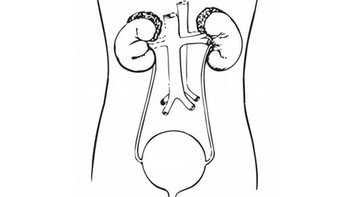
Based on the case of a man with metastatic renal cell carcinoma, Brian Rini, MD, and peers discussed later-line immunotherapy and tyrosine kinase inhibitor combination therapies.
A 51-year-old man presented with worsening fatigue on exertion and pallor with an ECOG performance score of 2 and was diagnoses with stage II standard-risk multiple myeloma.

Treatment for a patient with poorly differentiated adenocarcinoma of the lung was the topic of discussion between Joshua K. Sabari, MD and peers during a Case-Based Roundtable.
During a live virtual event, Beth A. Christian, MD, discussed real-world challenges of providing timely access to CAR-T cell therapy for patients with diffuse large B-cell lymphoma.
During a live virtual event, Eleni Efstathiou, MD, PhD, discussed the recommended approach to front-line treatment of castration-resistant prostate cancer.
During a live virtual event, Beth A. Christian, MD, discussed approaches to third-line treatment of transplant-ineligible DLBCL and when to consider CAR T-cell therapy.
During a live virtual event, Martin Dietrich, MD, PhD, discusses how to address switching treatments in response to detection of a MET gene biomarker.
During a live virtual event, Danielle Brander, MD, discussed with participating physicians second-line treatment options for patients with chronic lymphocytic leukemia, with questions guided by Targeted Oncology.
During a live virtual event, Martin Dietrich, MD, PhD, discusses management of toxicities and adverse events of MET inhibitors in non–small cell lung cancer.
A 51-year-old man presented with worsening fatigue on exertion and pallor with an ECOG performance score of 1. He eventually received a diagnosis of stage II standard-risk multiple myeloma after testing and examination.
During a live virtual event, Danielle Brander, MD, discussed with participating physicians second-line treatment options for patients with chronic lymphocytic leukemia, with questions guided by Targeted Oncology.
A 66-year-old woman was referred by urology after evaluation for gross hematuria. After a clinical work-up, the patient was diagnosed with metastatic bladder cancer.

At a live virtual event, Martin Dietrich, MD, PhD, discusses treatment options for a patient with non–small cell lung cancer when molecular testing shows a MET exon 14 skipping mutation.
During a Targeted Oncology Case-Based Roundtable event, Mark A. Socinski, MD, led a discussion about treatment of patients with EGFR-mutant non–small cell lung cancer.
A 75-year-old man presented with intermittent right hip pain, but his physical examination was unremarkable and he had an ECOG performance score of 1. Two oncologists lead a discussion about the patient's case.
A group of oncologists led by Bradley C. Carthon, MD, PhD, discussed clinical work-up, treatment, and follow-up for a 75-year old patents with castration-resistant prostate cancer.
Eleven months after a 43-year-old woman with diffuse large B-cell lymphoma completed chimeric antigen receptor T-cell therapy, she complained of fever, night sweats, and back pain.
At a live virtual event, Martin Dietrich, MD, PhD, discusses how to approach biopsies and molecular testing in coordination with pathologists and testing services for patients with non–small cell lung cancer.

The biopsy of a 88-year-man demonstrated infiltrative basal cell carcinoma. his case was the topic of discussion during a Case-Based Roundtable led by Nikhil I. Khushalani, MD.
Eleven months after completing therapy for diffuse large B-cell lymphoma, a 43-year-old patients reported fever, night sweats, and back pain, and a palpable lymph node was discovered in her left groin.
Justin Kline, MD, discusses what makes loncastuximab tesirine-lpyl a good bridge therapy for patients with relapsed/refractory diffuse large B-cell lymphoma to potential CAR T-cell therapy.
An otherwise healthy 60-year-old White woman presented with a nonproductive cough. The patient's case was the topic of discussion during a recent Case-Based Roundtable event.
One year after a 75-year-old patient with diffuse large B-cell lymphoma achieved remission following 6 cycles of R-CHOP, the patient relapsed but declined transplant.
During a live virtual event, Alicia Morgans, MD, MPH, discussed when to combine novel hormonal agents with androgen-deprivation therapy in nonmetastatic castrate-resistant prostate cancer and how novel imaging techniques could influence treatment.
After 8 months on enzalutamide, a 75-year-old patients with metastatic castration-resistant prostate cancer showed a PSA level of 60.7 ng/mL, enlargement of known pelvic lymph nodes, and progressive disease.
Looking at the challenges with CAR T-cell therapies in patients with diffuse large B-cell lymphoma Justin Kline, MD, discusses the best available therapies for patients who relapse on treatment.
A 59-year-old Asian man presented with chest pain, cough, and dyspnea. A discussion of the case was led by Shirish M. Gadgeel, MD, during a Targeted Oncology Case-Based Roundtable event.
During a live virtual event, Alicia Morgans, MD, MPH, discussed the choice of novel hormonal agents to combine with androgen-deprivation therapy in nonmetastatic castrate-resistant prostate cancer.