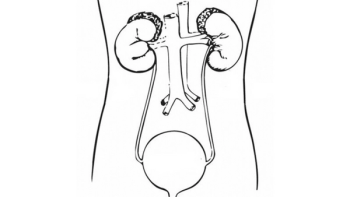
During a Targeted Oncology Case Based Peer Perspectives event, Sandy Ting Liu, MD, discussed the case of a62-year-old male patient with bladder cancer.
During a Targeted Oncology Case Based Peer Perspectives event, Sandy Ting Liu, MD, discussed the case of a62-year-old male patient with bladder cancer.

During a Targeted Oncology Case Based Peer Perspective event, Barbara Pro, MD, discussed the case of a 60-year-old male patient with peripheral T-cell lymphoma.
During a Targeted Oncology Case Based Peer Perspective event, Alex Mejia-Garcia, MD, discussed the case of a 51-year-old male patient with stage II multiple myeloma.

Cyrus M. Khan, MD, discussed the case of a 61-year-old patient with bone marrow biopsy confirmed chronic lymphocytic leukemia during a Targeted Oncology Case Based Peer Perspectives event.
Haris Ali, MD, discussed the case of a 48-year-old patient with acute graft-versus-host disease.
Nilanjan Ghosh, MD, PhD, discussed the case of a 22-year-old patients with advanced Hodgkin lymphoma.
In an interview with Targeted Oncology, Peter Martin, MD, discusses the current mantle cell lymphoma treatment landscape and the future of the field.
During a Targeted Oncology Case Based Peer Perspective event, Jose Sandoval Sus, MD, discussed the guideline-recommended treatment options for a 71-year-old patient with chronic lymphocytic leukemia.

During a Case Based Peer Perspectives event Brian T. Hill, MD, PhD, discussed the case of a 53-year-old patients with chronic lymphocytic leukemia.
Alicia K. Morgans, MD, MPH, discussed the case of a 75-year-old male with metastatic castration-resistant prostate cancer.
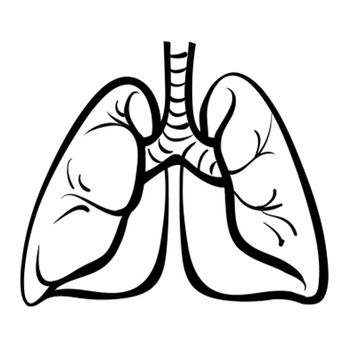
Nathan A. Pennell, MD, PhD, discussed the case of 66-year-old patient with EGFR-mutant non–small cell lung cancer, during a virtual Case Based Peer Perspectives event.

Leslie M. Randall, MD, discussed the case of a 49-year-old African American patients with BRCA-mutated ovarian cancer.

Edward Kim, MD, chair, Department of Solid Tumor Oncology, Levine Cancer Institute in Charlotte, NC, discussed the use of atezolizumab and durvalumab as treatment of a 73-year-old female patient with extensive-stage small cell lung cancer during a virtual Case Based Peer Perspective event.
Alex Spira, MD, PhD, director, Virginia Cancer Specialists, Phase I Trial Program, Fairfax, VA, discussed the use of durvalumab as treatment of a 63-year-old male with unresectable stage III non–small cell lung cancer.
Ronald D. Alvarez, MD, MBA, weighs the pros and cons of adding bevacizumab to olaparib as treatment of a 69-year-old male patients with BRCA-mutant ovarian cancer.

Treatment options for a 69-year-old patient with poorly differentiated, infiltrative, cutaneous squamous cell carcinoma was discussed by Meredith McKean, MD, MPH and a group of physicians.
During a virtual Case Based Peer Perspective series, Zofia Piotrowska, MD, discussed the case of a 66-year-old man with non–small cell lung cancer and a genetic mutation.
The case of a 49-year-old African American woman with ovarian cancer was discussed during a virtual Case Based Peer Perspective event led by Matthew L. Anderson, MD, PhD.
The case of a 73-year-old Asian patient diagnosed with non–small cell lung cancer and an EGFR exon 19 deletion was discussed during a virtual Case Based Peer Perspectives event, led by Melissa L. Johnson, MD.
During a virtual Case Based Peer Perspectives event, Mark G. Kris, MD, attending physician, Thoracic Oncology Service, William and Joy Ruane chair in Thoracic Oncology, Memorial Sloan Kettering Cancer Center, discussed molecular testing for a 59-year-old patient with poorly differentiated adenocarcinoma of the lung, as wells as the treatment options for the patient.
Mark Agulnik, MD, discussed the guidelines and data supporting possible treatment decisions for an 88-year-old male patients with basal cell carcinoma, during a virtual Case Based Peer Perspectives event.
John V. Heymach, MD, PhD, reviewed the case of a 73-year-old women with extensive-stage small cell lung cancer during a virtual Case Based Peer Perspective event.
During a virtual Case Base Peer Perspectives event, Eleni Efstathiou, MD, PhD, a discussed treatment options for a 57-year-old African American man with nonmetastaic castration resistant prostate cancer.
During a virtual Case Based Peer Perspectives event, David I. Quinn, MD, MBBS, PhD, reviewed the case of a 60-year old male patient with metastatic castration-resistant prostate cancer.
During a virtual Case Based Peer Perspectives event, Nicholas J. Vogelzang, MD, reviewed the case of a 75-year-old man diagnosed with metastatic castration-resistant prostate cancer.

During a virtual Case Based Peer Perspectives event, Paul M. Barr, MD, reviewed the case of a 71-year-old woman with newly diagnosed chronic lymphocytic leukemia and the role of BTK inhibitors in the frontline setting.
Siddhartha Ganguly, MD, reviewed the case of a 51-year-old man with standard-risk multiple myeloma.
During a virtual Case Based Peer Perspectives event, Craig A. Portell, MD, discussed how he would go about treating a patient case with chronic lymphocytic leukemia.
During a virtual Case Based Peer Perspectives event, Jan A. Burger, MD, PhD, discussed testing and the treatment options for chronic lymphocytic leukemia, based on a case of 71-year-old female patient.