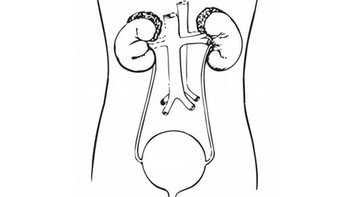
During a Targeted Oncology Case-Based Roundtable event, Tian Zhang, MD, MHS, an assistant professor of Medicine at Duke Cancer Institute, discusses the case of a 60-year-old patients with metastatic castration-resistant prostate cancer.
During a Targeted Oncology Case-Based Roundtable event, Tian Zhang, MD, MHS, an assistant professor of Medicine at Duke Cancer Institute, discusses the case of a 60-year-old patients with metastatic castration-resistant prostate cancer.

Two years after being diagnosed with multiple myeloma and treated with the Dara-Rd regimen as induction therapy, a 78-year-old patient presented with mild fatigue during routine follow-up. James E. Hoffman, MD, discussed the case with a group of peers.

Research in the solid tumors arena around the combination of the oncolytic virus technology CF33-CD19 and the CD19-targeting CAR placental-derived T-cell therapy CyCART-19, is underway to explore it’s potential in this patient population.
Jorge A. Garcia, MD, FACP, discussed that case of a 66-year-old female presented to a urologist with nodular 7-cm mass along posterior bladder wall and was later diagnosed with bladder cancer. He was joined by Neeraj Mahajan, MD, Anish B Parikh, MD, and 8 other physicians during a Targeted Oncology Case-Based Roundtable event.

During a Targeted Oncology Case-Based Roundtable, Ruben Mesa, MD, discussed the prognostic risk systems in myelofibrosis.
During a Targeted Oncology Case-Based Roundtable event, Joshi Alumkal, MD, discussed the case of a 75-year-old man with metastatic castration-resistant prostate cancer.
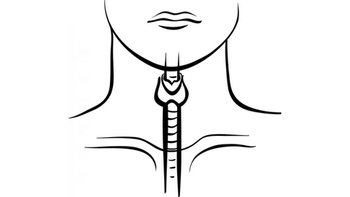
During a Targeted Oncology Case-Based Roundtable event, Guilherme Rabinowits, MD, discussed the case of a 58-year-old patient with medullary thyroid cancer.
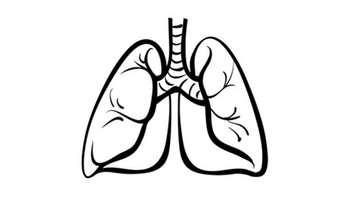
During a Targeted Oncology Case-Based Roundtable event, Jarushka Naidoo, MB, BCh, MHS. discussed the case of a 73-year-old patient with small cell lung cancer who first presented with shortness of breath, productive cough, chest pain, and fatigue.
During a Targeted Oncology Case-Based Roundtable event, Clifton C. Mo, MD, discussed the treatment of newly-diagnoses multiple myeloma.
During a Targeted Oncology Case-Based Roundtable event, Alicia K. Morgans, MD, MPH, discussed the case of a 75-year-old man with metastatic castration-resistant prostate cancer.
Two years after being diagnosed with stage II multiple myeloma, a patient continuing on daratumumab plus lenalidomide maintenance showed concerning symptoms during routine follow-up, explained Ruben Niesvizky, MD.
The treatment plan for a woman with multiple myeloma, including which imaging to order, choice of second-line therapy, managing comorbidities, and backbone therapy choice, was discussed during a recent Cased-Base Roundtable event led by Clifton C. Mo, MD.
Matthew A. Lunning, DO began a Case-Based Roundtable event by asking a group of oncologists how diffuse large b-cell lymphoma in handling in their practices. The responses varied, considering some of the oncologists worked in academic centers and some worked in the community setting.
Pedro C. Barata, MD, MSc, discussed the case of a 66-year0old woman with urothelial carcinoma during a Targeted Oncology Case-Based Roundtable event.
During a Targeted Oncology Case-Based Roundtable event, Grace K. Dy, MD and 9 other physicians discussed molecular testing for patients with non–small cell lung cancer.
According to a poll, the majority of physicians would wait for molecular testing on a patient metastatic lung adenocarcinoma. Then, upon diagnosis of RET-mutant non–small cell lung cancer, a group of oncologists explained how they would go about treatment for the patient.
Erminia Massarelli, MD, PhD, MS, discussed the case of a 58-year-old man with RET-mutant medullary thyroid cancer.
Ronald J. Scheff, MD, reviews the molecular testing practices for non–small cell lung cancer and frontline treatment of patients with PD-L1-positive non–small cell lung cancer during a Case-Based Roundtable event.
During a Targeted Oncology Case-Based Roundtable event, Thomas Hutson, DO, PharmD, discussed the case of a patient with metastatic castration-resistant prostate cancer.
Treatment for a patient with chronic lymphocytic leukemia who has comorbidities including hypertension and atrial fibrillation was the topic of discussion during a Targeted Oncology Case-Based Roundtable event led by Parameswaran Venugopal, MD.
In the case that a clinical trial is not an option for a 75-year-old male patient with diffuse large B-cell lymphoma who is ineligible for transplant due to older age and high risk. Herbert A. Eradat, MD, explains his treatment plan.
During a Targeted Oncology Case-Based Roundtable event, Balazs Halmos, MD, MS, discussed the case of a 73-year-old patient with early-stage small cell lung cancer.
During a Targeted Oncology Case-Based Roundtable event, A. Oliver Sartor, MD, reviewed the case of a 75-year-old man with metastatic castration-resistant prostate cancer.

FDA approval has been granted approval to belumosudil for the treatment of adult and pediatric patients 12 years and older with chronic graft-versus-host disease after failure of at least two prior lines of systemic therapy.
During a Targeted Oncology Case-Based Roundtable event, Vadim S. Koshkin, MD, discussed switch maintenance for patients with bladder cancer.
Jonathon B. Cohen, MD, MS, moderated a Case-Based Roundtable event during which experts discussed treating patients with chronic lymphocytic leukemia during the COVID-19 pandemic.
Strategies for treating patients with HER2-positive breast cancer and metastatic brain lesions was a topic discussed between William J. Gradishar, MD, and a group of peers during a Targeted Oncology Case-Based Roundtable event.
During a Targeted Oncology Case-Based Roundtable event, Daniel A. Landau, MD, moderated a discussion around the JAVELIN trial and how its results were practice changing for oncologists treating for bladder cancer.
Based on clinical trial data, apalutamide, enzalutamide, and darolutamide are all viable treatment options for nonmetastatic castration resistant prostate cancer.
For patients who relapsed on their prior therapy and have triple-refractory multiple myeloma, selecting the best next-line of therapy is an important decision for their disease outcome. During a Targeted Oncology Case-Based Roundtable event, Peter Forsberg, MD, discussed this topic with a group.