
In the first article of a 2-part series, Yara Abdou, MD, discussed the most significant challenges and transformative advancements in the treatment of HER2-positive breast cancer.
Jordyn Sava is an editor for Targeted Oncology.
In the first article of a 2-part series, Yara Abdou, MD, discussed the most significant challenges and transformative advancements in the treatment of HER2-positive breast cancer.

In an interview with Targeted Oncology, Charu Aggarwal, MD, MPH, discussed the real-world study evaluating the link between molecular genotyping and survival among patients with non–small-cell lung cancer.

In an interview for Cervical Cancer Awareness Month, Robert P. Edwards, MD, discussed the current treatment landscape of cervical cancer as well as future prospects.
The FDA has approved the investigational new drug application for HBM9027, a bispecific antibody.
An investigational new drug for BSI-082 has been cleared by the FDA for the treatment of hematologic and solid tumors.

In an interview with Targeted Oncology, Jie Jin, MD, discussed the need for a standard therapy in peripheral T-cell lymphoma and highlighted the potential impact of the JACKPOT26 study.
NK010 represents a promising advancement in the landscape of natural killer cell-based immunotherapy across a variety of cancer types.
PTX-252, a novel molecular drug, has received an FDA orphan drug designation for the treatment of patients with acute myeloid leukemia.
Results from the phase 3 CheckMate-8HW trial support first-line treatment with nivolumab plus ipilimumab as a standard-of-care option for patients with microsatellite instability–high or mismatch repair deficient metastatic colorectal cancer.
A study has identified a genetic mechanism, DHX9, making small cell lung cancer responsive to immunotherapy. This is a pivotal breakthrough for treatment of a historically resistant disease.

In an interview with Targeted Oncology, Amer Assal, MD, provided insights into the risks and complications associated with stem cell transplants, emphasizing the importance of risk stratification and preventive measures.
The combination of avutometinib and sotorasib received FDA fast track designation for the treatment of KRAS G12C-mutant non–small cell lung cancer.

Matthew J. Frigault, MD, MS, discussed follow-up data on the efficacy and safety of CART-ddBCMA for the treatment of patients with relapsed/refractory multiple myeloma, particularly in later-line settings.
Francesca Jackson-Spence, PhD, and Matthew Young, MD, delved into the major advances in genitourinary cancer treatment, including breakthroughs in immunotherapy, targeted therapies, and early detection that offer new hope for patients.

In an interview with Targeted Oncology, Jon E. Arnason, MD, discussed an analysis looking at circulating tumor DNA among patients with follicular lymphoma and diffuse large B-cell lymphoma from the ELM-2 trial.
Following clearance from the FDA, Hoth Therapeutics is carrying out a clinical trial as part of its open investigational new drug program for HT-001 in cancers undergoing toxicities from EGFR inhibition.
David J. Andorsky, MD, discussed real-world findings from a study which evaluated BTK inhibitors in adult patients with chronic lymphocytic leukemia or small lymphocytic lymphoma.
In an interview with Targeted Oncology, Jonathan W. Riess, MD, discussed the ever-changing EGFR-mutated lung cancer treatment landscape, highlighting several agents that are currently under development.
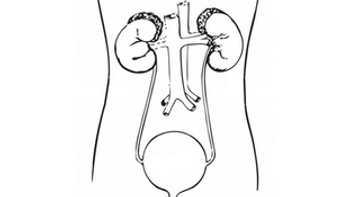
The gene therapy, nadofaragene firadenovec-vncg, is now fully available across the United States for patients with this aggressive bladder cancer.
The BOSTON study delivered promising findings among patients with multiple myeloma treated with selinexor, bortezomib, and dexamethasone vs bortezomib and dexamethasone.
In an interview with Targeted Oncology, Lee Greenberger, PhD, discussed some of the latest, interesting research that caught his attention in 2023 and what community oncologists should know about the space as we move into 2024.
In season 5, episode 1 of Targeted Talks, Badrinath Konety, MD, delves into the critical topic of prostate cancer screening and discusses some of the recent advancements in the prostate cancer space.

The beta blocker carvedilol may improve important markers of heart injury sustained as a result of chemotherapy exposure among long-term childhood cancer survivors.

The AMPLIFY-7- trial is evaluating the investigational therapeutic cancer vaccine ELI-002 7P in patients with solid tumors that harbor KRAS or NRAS mutations.
In an interview with Targeted Oncology, Franck Morschhauser, MD, PhD, discussed the high complete response rates and durable remissions seen with lisocabtagene maraleucel in patients with high-risk relapsed/refractory follicular lymphoma.

Sabarish Ram Ayyappan, MD, discusses the mechanism of action of odronextamab and highlights the phase 2 ELM-2 trial which evaluated the agent in patients with relapsed/refractory diffuse large B-cell lymphoma.

A phase 1a study of HF1K16 for the treatment of patients with solid tumors has been completed and deemed well-tolerated.

Pembrolizumab plus cabozantinib showed promising activity with an objective response rate of 65.8%, median progression-free survival of 10.45 months, and median overall survival of 30.81 months in metastatic renal cell carcinoma.
With an investigational new drug application cleared by the FDA, a multi-center, open-label, modified dose-escalation, phase 1b trial of ACT-IOP-003 will begin in pancreatic cancer.
Treatment with trastuzumab maintains its place as the backbone of therapy in the first-line setting for management of patients with HER2-positive metastatic breast cancer.