
In an interview with Targeted Oncology, Rohan Garje, MD, discussed how mutations such as TP53, RB1, and PTEN impact overall survival in patients with metastatic prostate cancer.
Jordyn Sava is an editor for Targeted Oncology.
In an interview with Targeted Oncology, Rohan Garje, MD, discussed how mutations such as TP53, RB1, and PTEN impact overall survival in patients with metastatic prostate cancer.

Samilia Obeng-Gyasi, MD, MPH, delved into the background and findings of this study assessing the correlation between neighborhood opportunity, allostatic load, and all-cause mortality among patients with breast cancer.
The combination of zanubrutinib and obinutuzumab is now an approved treatment option for adult patients with relapsed/refractory follicular lymphoma after at least 2 prior lines of therapy.
Nivolumab given with cisplatin-based chemotherapy has received approval from the FDA for patients with treatment-naive unresectable or mUC.

Belantamab mafodotin plus pomalidomide and dexamethasone significantly extended progression-free survival in multiple myeloma, offering a potential new treatment option with different mechanisms of action.
Cambritaxestat, a first-in-class therapy in development for highly fibrotic cancer indications that overexpress autotaxin, has been granted an orphan drug designation from the FDA in pancreatic cancer.

In an interview with Targeted Oncology, Raajit K. Rampal, MD, PhD, provided an update on developments, unmet needs, and future directions for the treatment of patients with myelofibrosis.

Enfortumab vedotin with pembrolizumab significantly improved survival outcomes compared with chemotherapy in patients with previously untreated advanced urothelial cancer.

In an interview with Targeted Oncology, Chakra Chaulagain, MD, discussed the trends of higher rates of autologous hematopoietic stem cell transplantation refusal among patients with multiple myeloma.
The investigational new drug application for CLN-619 has been granted clearance from the FDA, marking it as a potential for the treatment of relapsed/refractory multiple myeloma.
The FDA approved the investigational new drug application for olaptesed pegol as a potential treatment for adult patients with aggressive brain cancer, specifically glioblastoma.

For Colorectal Cancer Awareness Month, Jedrzej Wykretowicz, MD, PhD, discussed the importance of early detection and taking steps towards the prevention of colorectal cancer.
The FDA has initiated a rolling submission for mirdametinib, an investigational MEK inhibitor, for the treatment of neurofibromatosis type 1-associated plexiform neurofibromas in pediatric and adult patients.

A recent study identified key risk factors that link with increased symptom burden in patients with endometrial cancer.
In an interview with Targeted Oncology, Claire Saxton, MBA, and Ashley Moncrief, discussed the importance of education efforts focused on ensuring that patients with MDS understand their diagnosis and options so that they can make informed decisions about their care.

In an interview with Targeted Oncology, Matthew Matasar, MD, discussed the advantages and current applications of bispecific antibodies for the treatment of B-cell lymphomas.
In an interview for Triple-Negative Breast Cancer Awareness Day, Daniel Carlson, DO, delved into the complexities of the disease, highlighting the current space and future possibilities.
Amivantamab plus carboplatin and pemetrexed is now an approved first-line treatment for patients with EGFR exon 20 insertion mutation-positive non-small cell lung cancer.
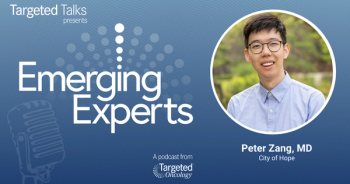
In this episode of Emerging Experts, Peter Zang, MD, highlights research on baseline CD8 lymph node avidity with 89-Zr-crefmirlimab for the treatment of patients with metastatic renal cell carcinoma and response to immunotherapy.
JAB-30300, a P53 Y220C activator, received approval from the FDA for its investigational new drug application. A phase 1/2a clinical trial to investigate its safety and efficacy against advanced solid tumors will begin.
Here’s a look back on all the FDA happenings from the month of February 2024.
In an interview with Targeted Oncology, Binod Dhakal, MD, MS, discussed the phase 2 IMPEDE trial, focusing on the treatment regimen Isa-EloPD for patients with relapsed/refractory multiple myeloma.
A fast track designation has been granted to 9MW2821 by the FDA for patients with advanced, recurrent, or metastatic esophageal squamous cell carcinoma.

Experts like Kevin Nead, MD, and Nicholas Leeper, MD, are exploring the connection between cardiovascular disease and cancer.
Approval for melphalan flufenamide has been withdrawn by the FDA due to the failure of its confirmatory trial to demonstrate its clinical benefit and the lack of evidence supporting its safety and effectiveness.
If FDA-approved, epcoritamab would be the first and only subcutaneous bispecific antibody indicated for the treatment of adult patients with relapsed/refractory follicular lymphoma after 2 rounds of previous therapy.
The FDA has granted an investigational new drug application to the investigational chimeric antigen receptor T-cell therapy IMC001 for the treatment of EpCAM-positive advanced gastrointestinal tumors.
An orphan drug designation has been granted by the FDA for IO-202 as a treatment option for patients with chronic myelomonocytic leukemia.

Findings suggest that liso-cel may be an effective treatment option for patients with relapsed/refractory mantle cell lymphoma and high-risk features, who have limited treatment options.
Linvoseltamab shows promise for patients with heavily pretreated multiple myeloma, achieving a 71% overall response rate in a phase 1/2 trial.