An investigational new drug application for TCB008 has been cleared by the FDA. A phase 1B trial will now assess the agent in patients with relapsed/refractory acute myeloid leukemia.
Jordyn Sava is an editor for Targeted Oncology.
An investigational new drug application for TCB008 has been cleared by the FDA. A phase 1B trial will now assess the agent in patients with relapsed/refractory acute myeloid leukemia.

In addition to the approval of capivasertib and fulvestrant, the FDA has granted approval to the FoundationOne® CDx as a companion diagnostic to identify patients with advanced HR-positive, HER2-negative advanced breast cancer.

The rate of undetectable minimal residual disease at 10-4 in bone marrow was 77%, including a 71% rate among 14 patients with chronic lymphocytic leukemia refractory to prior Bruton tyrosine kinase inhibitors treated with venetoclax, umbralisib, and ublituximab.

VBI-1901 10µg plus GM-CSF had a disease control rate of 44% among 16 patients with recurrent glioblastoma in a phase 1/2a study.
Along with improvements shown for the primary and secondary end points of the phase 3 MANIFEST-2 trial in JAK inhibitor-naive patients with myelofibrosis, pelabresib plus ruxolitinib did not display any new safety signals.

In an interview with Targeted Oncology, Michael Wang, MD, discussed the rationale of the phase 3 study and how positive results from this trial may further shape the mantle cell lymphoma treatment landscape.
Positive findings from the MARIPOSA-2 study of amivantamab with chemotherapy with or without lazertinib in locally advanced or metastatic non–small cell lung cancer with EGFR mutations support the submission of a supplemental biologics license application to the FDA.
Maintenance therapy with lenalidomide and rituximab is safe and feasible for the treatment of patients with mantle cell lymphoma.

The first group of patients in a trial testing [212Pb]VMT-α-NET in patients with unresectable or metastatic neuroendocrine tumors that express somatostatin receptor type 2 has finished dosing.

In an interview with Targeted Oncology, Q3 2023 Oncology Icons honoree, Daniel Efiom-Ekaha, MD, FACP, discussed his years of experience in community practice.
Enzalutamide is the first and only androgen receptor signaling inhibitor approved by the FDA in this intent-to-treat population.
The FDA has approved capivasertib with fulvestrant for adult patients with hormone receptor-positive, HER2-negative, locally advanced or metastatic breast cancer harboring 1 or more PIK3CA, AKT1, or PTEN alterations.
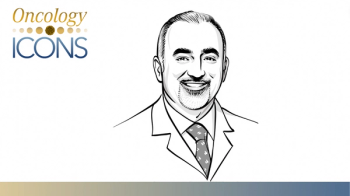
In an interview with Targeted Oncology, Maen Hussein, MD, a Q3 2023 Oncology Icons honoree, discusses his path to the community oncology setting and highlights upcoming trends in oncology he feels will improve patient outcomes.
Repotrectinib is now an FDA-approved option for patients with ROS1- positive advanced non-small cell lung cancer.
SIRPant-M has been granted orphan drug designation by the FDA for patients with T-cell lymphoma.

In an interview with Targeted Oncology, City of Hope cancer center’s Marwan Fakih, MD, further discussed the findings from this phase 3 trial and future directions for evaluating this combination.
In season 4, episode 18 of Targeted Talks, Arvind Dasari, MD, MS, dives into the recent approval of fruquintinib for patients with metastatic colorectal cancer.
Following the FDA’s denial of a de novo classification request of ProSense, citing concerns about the choice of comparator group used in the ICE3 trial, IceCure is working to identify a more representative comparator group.
The fast track designation granted to SONALA-001 in combination with the INSIGHTEC Exablate 4000 Type-2 Device from the FDA is for the treatment of patients with diffuse intrinsic pontine glioma.

In an interview with Targeted Oncology, Peter Schmid, FRCP, MD, PhD, discussed the implication of findings from the KEYNOTE-522 trial of the addition of pembrolizumab to neoadjuvant chemotherapy in patients with high-risk triple-negative breast cancer.
Julia Rotow, MD, discussed emerging data on upfront therapies for patients with lung cancer harboring EGFR mutations in a presentation at the 18th Annual New York Lung Cancers Symposium.
An analysis, based on data from the JAVELIN 100 Bladder trial, found the NCCN/FACT Bladder Symptom Index-18 for assessing quality-of-life in patients with advanced urothelial carcinoma to be reliable and valid.
For many immune-related adverse events, steroids are used as frontline treatment. However, it remains unclear if steroids allow for preservation of the antitumor immune response, resulting in the need for more options for patients with cancer.

In an interview with Targeted Oncology, Joshua Sabari, MD, discussed the rationale of studying LY3537982 in the LOXO-RAS-20001 trial and next steps for the evaluation of the agent.

The combination of and investigational immune checkpoint inhibitor, immunotherapy, and antibody-drug conjugate showed improvements in overall survival in patients with a variety of human papillomavirus-positive cancers.
TX-030, a potential first-in-class, anti-CD39 antibody, is being evaluated in a phase 2 trial in metastatic pancreatic ductal adenocarcinoma.
AU-007 demonstrated promising early efficacy and safety data when given alone or in combination with aldesleukin across multiple solid tumor types.
A phase 1/2 trial is evaluating the safety, efficacy, and tolerability of RZ-001 in patients with glioblastoma.
The application for lisocabtagene maraleucel in relapsed or refractory chronic lymphocytic leukemia/small lymphocytic lymphoma has been accepted by the FDA, following positive results from the TRANSCEND CLL 004 study.