
For Gallbladder Cancer Awareness Month, Horacio J. Asbun, MD, and Domenech Asbun, MD, shared their thoughts and strategies for treating patients with this disease from the surgical and clinical sides.
Jordyn Sava is an editor for Targeted Oncology.
For Gallbladder Cancer Awareness Month, Horacio J. Asbun, MD, and Domenech Asbun, MD, shared their thoughts and strategies for treating patients with this disease from the surgical and clinical sides.

In an interview with Targeted Oncology, Regina Barragan-Carrillo, MD, discussed the findings from her analysis of the Language of Respect guidelines adopted by the American Society of Clinical Oncology and how well they are followed in prostate cancer abstracts.

Fruquintinib combined with paclitaxel significantly improved progression-free survival in patients with advanced gastric/GEJ cancer compared with paclitaxel alone.

According to an interim analysis of the DREAMM-7 trial, belantamab mafodotin, bortezomib, and dexamethasone achieved a statistically significant and clinically meaningful improvement in progression-free survival among patients with multiple myeloma.

Available data on patient-reported outcomes and positive interim results from QUILT 3.032 support N-803 for patients with Bacillus Calmette-Guérin-unresponsive non-muscle-invasive bladder cancer.

In an interview with Targeted Oncology, Ashley Yocum, PhD, discussed The Beat AML study and emphasized the significance of considering patient factors, such as age and genetic mutations, in treatment decisions.
If approved, vepdegestrant could provide a valuable new treatment option for patients with ER+/HER2- breast cancer who have progressed after receiving endocrine therapy.

In an interview with Targeted Oncology, Bruno Sangro, MD, PhD, discussed the potential durvalumab, bevacizumab, and TACE has to set a new standard-of-care among patients with unresectable hepatocellular carcinoma.
The allogeneic gamma delta 2 T-cell therapy ACE2016 will undergo investigation in a phase 1 trial for the treatment of patients with locally advanced or metastatic EGFR-expressing solid tumors.

In an interview with Targeted Oncology, Yuqin Song, MD, PhD, discussed golidocitinib as the first JAK1 inhibitor developed for patients with T-cell lymphomas in this pivotal study.
A fast track designation to UV1 combination therapy for malignant mesothelioma from the FDA signifies expedited review and development for a promising treatment option, offering hope for patients with malignant pleural mesothelioma.
In an interview with Targeted Oncology, Michael Zinner, MD, explored the scientific challenges and breakthroughs shaping the landscape of oncology care in the context of World Cancer Day.
While ECOG performance status proves crucial for predicting survival in patients with metastatic prostate cancer, its specific impact on mCSPC needs further investigation.
Early data of afamitresgene autoleucel suggest substantial benefits for those with advanced synovial sarcoma who haven't responded to other treatments.
The FDA granted a fast track designation to BST02 for patients with all forms of liver cancer.

During a live event on Twitter/X, Pashtoon Kasi, MD, MS, discussed the potential of ctDNA and other advancements that have the potential to improve the lives of patients with GI cancers.
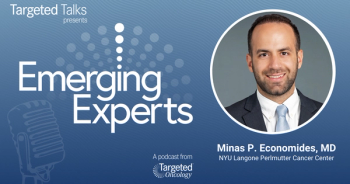
In our 4th episode of Emerging Experts, Minas P. Economides, MD, unveils the challenges and opportunities for renal cell carcinoma treatment, focusing on the lack of therapies available in the second-line setting.
Here is a look back at the FDA happenings from the month of January 2024.

In the second article of a 2-part series, Yara Abdou, MD, provided a deep dive into the evolving landscape of HER2-targeted therapy and its potential to revolutionize cancer treatment.

In an interview with Targeted Oncology, Geoffrey D. Moorer, MD, discussed recent trending topics in the field of oncology among hospital tumor boards and committees.
The FDA has decided to re-evaluate the ProSense System as a minimally invasive treatment option for patients with early-stage, low-risk breast cancer.

Robotic peritoneal mesometrial resection with targeted or systemic lymphadenectomy demonstrated feasibility with acceptable complication rates in intermediate/high-risk endometrial cancer requiring second surgery after prior hysterectomy.
In an interview with Targeted Oncology, Naval G. Daver, MD, discussed the first-in-human, phase 1/2 study of DSP-5336 in patients with relapsed or refractory acute myeloid leukemia.
The axicabtagene ciloleucel manufacturing process has received FDA approval for a change to reduce the median turnaround time.
In an interview with Targeted Oncology, Thomas Powles, MD, MBBS, MRCP, discussed the impressive performance of enfortumab vedotin plus pembrolizumab for the treatment of locally advanced or metastatic urothelial carcinoma, as seen in the EV-302 trial.
The investigational new drug application for OriCAR-017 has been cleared by the FDA for the treatment of patients with relapsed/refractory multiple myeloma.
Matthew Matasar, MD, discussed the rationale and findings of the doublet consisting of ibrutinib and venetoclax for the treatment of mantle cell lymphoma.
Patients with advanced/metastatic clear cell renal cell carcinoma who received belzutifan took longer to experience worsening symptoms and reported higher quality-of-life scores on questionnaires.
In an interview with Targeted Oncology, Randeep Sangha, MD, discussed the background of the phase 1 study and the rationale for studying zelenirstat for the treatment of solid tumors and hematologic malignancies.

Findings from 2 Chinese clinical trials of olverembatinib support its addition to The National Comprehensive Cancer Network guidelines for the treatment of patients with chronic myeloid leukemia.