

LUNG CANCER
Latest News
Latest Videos

CME Content





























More News

Ceritinib has been granted a priority review by the FDA as a first-line treatment for patients with <em>ALK</em>-positive, metastatic NSCLC.
Benjamin Levy, MD, has been named clinical director of medical oncology and medical director of thoracic oncology for the Johns Hopkins Kimmel Cancer Center at Sibley Memorial Hospital.
Joel Neal, MD, PhD, discusses how recent immunotherapy advances are transitioning the field of NSCLC and how the impact of molecular testing continues to shape treatment decisions.
Rovalpituzumab tesirine, a DLL3-targeted antibody-drug conjugate, demonstrated encouraging single-agent antitumor activity with a manageable safety profile in the treatment of patients with recurrent small cell lung cancer.
Results of an initial study of tumors from patients with lung cancer or head and neck cancer suggest that acquired resistance to checkpoint inhibitors may be due to the elimination of certain genetic mutations needed to enable the immune system to recognize and attack malignant cells.

Rosalyn Juergens, MD, PhD, assistant professor, Department of Oncology, Division of Medical Oncology, McMaster University, discusses a clinical trial investigating chemotherapy with durvalumab and tremelimumab in patients with non-small cell lung cancer (NSCLC).
Mohammad Jahanzeb, MD, discusses why researchers must work on identifying targetable mutations in these non-driver adenocarcinomas and shares his insight on other trends and challenges in the field.
H. Jack West, MD, discusses the benefits of EGFR TKIs in NSCLC, challenges with determining optimal sequencing, and potential combinations on the horizon.

Hatim Husain, MD, assistant professor of Hematology-Oncology at the University of California San Diego Moores Cancer Center, discusses a study monitoring the emergence of<em> T790M </em>in <em>EGFR</em>-mutated non-small cell lung cancer (NSCLC).
The indication for pembrolizumab has been expanded by the European Commission to include the frontline treatment of patients with metastatic non–small cell lung cancer that expresses PD-L1 on ≥50% of cells and does not harbor an EGFR or ALK mutation.

Heather Wakelee, MD, discusses T790M mutation detection among different platforms in an analysis from the TIGER-X trial
Two separate delays have been announced by Bristol-Myers Squibb and AstraZeneca in the development of PD-1 and CTLA-4 inhibitor combinations as first-line therapies for patients with advanced or metastatic non–small cell lung cancer.
A review of data regarding PD-L1 expression as a predictive biomarker of response to checkpoint inhibition in lung cancer.

Roy Herbst, MD, PhD, discusses the next steps with pembrolizumab in non-small cell lung cancer following its FDA approval, including combination regimens.
Martin J. Edelman, MD, has joined Fox Chase Cancer Center as chair of the Department of Hematology/Oncology and deputy cancer center director for clinical research.
Claire Verschraegen, MD, discusses the design and findings of an early trial of avelumab and the future potential for the PD-L1 inhibitor in lung cancer.

Nicolas Girard, MD, discusses how to maximize the clinical benefit of crizitonib (Xalkori) in non-small cell lung cancer (NSCLC).
A supplemental biologics license application for pembrolizumab in combination with pemetrexed plus carboplatin has been granted priority review by the FDA as a treatment for patients with metastatic or advanced non-squamous non–small cell lung cancer without <em>EGFR</em> or <em>ALK</em> mutations and regardless of PD-L1 expression.
Mark G. Kris, MD, shares his thoughts on the prominent advancements in the field of lung cancer, how liquid biopsies are shaping treatment decisions, and his predictions for the years ahead.
PD-L1 expression is starting to be part of the standard of care in determining the appropriate treatment plan for newly diagnosed non-small cell lung cancer. However, testing for the biomarker is not always necessary for patients who have relapsed or who have small cell lung cancer.
Jared Weiss, MD, recently sat down with <em>Targeted Oncology</em> to discuss treatment considerations and options for patients with metastatic lung cancer based on 3 case scenarios.

Luciano Mutti, PhD, professor in cancer research, University of Salford, Manchester, discusses the current and future role of immunotherapy in mesothelioma.
Findings from an efficacy update of patients participating in a study in the CheckMate series revealed that first-line nivolumab (Opdivo) demonstrated activity in advanced non–small cell lung cancer, and the addition of ipilimumab (Yervoy) resulted in enhanced activity, specifically in prolonged progression-free survival and higher objective response rates.
Durvalumab treatment in the second-line setting or beyond demonstrated clinical benefit and led to durable responses in heavily pretreated patients with locally advanced or metastatic non-small cell lung cancer.
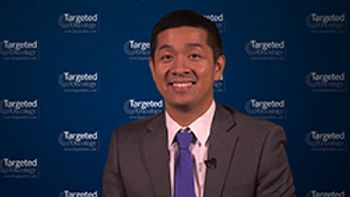
Metastatic Non-Small Cell Lung Cancer with Alexander Drilon, MD