HER2 Breast Cancer
Latest News
Latest Videos






CME Content





























More News
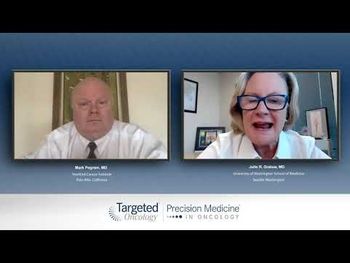

Dr Mark Pegram and Dr Julie Gralow discuss treatment options in relapsed/refractory HER2+ metastatic breast cancer.

Nancy U. Lin, MD, discusses the latest findings from the HER2CLIMB study of either tucatinib or placebo, added to trastuzumab and capecitabine, for patients with previously treated HER2-positive metastatic breast cancer who have brain metastases.

"The FDA approval of Phesgo reflects our commitment to improving outcomes for the many people living with HER2-positive breast cancer."

In a single-institution study, investigators found a correlation between certain genotypes and comorbidities and trastuzumab-induced cardiotoxicity among patients with HER2-positive breast cancer.
"The endocrine combination of abemaciclib plus fulvestrant and trastuzumab showed significant improvements in both progression-free survival and overall response compared with chemotherapy plus trastuzumab and was generally well-tolerated."

“While the sample size and power are limited, these results suggest that a higher HER2 FISH ratio at baseline core biopsy may be a potential biomarker to select patients for neoadjuvant dual anti-HER2 therapy without chemotherapy."

Yeon Hee Park, MD, discusses the data supporting the FDA’s accelerated approval of fam-trastuzumab deruxtecan-nxki for the treatment of adult patients with unresectable or metastatic HER2-positive breast cancer who have received ≥2 prior anti–HER2-based regimens in the metastatic setting.
"The overall response rate and progression-free survival were significantly improved with pyrotinib plus capecitabine."
The addition of tucatinib to treatment with trastuzumab and capecitabine resulted in more than a 60% reduction in the risk of central nervous system progression or death in both patients with previously treated HER2-positive metastatic breast cancer who have active or stable brain metastases.

"Since submitting the BLA for margetuximab, we have worked collaboratively with the FDA to answer the Agency’s questions as they arise. We will continue to work closely with the Agency to potentially bring margetuximab as a treatment option to patients with HER2-positive metastatic breast cancer."
In an interview with Targeted Oncology, Rashmi Murthy, MD, discussed the final results from the HER2CLIMB study and the future of tucatinib as it makes its way to the community setting as treatment of advanced HER2--positive breast cancer.
"HER2-targeted therapy has changed the natural history of HER2-positive metastatic breast cancer, with the dual blockade of pertuzumab and trastuzumab, with docetaxel, demonstrating an 8-year landmark overall survival rate of 37%."
A new phase II trial showed higher pathological complete response rates in patients with HER2-positive breast cancer who took docetaxel, carboplatin, trastuzumab, and pertuzumab followed by trastuzumab emtansine, and pertuzumab, versus those who took only the former therapy.
"We know that, in general, patients with this particular subset of hormone-receptor-positive breast cancers should get chemotherapy, but all the studies showing the benefits of chemotherapy included patients with large cancers."
Safety data from the phase III EMBRACA trial were recently published. Talazoparib appears to be safe with manageable toxicities in patients with germline BRCA-mutated HER2-negative advanced breast cancer.

Nancy Lin, MD, discusses options for patients with human epidermal growth factor receptor 2-positive breast cancer who also present with brain metastases.
Indigenous American ancestry has been linked to an increased incidence of HER2-positive breast cancer, according to the Peruvian Genetics and Genomics of Breast Cancer Study study published in Cancer Research.
Despite evidence from previous studies that showed that platinum-based chemotherapy agents are active in patients with breast cancer, platinum-based chemotherapy was not found to be superior to standard chemotherapy in terms of eliciting pathologic complete responses in patients with HER2-negative breast cancer carrying a BRCA mutation, according to data from the INFORM trial published in the Journal of Clinical Oncology.
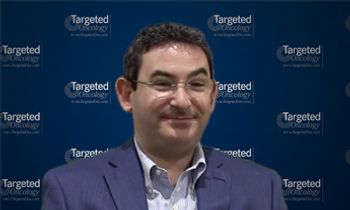

Jasmeet C. Singh, MD, discusses the future of the treatment landscape for HER2-positive breast cancer following positive new research presented at the 2019 San Antonio Breast Cancer Symposium.
In an interview with Targeted Oncology at the 2019 San Antonio Breast Cancer Conference, Antionette Tan, MD, shared the results of the FeDEriCa study and explained how the results can impact the treatment of patients with HER2-positive breast cancer in the clinical setting.
Ado-trastuzumab emtansine has been approved by the European Commission for the treatment of adult patients with HER2-positive early breast cancer, in the adjuvant setting who have residual invasive disease after taxane-based chemotherapy and HER2-targeted therapy, in the neoadjuvant setting.<sup>1</sup>